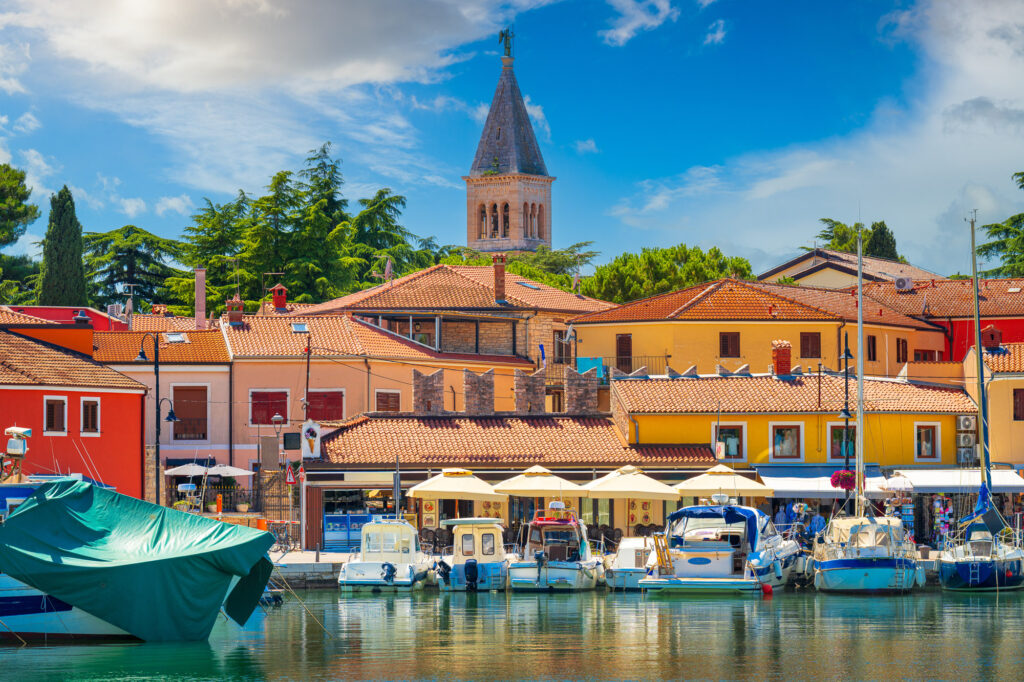
Rabac sits on Istria‘s eastern coast, where steep green hills descend to a series of bright pebble beaches along Kvarner Bay. Once a small fishing village, it is now one of the peninsula’s best-known seaside resorts. Travellers come for clear water, a long waterfront walking area and beach-focused accommodation, while medieval Labin rises above the coast for an easy change of scene.
Rabac is especially appealing if your idea of an Istrian holiday involves swimming and a scenic shore rather than a packed programme of historic city sights. This guide covers how the beaches differ, what to do away from the water, the best areas to stay and how to combine Rabac with Labin and the surrounding countryside.
Is Rabac worth visiting?
Yes, if beaches and coastal scenery are priorities. Rabac’s appeal comes from the contrast between white pebbles, intensely blue water, pine-covered slopes and the views out across the bay. A seaside holiday here can be very simple: swim in the morning, walk the coast in the afternoon and have dinner without leaving town.
There are also clear trade-offs. Rabac is more of a resort settlement than an architectural old-town destination. The terrain rises sharply above the water, so an accommodation property that looks near the shore on a map may involve steep roads or many steps. In peak summer, popular swimming areas can get crowded.
For travellers who want a historic centre, Labin makes an excellent companion to Rabac rather than a reason to avoid it.
Best beaches in Rabac
Rabac is known for pebbly swimming areas and relatively transparent water, but each stretch of coast feels different. Beach services, lifeguard presence and water activities are seasonal, so check locally when you arrive. Bringing water shoes is sensible for most visitors.
Girandella Beach
Girandella is among Rabac’s best-known beach areas, associated with the eastern part of the resort and a developed hotel setting. Expect a mix of scenic pebbles, places to swim and summer activity. Its popularity means that the most convenient spots can fill early in busy weeks.
Best for: travellers who want a lively bathing area and do not mind sharing the shoreline. Look at the specific cove or section before choosing a spot: a well-known beach name can refer to a broader waterfront area rather than one continuous swimming surface.
St Andrea and the waterfront coves
Around St Andrea, the coastline offers attractive places to stop as you walk between sections of Rabac. The draw is the combination of blue water, pebble coves and the possibility of moving between swimming and a waterfront café or promenade. It is a good option for visitors who enjoy trying more than one location in a single day.
Some shoreline approaches may include rocks or steps, and not every cove is suited to pushchairs or mobility-limited visitors. Inspect access before committing to a full day on that section.
Maslinica Beach
Maslinica is another popular area, closer to accommodation and facilities on the western side of the Rabac waterfront. It may suit travellers who prioritise straightforward access from their hotel or apartment over finding a secluded cove.
Facilities and designated sections can vary, so confirm whether you are using a public-access area, a hotel-related concession area or a place with paid extras. Even where a beach is public, umbrellas, loungers and other services may have separate charges.
How to choose the right Rabac beach
- For families: look for a manageable beach entrance, toilets nearby and a safe spot to sit in view of the water. Pebbles do not automatically mean dangerous swimming, but footing can be awkward.
- For couples: walk along the shore before settling on a cove; a little distance from the busiest entrances can make the atmosphere more relaxed.
- For active swimmers: judge wind, boat traffic and sea conditions on the day rather than relying solely on photographs of calm water.
- For accessible access: confirm the exact route, gradient, steps and facilities with the beach operator or local visitor information; do not assume every part of the resort waterfront is step-free.
Things to do in Rabac beyond swimming
Walk the waterfront at different times of day
The promenade and connected coastal paths are central to the Rabac experience. Morning brings a quieter view of the harbour and bay; late afternoon is pleasant for a longer walk with photo stops. Rather than racing along the coast, allow time to sit and watch the light on the water.
In the hottest part of summer, begin early or save your walk for the evening. Some sections are open and sunny, and the return journey may include an uphill climb to your accommodation.
Take a boat excursion when conditions allow
Summer operators may offer panoramic boat rides, short coastal outings or swim-focused excursions. These are a way to appreciate the coastline from a different angle, but routes and stops differ by operator. Check the actual itinerary, departure point, duration, shade, children’s policies and what happens if wind or rough sea affects the trip.
Do not book a tour simply because it promises a ‘hidden beach’—the value depends on how much time you spend swimming compared with travelling by boat.
Explore coastal walking and hiking routes
Beyond the town’s gentle waterfront, the slopes above Rabac support more demanding walking routes, including paths linked with the Labin area. The local tourist board highlights routes such as the Sentona Trail and Bellavista, but these are not interchangeable with a flat resort promenade. Elevation, uneven ground and occasional steep sections require proper footwear and realistic planning.
Before setting out, obtain a current route map or advice from the official Labin-Rabac Tourist Board. Carry drinking water, check the weather, and avoid assuming a wooded-looking route will remain shaded or easy throughout. In hot weather, a shorter coastal walk may be a much better choice than a strenuous inland ascent.
Visit Labin: the essential day trip from Rabac
Labin’s medieval old town stands on a hill above the resort, only a few kilometres away by road. It gives a Rabac holiday a completely different experience: narrow historic lanes, small squares, galleries and reminders of the area’s mining heritage. From elevated viewpoints you can understand the dramatic geography of this eastern Istrian coast.
Walk through the old town, look for the historic town gate and the loggia, and take time for a café. If you are interested in industrial and social history, investigate the town’s museum and mining-related interpretation, checking opening arrangements before your visit.
A half-day in Labin combines particularly well with an early swim or evening meal in Rabac. If you are travelling without a car, check current local transport or taxi options in both directions, including the return after dinner.
Other day trips from Rabac
Discover eastern Istria’s hill towns
The inland area around Labin offers smaller villages, quiet roads and a different rhythm from the coast. Pićan and Gračišće are options for travellers who enjoy historic hill settlements, while the broader Labin countryside rewards slow exploration. A car is helpful for linking several places; do not assume frequent bus connections between small villages.
Explore Plomin and coastal viewpoints
North of Rabac, the terrain offers striking views of the coastline and the northern Adriatic. Plomin is worth considering as part of a carefully planned drive rather than a hurried side trip. Keep an eye on road conditions, parking availability and the time needed to return along winding roads.
Make time for a broader Istrian itinerary
With additional days and a car, you can explore the wider peninsula, including Pula‘s Roman heritage or inland food and wine areas. However, cross-peninsula drives take more time than distances on a map can suggest. For a short stay, concentrate on Rabac, Labin and the nearby eastern Istrian landscape.
Where to stay in Rabac
Near the waterfront: best for travellers whose priority is walking to the sea, cafés and evening activity. Check noise levels in busy summer weeks and confirm the exact beach access, not just the distance shown on a map.
Near a preferred beach area: ideal for families who expect to return to their room during the day. Compare properties near Girandella, St Andrea or Maslinica based on the actual pedestrian route and facilities.
Higher on the hillside: apartments may offer attractive views and a quieter atmosphere, but the climb back from the beach can be tiring in summer heat. Ask specifically about stairs, gradients and parking.
Labin: an alternative if you favour historic streets, a broader restaurant choice and the flexibility of driving down to Rabac for swimming. It works especially well for visitors exploring inland Istria as well as the sea.
Before booking, verify air conditioning, parking, the presence of an elevator where relevant and whether the nearest swimming area is actually suitable for your group.
Getting to Rabac and getting around
Rabac is on the eastern side of the Istrian peninsula, below Labin. Road access is practical for drivers touring Istria, while Pula and other larger transport centres are common starting points. Road distances are not the whole story: the final approach and local streets can be winding or steep, particularly near hillside accommodation.
Travellers without a car should check current services to Labin and any onward connection to Rabac. Timetables, seasonal frequency and evening availability may differ, so plan the final connection before booking accommodation. Taxis can be useful for the hill between Rabac and Labin, but agree on the fare or confirm the pricing method in advance.
In the resort itself, much of a beach holiday can be done on foot if you stay near the waterfront. Walking to more distant coves and back to a hilltop apartment may be harder than expected in strong sun.
Best time to visit Rabac
June and September are attractive for many visitors who want beach weather with somewhat less pressure on popular areas. July and August bring the busiest resort atmosphere, warmest-feeling holiday conditions and more competition for accommodation and beach space. Spring and autumn are good periods for walking and exploring Labin, but swimming conditions and seasonal business opening hours are less dependable.
Weather and sea state matter more than a fixed calendar rule. Always check local forecasts, especially when planning boat trips or higher-level hikes.
One day in Rabac: a practical itinerary
- Morning: head to the waterfront and choose a beach before the busiest hours; take a swim at a cove that matches your group’s needs.
- Lunch: eat close to the shore, with a break from the midday sun.
- Early afternoon: take a leisurely promenade walk or explore another beach section instead of sitting in one place all day.
- Late afternoon: drive or arrange a transfer up to Labin for the old town, viewpoints and history.
- Evening: finish in Labin or return to Rabac for a meal by the sea.
For a stay of several days, separate the Labin visit and a longer hike into different days. A beach, heritage and hiking itinerary is much more enjoyable when it leaves room for weather changes.
Practical advice for families and couples
- Take water shoes: Rabac’s famous pebble beaches are scenic but can feel uncomfortable underfoot.
- Seek shade and carry water, especially if walking between beaches in July or August.
- Read accommodation reviews for uphill access, not just sea views and room quality.
- Check whether hotel-associated beach services require extra payment and whether day visitors can use the facilities.
- Confirm current paths and expected difficulty before attempting routes towards Labin or the hill country.
- Do not rely on out-of-date schedules for buses, boat trips, museums or seasonal businesses.
Frequently asked questions
Is Rabac in Istria or Kvarner?
Rabac is geographically on the eastern side of the Istrian peninsula, overlooking Kvarner Bay. It is part of an Istrian itinerary even though its coastline faces the Kvarner area.
Does Rabac have sandy beaches?
Rabac is predominantly known for pebble beaches and rocky sections rather than long sandy shores. If fine sand is essential for your holiday, compare alternatives before booking.
Can you visit Labin from Rabac?
Yes. Labin is the natural cultural excursion from Rabac, but it lies uphill from the resort. A car, taxi or verified local transport connection is more practical for many visitors than walking the road.
Is Rabac suitable without a car?
It can be for a beach-first holiday if your accommodation is near the waterfront. Exploring smaller inland towns and making flexible day trips is much easier with a car.
How many days should you spend in Rabac?
A day trip gives a taste of the beaches and coast; three to five nights allow more relaxed swimming, time for Labin and at least one additional outing.
Final planning advice
Rabac is a strong choice for travellers who want clear water, scenic pebble coves and a relaxed resort base with hills at their back. Choose your accommodation according to the beach and walking route you will actually use, reserve time for Labin’s old town, and treat the more demanding hiking routes as separate adventures. That approach gives you the best of eastern Istria without overloading a beach holiday.
Plan your trip
Planning a trip to Istria?
Discover beaches, things to do, parking, food and practical travel information.