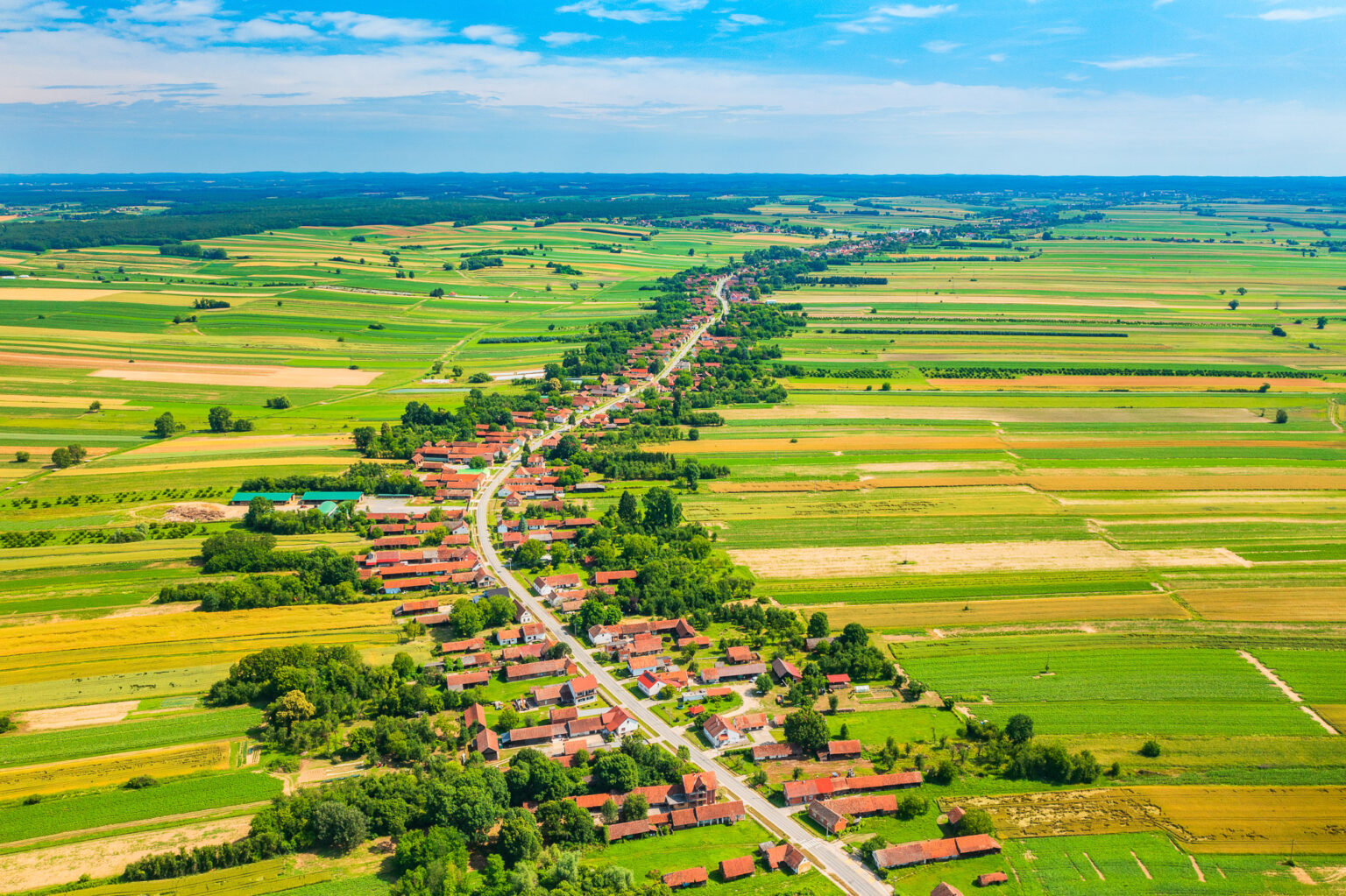
Slavonia and Eastern Croatia offer a very different side of the country from the Adriatic coast. Instead of island ferries and stone seaside towns, this is a region of broad rivers, wetlands, vineyards, historic cities, village traditions and some of Croatia’s most distinctive food and wine.
For travellers who want to see beyond the coast, the east is especially rewarding. Osijek provides the easiest urban base, Baranja combines wine country with rural restaurants and the wetlands of Kopački Rit, while Vukovar and Ilok bring the Danube, layered history and one of Croatia’s most interesting wine landscapes into the same journey.
Where Is Slavonia and Eastern Croatia?
Slavonia occupies much of Croatia’s eastern inland area, stretching toward the borders with Hungary, Serbia and Bosnia and Herzegovina. For travel planning, the wider eastern-Croatia region is best understood as a network of destinations rather than one single city.
- Osijek is the main urban centre and the most practical starting point for many visitors.
- Baranja, north of Osijek between the Drava and Danube, is known for wetlands, wine, paprika-rich food and traditional villages.
- Kopački Rit Nature Park protects one of Europe’s important Danube-Drava floodplain landscapes.
- Vukovar stands on the Danube and combines riverside scenery with important modern Croatian history.
- Ilok sits farther east above the Danube and is especially attractive for wine lovers.
- Đakovo is known for its cathedral, equestrian traditions and position in the agricultural heartland of Slavonia.
If your Croatia trip is focused mainly on the coast, eastern Croatia works best as a dedicated two- to four-day extension rather than a rushed day trip.
Why Visit Slavonia?
The strongest reason to visit is contrast. A trip through Slavonia adds river landscapes, continental architecture, wetlands and wine villages to a Croatia itinerary that may otherwise be dominated by the Adriatic.
The region is also well suited to travellers who prefer slower travel. Distances between the main places are manageable, roads are generally straightforward, and there is less pressure to move constantly between headline attractions.
Food and wine
Eastern Croatia has a strong culinary identity. Expect freshwater fish, paprika, cured meats, hearty stews, seasonal produce and generous portions. Baranja and Ilok are among the most rewarding areas for wine-focused travel, with Graševina particularly important across eastern Croatian vineyards.
Nature
The Danube and Drava shape much of the region. Kopački Rit is the best-known protected landscape, but cycling routes, riverside walks and rural areas make nature part of almost every itinerary.
Culture and history
Osijek’s Tvrđa district, Vukovar’s memorial sites, Đakovo’s cathedral and the historic wine cellars of Ilok show how many different layers of Central European, Ottoman, Habsburg and modern Croatian history meet in the east.
Osijek: The Best Base for Eastern Croatia
Osijek is a logical first stop. The city lies on the Drava River and is large enough to offer a good choice of accommodation, restaurants and services while still being easy to explore.
The riverside promenade is central to the city’s character. Tvrđa, the historic fortified district, is one of the main areas to explore, while the centre around Ante Starčević Square shows Osijek’s more urban side. The city also works well for cycling, café stops and relaxed evenings.
Travellers without a car will generally find Osijek the easiest base in the region. However, a car becomes much more useful if you want to combine Baranja wineries, Kopački Rit, Vukovar, Ilok and rural restaurants efficiently.
Baranja: Wine Villages, Food and Rural Landscapes
Baranja begins almost immediately north of Osijek, but its atmosphere is much more rural. Vineyards, traditional houses, wine roads and restaurants built around local ingredients make it ideal for a slower day or overnight stay.
One of the pleasures of Baranja is that food, wine and landscape are closely connected. A good day might combine a morning in Kopački Rit, lunch in a village restaurant and an afternoon wine tasting.
If you plan to visit wineries, arrange tastings in advance, especially outside weekends and peak event periods. If you are driving, designate a driver or use a local transfer.
Kopački Rit Nature Park
Kopački Rit lies in the floodplain near the meeting of the Drava and Danube systems. Water levels continually reshape its channels, lakes, reed beds, floodplain forest and wet meadows, which is one reason the park feels different across the seasons.
The park can be experienced on foot, by organised boat or small boat excursions, and through specialist activities such as canoeing and birdwatching. For many first-time visitors, a guided boat excursion is the easiest introduction because it provides access to waterways that cannot be understood from the road alone.
Current 2026 planning note: the park’s official information states that reservations are required for boat and small-boat excursion programmes. The 2026 basic park entrance fee is €3, while guided water programmes cost extra. Current opening hours and programmes can change seasonally, so check the official Kopački Rit website before travelling.
Vukovar: The Danube and Modern Croatian History
Vukovar occupies an important place in Croatia’s recent history, but it is also a living Danube city. A thoughtful visit should leave time for both aspects.
Many visitors come to understand the events connected with the 1991 battle and the Croatian War of Independence. Memorial sites are emotionally significant, so this is a destination where context matters and rushing from one site to another is rarely the best approach.
At the same time, Vukovar’s riverfront, cultural institutions and surrounding countryside show another side of the city. Staying overnight can make the experience more balanced than treating it only as a memorial stop.
Ilok: Wine Above the Danube
Ilok sits at Croatia’s far eastern edge and is one of the most appealing small-town stops in the region. The elevated old-town area overlooks the Danube and is closely associated with wine.
It is particularly attractive for travellers who like historic cellars, vineyard landscapes and quieter towns. Ilok combines naturally with Vukovar, but allowing an overnight stay gives you more flexibility for tastings and a slower evening beside the Danube.
Đakovo: Cathedral and Slavonian Traditions
Đakovo makes an easy addition to an eastern Croatia road trip. Its landmark cathedral dominates the centre, while the town is also strongly associated with horses and long-established Slavonian traditions.
It works particularly well as a stop between Zagreb and Osijek if you are driving east, or as a half-day excursion from Osijek.
How Many Days Do You Need?
Two days
Use Osijek as your base. Spend one day in the city and one day combining Baranja with Kopački Rit.
Three days
Add Vukovar and Ilok. This gives the trip a much stronger Danube and wine dimension.
Four to five days
Add Đakovo, extra time in Baranja, winery visits, cycling or a second nature-focused day. This is the best pace if eastern Croatia is a major part of your holiday rather than a side trip.
A Practical 4-Day Slavonia Itinerary
- Day 1: Osijek. Explore the riverside, Tvrđa and the city centre. Stay in Osijek.
- Day 2: Kopački Rit and Baranja. Reserve a park programme, then continue to a rural restaurant and winery area.
- Day 3: Vukovar and Ilok. Visit Vukovar in the morning, continue along the Danube to Ilok and consider staying there.
- Day 4: Đakovo. Visit the cathedral and continue west toward Zagreb or your next Croatian region.
Getting to Slavonia and Eastern Croatia
Most international visitors approach from Zagreb. Driving gives the greatest flexibility because the main attractions are spread across cities, villages, parks and wine areas.
Rail and bus connections can work for reaching larger cities such as Osijek, but local day-trip planning becomes more complicated without a car. If you prefer not to drive, base yourself in Osijek and combine public transport with organised excursions or local transfers.
Travellers building a broader inland itinerary can also connect the region with Zagreb and Central Croatia.
Best Time to Visit
Spring and autumn are especially attractive. Temperatures are usually more comfortable for walking and cycling, vineyards and rural landscapes are active, and nature-based trips can be excellent.
Summer can be hot, particularly in July and August, but it also brings festivals and long evenings. Winter is quieter and works best for city breaks, food, wine and seasonal events rather than a nature-heavy itinerary.
For Kopački Rit, conditions depend not only on season but also on water levels, weather and programme availability. Always check the park’s current notices before setting out.
Where to Stay
Osijek is the best all-round base for first-time visitors. Baranja is better if food, wine and rural atmosphere are the priority. Vukovar suits travellers who want more time for history and the Danube, while Ilok is ideal for a wine-focused overnight stop.
A mixed itinerary often works best: two nights in Osijek or Baranja, followed by one night in Vukovar or Ilok.
Driving and Practical Tips
- Do not underestimate distances simply because the region looks compact on a map.
- Reserve winery tastings and Kopački Rit boat programmes in advance.
- Carry water in summer; inland heat can be intense.
- Allow unhurried time at Vukovar’s memorial sites.
- Check event calendars because festivals can be a major reason to time a visit.
- If wine tasting is central to your plans, organise a driver or local transfer.
Is Slavonia Worth Adding to a Croatia Trip?
Yes, especially if you have already seen part of coastal Croatia or want a trip with more variety. Slavonia and Eastern Croatia are not substitutes for Dubrovnik, Split or the islands; they provide a completely different travel experience.
Osijek, Baranja, Kopački Rit, Vukovar, Ilok and Đakovo together create a strong inland route built around rivers, food, wine, nature and history. For travellers willing to move beyond the coast, it is one of the best ways to make a Croatia itinerary feel broader and more complete.
Travel guides
Featured articles about Slavonia
- Destinations
Slavonia and Eastern Croatia: Complete Travel Guide to Osijek, Wine, Nature and the Danube
Osijek, Kopački Rit, Baranja, Vukovar, Ilok and Đakovo: what to see, Slavonian food and wine, getting around and…