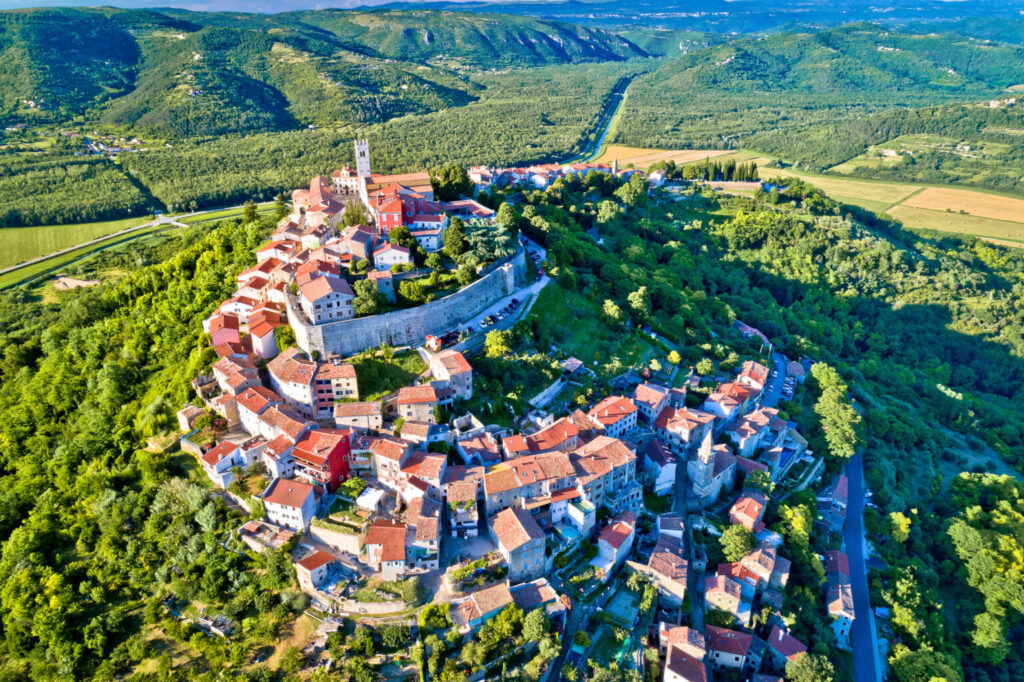
Labin is one of eastern Istria‘s most rewarding small towns: a hilltop maze of stone lanes and historic buildings with sea views towards Rabac and the Kvarner islands. Unlike a typical beach resort, Labin is a place to slow down, explore local stories and enjoy Istria’s inland character before heading to the coast. Its old town, art studios and unusual mining heritage make it an appealing half-day excursion or a quieter base for a longer stay.
This guide focuses on visiting Labin itself: what to see, how to structure a visit, how the town relates to nearby Rabac, and the practical choices that matter when planning a trip.
Why Visit Labin?
Labin has a different rhythm from Rovinj, Pula and Istria’s better-known coastal centres. The medieval core occupies a hill above the modern town, and its narrow streets lead to intimate squares, palaces, galleries and unexpected glimpses of the sea. The area also has a distinct industrial past: coal mining shaped local life for generations, and its legacy remains visible in the town’s museums and stories.
- For history: explore a layered old town and the story of mining communities.
- For art: find local galleries and ateliers among historic streets.
- For views: visit the viewpoints above the coast and Rabac.
- For a balanced day: combine Labin’s culture with a beach visit in Rabac.
Best Things to Do in Labin
Explore the Old Town on Foot
Start by putting the map away for a while. Labin’s old town is compact enough for an unhurried walk, but its stepped lanes, arches and small squares encourage detours. Look for façades that reveal different chapters of the town’s history, from the medieval street pattern to later Venetian-era architecture.
Allow time to sit in a café, browse a small shop or return to a viewpoint as the light changes. Comfortable shoes are more useful here than a packed sightseeing checklist: the old core has uneven stone paving and inclines.
Enjoy the Fortica Viewpoint
One of the strongest reasons to climb into the old town is its outlook. From the Fortica area you can look across the landscape towards Rabac, the Adriatic and the island of Cres when visibility is good. It is particularly satisfying after wandering the enclosed streets, when the view suddenly opens over the coastline.
The panorama also explains Labin’s geography: the historic settlement sits above the shore, while Rabac developed below as the better-known seaside holiday destination.
Visit Labin Town Museum
Labin’s town museum adds useful context to what you see outside. Alongside local archaeological and historical material, its distinctive attraction is a reconstruction of a coal mine. This unusual exhibit helps visitors understand the working lives and industrial identity of the Labin area, a side of Istria that beach itineraries often miss.
Check the official Labin museum and gallery information before visiting. Hours vary by month, and a museum visit should not be assumed to be possible on every day of the week.
Discover Labin’s Art and Galleries
Labin has a strong reputation as an artists’ town. Small galleries and working studios fit naturally among its stone buildings; opening patterns are not always the same as those of larger museums. Treat a gallery stop as a chance encounter rather than expecting every door to be open.
If you particularly enjoy sculpture, consider Dubrova Sculpture Park outside the historic centre. The park is connected with the Mediterranean Sculptors’ Symposium and offers a different kind of cultural stop among trees and open space. It works best as a separate visit when you have transport.
Understand the Mining Heritage
Mining is central to Labin’s modern history. The area’s miners organised the short-lived Labin Republic in 1921, an episode still remembered in local historical narratives. A visit becomes more interesting when you look beyond the postcard streets and recognise that the town’s identity grew from both art and labour.
The museum’s mine exhibit is the most straightforward introduction for travellers. Visitors interested in industrial heritage can seek information about additional local sites and interpretation from the tourist board before setting out.
Labin and Rabac: Should You Visit Both?
Yes, if you have most of a day. Labin and Rabac are close geographically but feel very different. Labin is elevated, urban and historic; Rabac is a waterfront holiday area known for pebble beaches and a scenic promenade. Pairing them gives you culture in the morning and an easy-going coastal afternoon.
A practical sequence is to explore Labin’s old town first, stop for lunch, then continue down to Rabac for a stroll or a swim when the weather suits. If you prefer a beach-first day, reverse the order and head up to Labin for late-afternoon light and dinner.
Do not mistake the two places for adjacent walkable neighbourhoods. They are linked by a road with a significant elevation change. Walking routes exist in the area, but trail choice, heat and return transport all deserve attention.
How Much Time Do You Need in Labin?
Two hours: a short old-town circuit, a viewpoint and a coffee. This is enough for a first impression but leaves little room for a museum.
Half a day: a more relaxed old-town visit, museum or gallery time and a meal. This is the best choice for most visitors interested in Labin itself.
One day: combine Labin with Rabac, or add the sculpture park and a longer food stop. Travellers who want a slow-paced holiday can also use Labin as a base for discovering eastern Istria over several days.
Where to Stay: Old Town, Modern Labin or Rabac?
Labin old town: choose it for atmospheric streets, historic accommodation and evening walks. Before booking, confirm parking arrangements, luggage access and stairs; the old town is not as convenient for door-to-door driving as newer areas.
Modern Labin: practical for shops, local services, road connections and travellers planning day trips by car. It is less picturesque, but can be easier for longer stays.
Rabac: better if your main goal is swimming, waterfront hotels and beach access. You can still visit Labin as a cultural outing, but check local transport arrangements if you will not have a car.
How to Get to Labin
Labin lies on Istria’s eastern side and is most straightforward to reach by road. Drivers commonly approach from the direction of Pula or via roads connecting with the Kvarner side of the peninsula. Navigation should target the old-town parking area rather than assume cars can enter the historic streets.
Regional and intercity buses serve the wider area, but the location of your accommodation matters: a bus stop in modern Labin is not necessarily beside the old-town lanes. If you are relying on buses, confirm the route, actual stop and latest return before you travel. For wider context, see our guide to bus travel in Croatia.
Visitors also staying in western or southern Istria can use Labin as a road-trip stop rather than changing hotels. For a broader cultural itinerary, our Pula travel guide covers another important historic base in the region.
Food and Local Atmosphere
Labin’s cafés and restaurants suit a slow visit. Look for seasonal Istrian dishes, local olive oil, regional wines and everyday specialities rather than assuming a fixed list of restaurants will remain open year-round. In the old town, a terrace and a good view can be as memorable as the menu.
If you are planning a full-day outing, lunch in Labin and a relaxed walk by the sea in Rabac make an easy combination. Outside the main season, checking current opening days is especially worthwhile.
Best Time to Visit Labin
Spring and early autumn are particularly pleasant for walking the stone streets and exploring nearby countryside without midsummer heat. Summer offers a lively atmosphere and the easiest combination with Rabac beaches, but midday sun can make uphill sightseeing less comfortable. Winter is quieter and atmospheric, although some visitor services and galleries may have reduced opening hours.
For outdoor plans, check the forecast and allow for conditions to change near the coast. The official Labin Tourist Board is the best place to confirm museum openings, current events and local visitor information.
Practical Tips for First-Time Visitors
- Wear shoes with grip for stone steps and uneven paving in the historic centre.
- Allow extra time for parking and the walk into the old town.
- Check gallery and museum opening hours individually rather than relying on generic summer hours.
- Bring water on hot days, especially if combining old-town sightseeing with a longer walking route.
- Separate your beach plan from your old-town plan: Rabac is below the hill, not part of Labin’s historic centre.
Frequently Asked Questions About Labin
Is Labin worth visiting?
Yes, especially if you enjoy historic towns, art and local stories. It offers an attractive contrast to Istria’s busier seaside destinations and fits comfortably into a half-day or full-day excursion.
Is Labin the same place as Rabac?
No. Labin is the hilltop town with the old centre and mining heritage; Rabac is the coastal resort below, known for beaches and a waterfront promenade.
Can you visit Labin without a car?
It is possible, but requires more planning than a visit by car. Confirm the relevant bus stop, walking distance to the old town and return service for the exact date.
Is Labin suitable for families?
Families who enjoy exploring lanes, viewpoints and an unusual museum can have a rewarding visit. Bear in mind that steps and uneven streets are less convenient with a stroller.
Final Planning Advice
Choose Labin for the experience of a real Istrian hill town rather than a checklist of major monuments. Its streets, views, art and mining story give it a distinctive identity, while nearby Rabac adds an easy coastal contrast. With a few hours, comfortable shoes and realistic transport plans, Labin becomes one of the most satisfying cultural stops on eastern Istria’s coast.
Plan your trip
Planning a trip to Istria?
Discover beaches, things to do, parking, food and practical travel information.