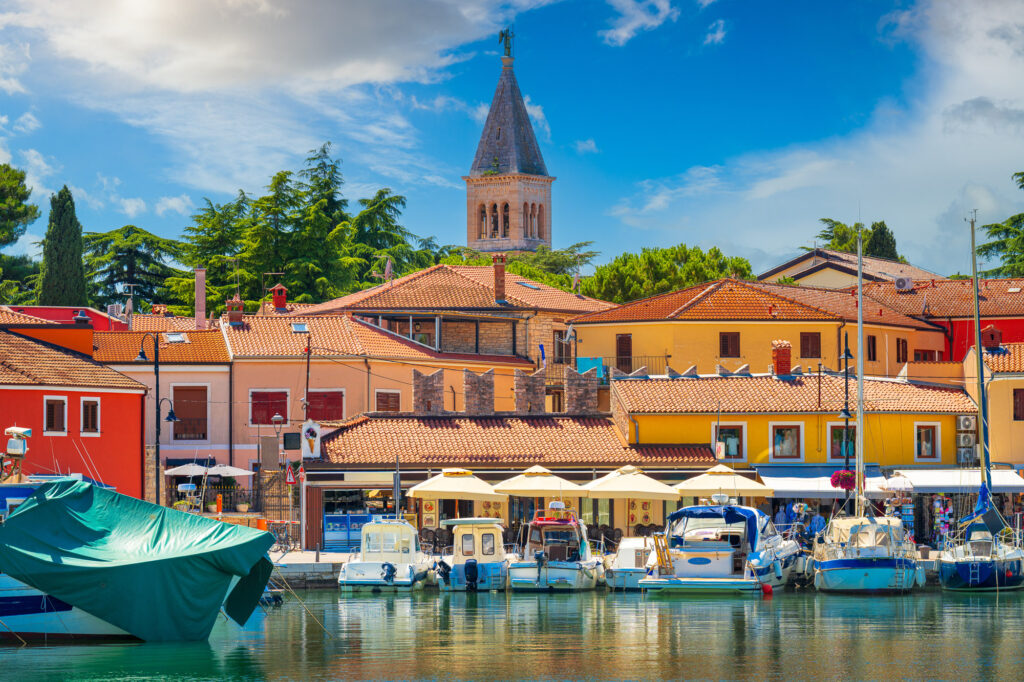
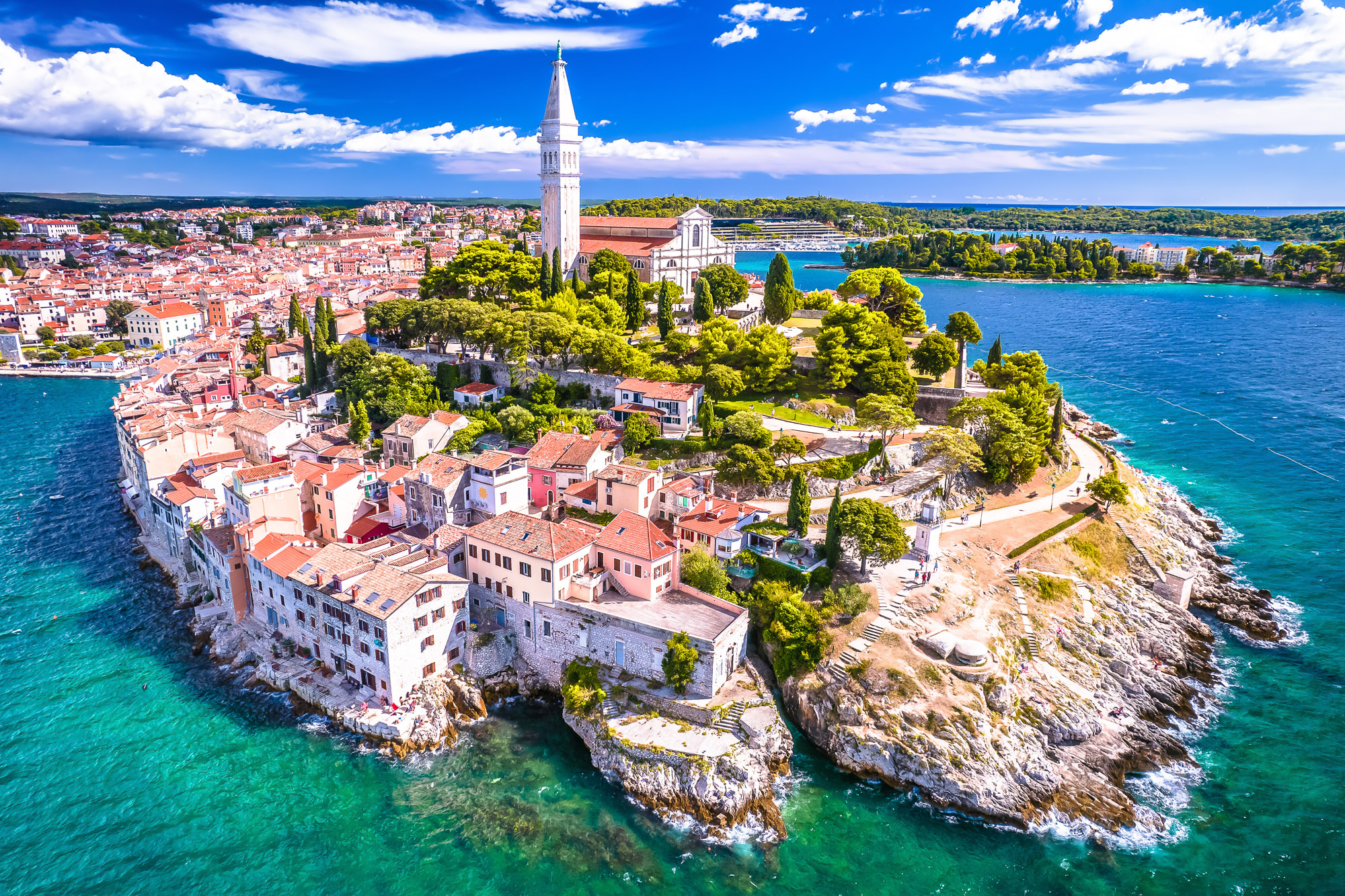
Rovinj is one of the most distinctive towns on the Istrian coast, with a historic centre built on a peninsula, a waterfront shaped by centuries of maritime life, and a green coastline that begins almost immediately beyond the old town. It works well for a short visit, but it is also a useful base for exploring western Istria.
This guide explains what to see, how the town is laid out, where to go for beaches and nature, how much time to allow, and what to know before arriving by car.
Why visit Rovinj?
Rovinj is best understood as a combination of old town, waterfront and nature rather than as a list of individual sights. The historic centre rewards walking, while the area south of town gives you pine forest, coves, cycling and swimming. That makes Rovinj suitable for travelers who want culture and scenery without having to spend every day driving between attractions.
The town is also well placed for day trips around Istria. Motovun offers a very different inland experience, while Grožnjan is another hill town with a strong cultural identity. For Roman history, Pula is the obvious larger-city counterpart.
Rovinj Old Town
The old town occupies a peninsula and is largely pedestrian-oriented. Narrow streets rise towards the Church of St. Euphemia, opening onto small squares, viewpoints, galleries, cafés and passages between historic houses.
Rather than rushing from landmark to landmark, allow time to explore the streets on foot. The waterfront around the old town is especially useful for understanding Rovinj’s relationship with the sea, while the higher streets provide changing views over the harbour and nearby islands.
Balbi’s Arch
Balbi’s Arch is one of the recognizable entrances into the historic centre. It marks the transition from the modern town into the older street network and is a natural starting point for a walking route.
Grisia Street
Grisia is one of the old town’s best-known streets and is closely associated with art, galleries and the town’s creative atmosphere. It is worth walking slowly rather than treating it simply as a route to the church.
Church of St. Euphemia
The Church of St. Euphemia dominates the old town skyline. Its bell tower is one of Rovinj’s defining visual landmarks and the church is closely connected with the city’s history and identity.
If you want a panoramic view, check current access conditions and opening arrangements before climbing the tower, particularly outside the main season.
Golden Cape and Rovinj’s green coast
South of the old town, Zlatni Rt (Golden Cape) Forest Park provides a completely different side of Rovinj. The area combines mature trees, walking and cycling paths, rocky shoreline and small swimming coves.
Uvala Lone is one of the most accessible beach areas in the park. The bay combines pebble and rocky sections with natural shade and services during the main season. It is a practical choice for travelers who want to combine a beach stop with a walk through the park.
Zlatni Rt itself is better thought of as a coastal landscape than a single beach. Paths lead through the forest to different sections of the shoreline, making the area useful for walking as well as swimming.
Best things to do in Rovinj
- Walk through the historic old town and explore its small streets and squares.
- Visit the Church of St. Euphemia and consider the bell tower when it is open.
- Walk the waterfront and harbour around the old town.
- Spend part of a day in Zlatni Rt Forest Park.
- Swim at one of the coves around Golden Cape or Lone Bay.
- Explore Rovinj by bicycle if you want to cover more of the coast.
- Use Rovinj as a base for inland Istrian destinations and coastal day trips.
How long do you need in Rovinj?
A first visit can be done in one day if your priority is the old town. A practical day could include the historic centre in the morning, lunch near the waterfront, and several hours around Zlatni Rt in the afternoon.
Two or three nights make more sense if you want to slow down, spend time at the coast and use Rovinj as a base for other parts of Istria. This is particularly useful if you are traveling by car and want to combine Rovinj with destinations such as Pula, Motovun or Grožnjan.
When is the best time to visit Rovinj?
Late spring and early autumn are strong choices if you want a balance between comfortable sightseeing and time outdoors. Summer is the busiest period and is the best fit for travelers prioritizing swimming, long evenings and the full coastal atmosphere, but you should expect more people and greater pressure on parking.
For a quieter experience, early morning is valuable in any season. The old town feels very different before the main daytime visitor flow arrives.
Getting to Rovinj
Rovinj is on the western Istrian coast and is most commonly reached by road. The nearest major airport is Pula Airport, while travelers arriving from other parts of Croatia or northern Italy can also approach by road through the Istrian network.
If you are building a wider Istria itinerary, Rovinj works particularly well as a coastal base. Combine it with inland hill towns rather than trying to cover every destination in a single day.
Parking in Rovinj
The historic old town is pedestrian-oriented, so visitors arriving by car should expect to park outside the old town and continue on foot. Current city parking is divided into several zones and closed car parks, with prices varying by location and season.
Current 2026 information shows that the closest parking areas, including Velika Valdibora and Mala Valdibora, can fill quickly during the busiest months. Arriving earlier in the day is a better strategy than driving around looking for a space.
Parking tariffs can change, so check the current tariff at the car park or with the municipal operator before leaving your vehicle. Mobile payment options are also available in Rovinj.
Is Rovinj good for families?
Yes, especially if your family enjoys a mixture of easy sightseeing and outdoor time. The old town contains slopes, steps and uneven stone streets, so it is not uniformly easy with a stroller. The coastal areas around Golden Cape offer more space and natural surroundings for families who need a break from the historic centre.
Is Rovinj good for couples?
Rovinj is particularly well suited to couples who prefer walking, waterfront restaurants, small streets and scenic evenings over a highly scheduled sightseeing itinerary. The combination of the old town and the wooded coastline makes it easy to alternate between culture and outdoor time.
What to eat in Rovinj
Rovinj is a good place to explore Istrian and Adriatic food. Look for local seafood, seasonal vegetables, olive oil, pasta dishes and regional wines. Menus vary considerably by restaurant, so it is worth choosing based on the current menu and season rather than relying only on a fixed list of dishes.
For a broader regional food itinerary, use Rovinj as one stop within an Istria trip rather than treating the town as an isolated culinary destination.
Rovinj as a base for exploring Istria
Rovinj is one of the strongest bases for combining a coastal stay with day trips. Pula is practical for Roman heritage and southern Istria. Motovun and Grožnjan introduce the hill-town landscape of inland Istria. Other coastal towns can be added depending on how much driving you want to do.
Best strategy: stay in Rovinj if you want a coastal atmosphere in the evenings, then use selected days for inland or southern Istria rather than changing accommodation every night.
Rovinj travel tips
- Wear comfortable shoes for the old town’s stone streets and slopes.
- If arriving by car in summer, plan parking before entering the centre.
- Visit the old town early if you want quieter streets.
- Allow time for Zlatni Rt rather than treating it as a quick photo stop.
- Do not try to drive into the pedestrian historic centre.
- Check current opening times and access rules for paid attractions before visiting.
- If you have several days, combine Rovinj with at least one inland Istrian destination.
Is Rovinj worth visiting?
Rovinj is worth visiting if you want an Istrian destination where historic streets, a working waterfront and accessible coastal nature are all within a relatively compact area. Its main strength is the combination: you can spend the morning exploring the old town, the afternoon walking or swimming around Golden Cape, and another day using the town as a base for the wider region.
That flexibility makes Rovinj more than a quick photo stop. It is a destination that can fit a short Istrian visit as well as a longer Croatia itinerary.
Explore more of Istria
Planning more than one stop? These guides cover towns that combine well with Rovinj:
Plan your trip
Planning a trip to Rovinj?
Discover beaches, things to do, parking, food and practical travel information.