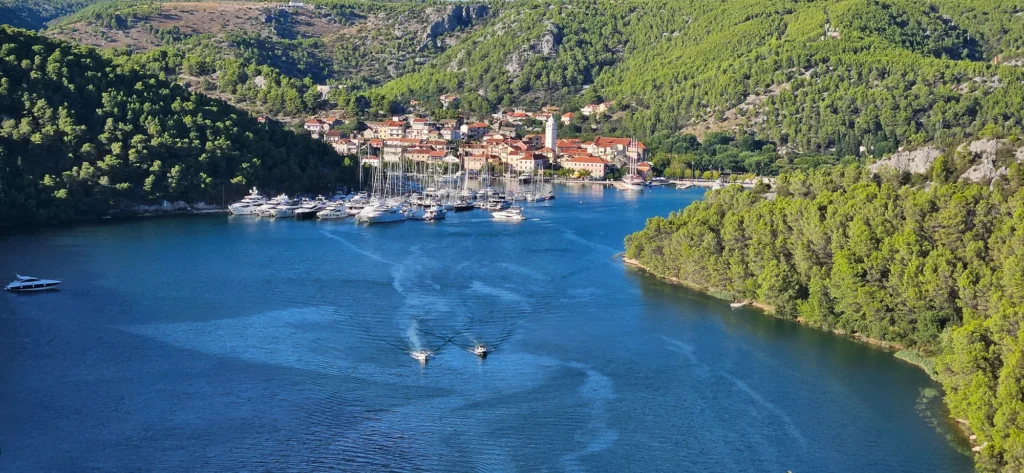
Šibenik is one of the most rewarding historic cities on Croatia’s central Adriatic coast. Built around a natural harbour between Zadar and Split, it combines a steep stone old town, major fortresses, a UNESCO-listed cathedral, nearby beaches, island connections and easy access to some of northern Dalmatia‘s best-known natural attractions.
Unlike several better-known Croatian coastal cities, Šibenik developed as a Croatian-founded medieval settlement rather than around a surviving Roman urban core. That gives the old town its own character: narrow lanes climb from the waterfront toward hilltop fortifications, while Renaissance and Gothic buildings cluster around small stone squares.
This guide covers the best things to do in Šibenik, where to swim, how long to stay, where to base yourself, how to get around and how to combine the city with islands, Krka National Park and the wider Šibenik region.
Why Visit Šibenik?
Šibenik works especially well for travellers who want history and culture without giving up beaches and day trips. The city is compact enough to explore on foot, yet it has enough depth for more than a quick stop.
Its strongest reasons to visit are:
- the UNESCO-listed Cathedral of St James
- a remarkable system of historic fortresses
- a walkable medieval old town
- easy access to the Šibenik archipelago
- nearby beaches and coastal settlements
- proximity to Krka National Park
- a useful location between Zadar and Split
Šibenik is also a good choice for travellers who prefer a smaller city base than Split but still want restaurants, waterfront evenings and straightforward day-trip options.
Šibenik Old Town
The historic centre rises from the waterfront through a maze of narrow stone streets, stairways, arches and small squares. It is a city best explored slowly rather than by following a rigid route.
The terrain is part of the experience. Streets become steeper as you move uphill toward St Michael’s Fortress, and comfortable shoes are more useful than beach sandals for sightseeing.
Start around the cathedral and Republic of Croatia Square, then wander through the surrounding lanes before climbing higher into the old town. Small churches, stone façades, courtyards and viewpoints appear throughout the centre.
Cathedral of St James
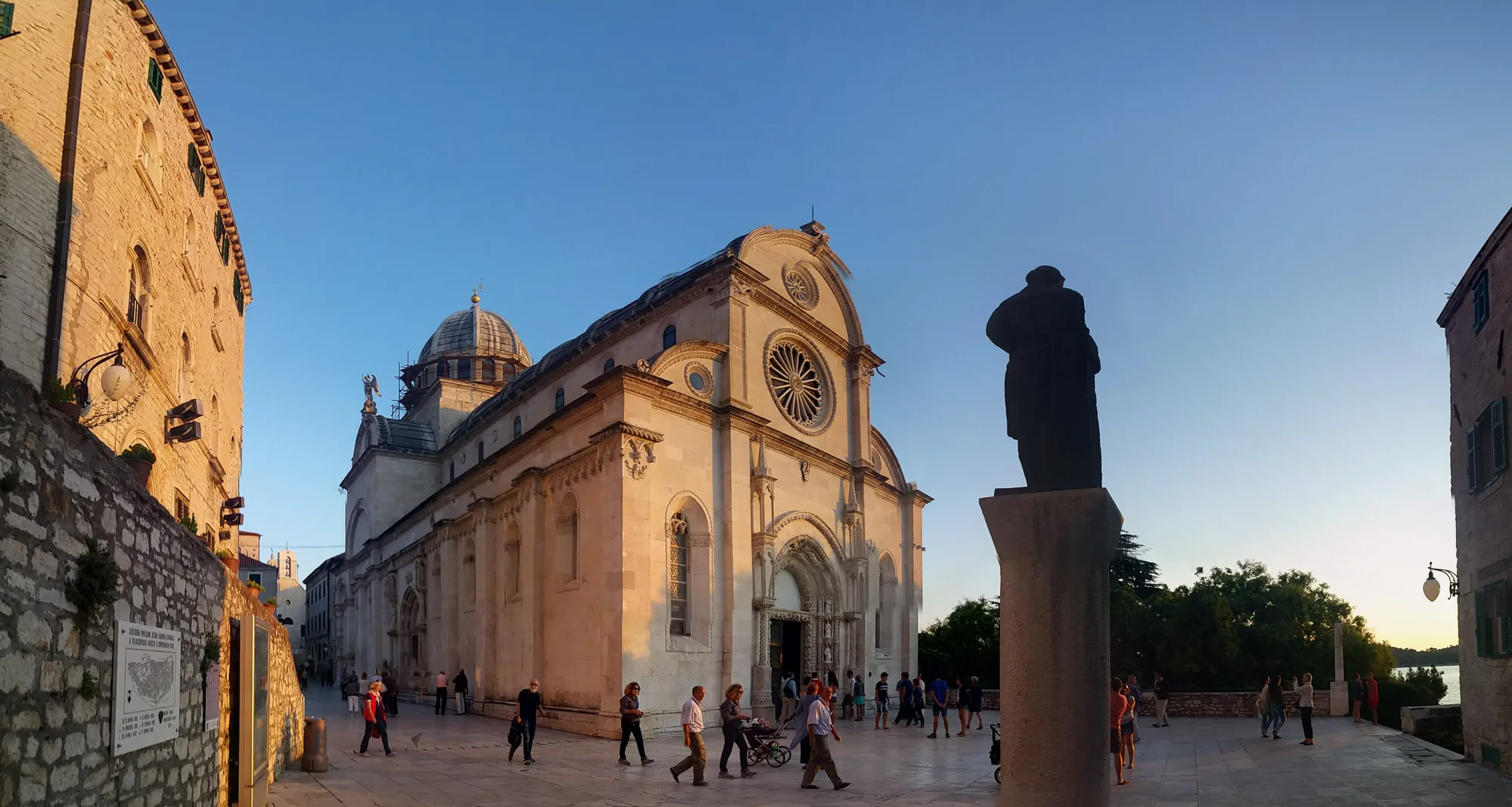
The Cathedral of St James is Šibenik’s most important landmark and one of Croatia’s outstanding works of architecture. Construction took place mainly during the 15th and 16th centuries, and the building combines Gothic and Renaissance elements.
UNESCO highlights its unusual all-stone construction and the way its architects developed distinctive techniques for the vaulting and dome. One of the most recognisable exterior details is the frieze of 71 sculpted human heads around the apses.
The cathedral has been on the UNESCO World Heritage List since 2000. Even if you normally spend little time visiting churches, this is the building in Šibenik that should not be skipped.
Šibenik’s Fortresses
Šibenik’s fortifications are among the best reasons to stay overnight rather than treat the city as a short transit stop.
St Michael’s Fortress
St Michael’s Fortress stands above the historic centre and offers broad views over the city, harbour and islands. It is the oldest of the city’s major hilltop fortifications and today also functions as a cultural and concert venue.
The uphill walk is steep in places, but the viewpoint helps explain Šibenik’s strategic position at the end of a protected channel leading toward the open Adriatic.
Barone Fortress
Barone Fortress sits higher above the city and forms part of Šibenik’s 17th-century defensive system. It is another strong viewpoint and is especially useful for understanding the relationship between the historic centre, surrounding hills and sea.
St John’s Fortress
St John’s Fortress occupies another strategic hill above Šibenik. After extensive restoration, it is part of the city’s managed fortress network together with St Michael’s and Barone.
Travellers interested in military history can easily spend much of a day moving between the old town and the three landward fortresses.
St Nicholas Fortress
St Nicholas Fortress guards the entrance to the St Anthony Channel outside the old town. It forms part of UNESCO’s serial World Heritage property covering Venetian defensive works in Croatia, Italy and Montenegro.
Because visitor access arrangements can change, check current official information before planning a visit. Even when you do not enter the fortress itself, the surrounding channel and coastal landscape are worth seeing.
St Anthony Channel
The St Anthony Channel connects Šibenik’s harbour with the open sea and provides one of the city’s best outdoor excursions. Walking and cycling routes follow parts of the channel, with views toward St Nicholas Fortress and the islands beyond.
This area is especially appealing if you want a break from old-town sightseeing without committing to a full-day excursion.
Banj Beach
Banj is Šibenik’s most convenient city beach. It lies within walking distance of the historic centre and is best known for its views back toward the old town skyline.
It is a practical choice for travellers staying centrally who want to combine sightseeing and swimming without driving. In summer, the beach can become busy, so early morning or late afternoon is often the most pleasant time.
Jadrija
Jadrija is a long-established seaside area west of Šibenik, known for its relaxed local atmosphere, pine shade and distinctive traditional beach cabins. The official Šibenik tourism material describes it as a favourite bathing place for residents and visitors since 1921.
It can be reached by road, and seasonal boat connections may also operate from Šibenik. Confirm current schedules if you plan to travel by sea.
Other Beaches Around Šibenik
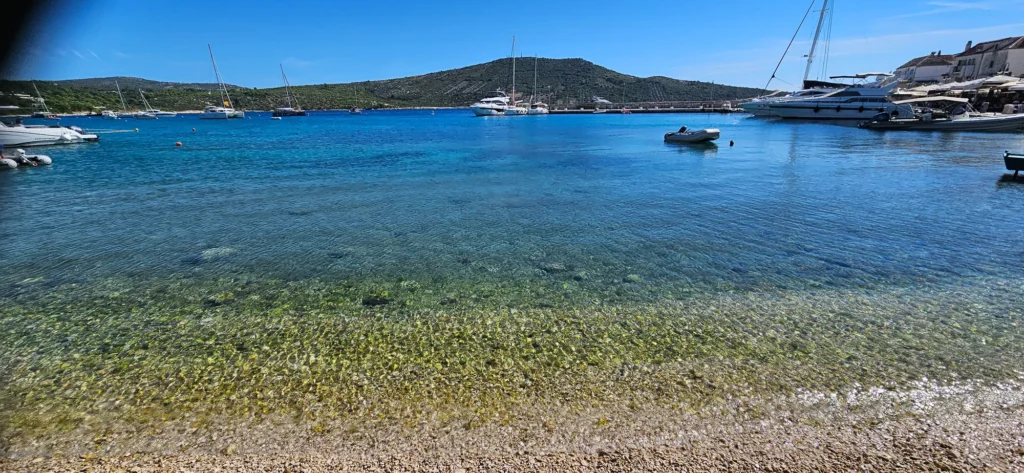
The wider Šibenik coast has many swimming options, including beaches around Brodarica, Žaborić and the resort areas south of the city. Travellers with a car have the most flexibility, but central Šibenik still works without one if you are happy using Banj Beach and organised excursions.
As elsewhere on the Croatian Adriatic, many beaches are pebble or rocky rather than sandy. Water shoes can be useful, especially for children.
Šibenik Archipelago
One of Šibenik’s biggest advantages is direct access to a chain of islands and small island settlements.
Zlarin
Zlarin is one of the easiest island trips from Šibenik. The island is associated with a long coral tradition and has a quiet village atmosphere, walking routes and swimming spots.
Prvić
Prvić is another attractive small island with traditional settlements and no need for a car. It suits travellers looking for a slow day of walking, swimming and village exploration.
Kaprije and Žirje
Farther into the archipelago, Kaprije and Žirje feel more removed from the mainland. They work better for travellers who have enough time to plan around ferry schedules rather than squeezing an island into a short city break.
Jadrolinija currently operates the Šibenik–Zlarin–Obonjan–Kaprije–Žirje line, but timetables and seasonal frequencies should always be checked for your exact travel date.
Krka National Park from Šibenik
Krka National Park is one of the most popular day trips from Šibenik. The park protects the Krka River and its waterfalls, canyons and cultural landscapes.
Šibenik is close enough to make the park a straightforward excursion, but do not assume that every entrance or boat route operates in the same way throughout the year. Use the national park’s official information when choosing an entrance and planning transport.
Skradin, a small town near one of the principal park approaches, can also be combined with a Krka visit.
Kornati National Park
The Kornati archipelago is another major nature experience accessible from the wider Šibenik region. The landscape is very different from a typical beach day: low, rocky islands and clear channels create one of the Adriatic’s most recognisable seascapes.
Most visitors experience Kornati on organised boat excursions. Before booking, check the itinerary carefully because departure points, included meals, park admission and swimming stops vary by operator.
Best Day Trips from Šibenik
Šibenik can support several days of regional exploration. Strong options include:
- Krka National Park: waterfalls, river landscapes and walking routes.
- Skradin: a small historic town on the Krka River.
- Primošten: a picturesque coastal town south of Šibenik.
- Zlarin: an easy island escape with a traditional village atmosphere.
- Prvić: a quiet island day without the need for a car.
- Kornati: a full-day marine excursion for travellers interested in islands and boating.
- Murter: a useful base for exploring the coast and accessing the Kornati area.
How Many Days Do You Need in Šibenik?
One full day is enough for the cathedral, old town and one or two fortresses, but two or three nights provide a much better experience.
- 1 day: old town, cathedral, St Michael’s Fortress and waterfront.
- 2 days: add more fortresses, Banj Beach or St Anthony Channel.
- 3 days: add Krka National Park or an island excursion.
- 4–5 days: use Šibenik as a base for beaches, islands and coastal day trips.
Where to Stay in Šibenik
Old Town
Stay in or beside the old town if your priority is atmosphere, restaurants and sightseeing on foot. The main drawback is access: historic streets can involve stairs, and parking is limited.
Waterfront and Central Šibenik
Areas close to the waterfront are practical for travellers who want easier access while remaining within walking distance of the historic centre.
Near Banj Beach
This area works well if swimming is important but you still want to walk into the centre.
South of Šibenik
Resort and coastal areas south of the city can be better for families and travellers prioritising pools, beaches and parking. They are less convenient for spontaneous evening walks through the old town unless you have transport.
Šibenik with Kids
Šibenik can work very well for families if the itinerary avoids too much midday climbing in summer. Fortresses, boat trips and beaches provide variety, while the historic centre is compact enough for shorter sightseeing sessions.
Families should be aware that the old town contains many steps and uneven stone surfaces. A lightweight stroller may be manageable in flatter areas, but it is not ideal for every route through the historic centre.
Šibenik for Couples
For couples, Šibenik offers a useful balance of historic atmosphere and relaxed evenings. Sunset viewpoints, waterfront dining, island day trips and small boutique-style accommodation make it a strong alternative to busier Dalmatian bases.
Staying at least two nights gives time to enjoy the city after day visitors leave.
Šibenik Without a Car
A car is not necessary for the central city. The old town, cathedral, waterfront, Banj Beach and main hilltop fortresses can all be reached on foot, although the climbs can be steep.
Island ferries and organised excursions expand the range of day trips. Buses connect Šibenik with major Croatian cities and other Dalmatian destinations.
A car becomes more useful if you want to explore smaller coastal villages, rural areas or several different beaches in one trip.
Getting to Šibenik
From Split
Šibenik is north of Split and can be reached by road or intercity bus. Travellers arriving by air often use Split Airport and continue by road transfer or bus connections.
From Zadar
Zadar lies to the northwest and is another practical gateway, especially for travellers combining northern Dalmatia destinations.
By Car
Šibenik is close to Croatia’s A1 motorway, making it convenient for a road trip. If your accommodation is in the historic centre, check parking arrangements before arrival because you will normally need to leave the car outside the pedestrian core.
By Bus
Intercity buses connect Šibenik with major Dalmatian cities and other Croatian destinations. Check current timetables for your date rather than relying on a fixed year-round frequency.
Best Time to Visit Šibenik
Šibenik is visitable year-round, but the experience changes significantly by season.
April and May
Spring is excellent for old-town sightseeing, fortress walks and regional road trips. Sea temperatures may still feel cool for long swims, but the city is easier to explore than in peak summer heat.
June
June is one of the best all-round months for combining sightseeing, beaches and island trips, with long daylight hours and a strong summer atmosphere.
July and August
These are the hottest and busiest months. The full coastal season is operating, but plan demanding sightseeing for mornings or late afternoons and expect more pressure on parking and accommodation.
September
September is particularly attractive for combining warm-sea swimming with cultural sightseeing and day trips.
October to March
Šibenik becomes quieter outside the main coastal season. The old town and major cultural sights still make the city worthwhile, but island services, excursions and some seasonal businesses operate less frequently.
Food in Šibenik
Šibenik sits firmly within the Dalmatian culinary tradition. Look for grilled fish, shellfish, octopus, black risotto, seasonal vegetables, olive oil and local wines, while inland dishes add a different dimension to the regional food scene.
Do not limit yourself to the most prominent waterfront restaurants. Exploring streets just beyond the main squares often reveals a broader range of konobas, wine bars and casual dining.
Practical Tips for Visiting Šibenik
- Wear comfortable shoes for steep stone streets and fortress climbs.
- Plan the cathedral and old town early in the day during peak summer.
- Check fortress opening hours before visiting because cultural events can affect access.
- Confirm ferry schedules before planning island day trips.
- Check parking before driving into central Šibenik.
- Carry water when walking uphill to the fortresses in summer.
- Allow at least one evening in the city rather than visiting only as a daytime excursion.
Is Šibenik Worth Visiting?
Yes. Šibenik is one of Croatia’s strongest smaller-city destinations because it combines major heritage sites with a lived-in old town, fortresses, beaches and easy access to islands and national parks.
It is especially worth considering if you want a Dalmatian base that feels more compact than Split and more urban than a small resort town. A two- or three-night stay gives enough time to experience the city itself while still leaving room for Krka, an island trip or the surrounding coast.
Frequently Asked Questions
What is Šibenik famous for?
Šibenik is best known for the UNESCO-listed Cathedral of St James, its historic fortresses and its position near Krka National Park and the Šibenik archipelago.
Does Šibenik have beaches?
Yes. Banj is the most convenient city beach, while Jadrija and several coastal areas around Šibenik provide additional swimming options.
Can you visit Šibenik without a car?
Yes. The historic centre and main city sights are walkable, while buses, ferries and organised excursions can cover many regional trips. A car mainly adds flexibility for smaller coastal and inland destinations.
Is Šibenik better than Zadar or Split?
It depends on the trip. Split offers the largest urban hub and island connections, Zadar is excellent for northern Dalmatia and its own waterfront landmarks, while Šibenik is particularly strong for fortresses, medieval atmosphere, Krka access and a compact city experience.
How far is Šibenik from Krka National Park?
Krka is close enough for an easy day trip from Šibenik, but the exact travel time depends on which park entrance you use and your mode of transport.
Plan Šibenik as More Than a Stopover
Šibenik deserves more than a quick cathedral visit between Zadar and Split. Stay long enough to climb the fortresses, walk the old town in the evening, swim locally and choose one regional excursion. That combination shows why Šibenik is not simply a convenient base, but one of northern Dalmatia’s most complete destinations.
Plan your trip
Planning a trip to Šibenik?
Discover beaches, things to do, parking, food and practical travel information.