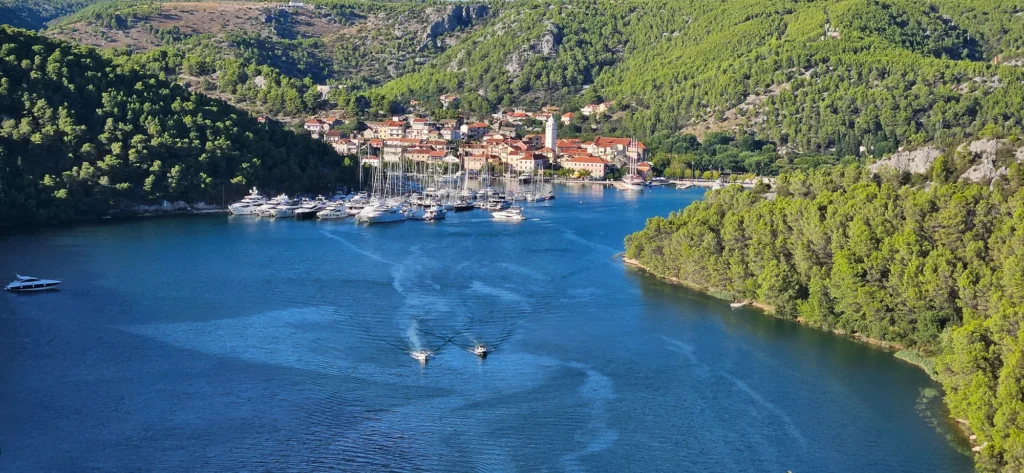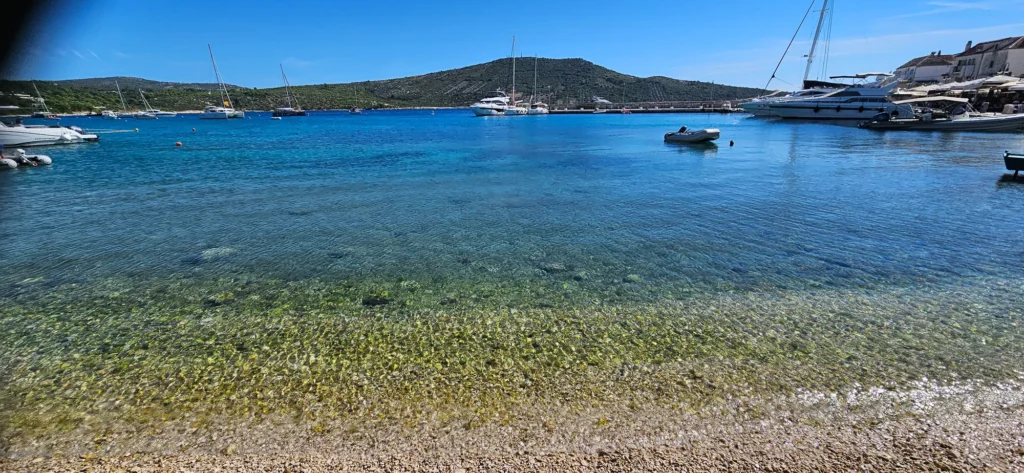

Nin is a small historic town on the shallow lagoon north of Zadar, known for sandy beaches, medieval churches, traditional salt production and unusually calm coastal scenery. It makes an easy cultural-and-beach day trip, but it is also a practical base for families who prefer shallow water and a quieter setting than a large city. The best Nin itinerary combines a short old-town walk with either the saltworks or time at the lagoon beaches, rather than treating the town as a quick photo stop.
Where is Nin in Croatia?
Nin lies on the Northern Dalmatian coast in the Zadar region, close to Zaton, Privlaka and the island of Vir. Its historic centre sits on a small island connected to the surrounding settlement by bridges. The surrounding landscape is strikingly open: sandy shallows, salt fields and views towards Velebit create a different atmosphere from the rocky island coast farther south.
For most visitors, a half-day to full day is sufficient to enjoy Nin’s core sights and a beach. Stay longer if your holiday is about family swimming, coastal walks and exploring the surrounding Riviera at a relaxed pace.
Best things to do in Nin
Walk around Nin Old Town
The compact historic centre is the natural place to begin. Cross into the old town, explore its streets and small squares, and look for the traces of Nin’s Roman and early Croatian past. The town’s modest scale is part of its appeal: you can see several important landmarks without moving between distant attractions by car.
Rather than racing from building to building, allow time for the setting—bridges, water, stone houses and views across the lagoon. Early morning and the hours around sunset are particularly pleasant for a walk outside the busiest summer period.
Visit the Church of the Holy Cross
The pre-Romanesque Church of the Holy Cross is Nin’s most recognizable historic building. It is often nicknamed “the smallest cathedral in the world,” although that phrase is a popular description rather than a useful technical definition. Its scale and simple geometry make it distinctive among Croatia’s early medieval monuments.
Check any current interior visiting arrangements locally. Even when access inside is limited, the exterior is worth seeing as part of the old-town walk.
See the Roman remains and early Croatian heritage
Nin’s heritage extends back far beyond the medieval period. Remains associated with the Roman settlement and smaller historic churches help explain why this place played an important role in the region. Visitors interested in archaeology should allow more time for interpretation rather than assuming the old town consists only of picturesque lanes.
The statue of Gregory of Nin (Grgur Ninski) is another recognizable landmark. He is closely associated in Croatian public memory with the country’s early ecclesiastical and linguistic history.
Explore the Nin Saltworks and Salt Museum
Salt production is one of the most distinctive experiences in Nin. The Solana Nin saltworks uses sun, wind and seawater in a traditional production landscape. Its Salt Museum, also known as the House of Salt, introduces the history of the craft through tools, photographs and exhibits. Summer is the season when visitors have the best chance of seeing the evaporation and crystallization processes in action.
The producer also offers an educational salt-field tour, with a guided walk among the pools. According to the saltworks, that tour is roughly 45 minutes, but operating days, departure times, admission prices and tour language can change. Check the official educational tour page before visiting; do not enter working salt fields independently.
For a short or less exposed visit, the official Salt Museum information is a useful alternative to the outdoor route. The salt fields can be very hot and open to the sun in summer.
Best beaches in Nin
Queen’s Beach (Kraljičina plaža)
Queen’s Beach is the main reason many families choose Nin. The broad sandy setting and shallow lagoon water make it different from the pebbly beaches found in much of coastal Croatia. You may need to wade a fair distance for deeper swimming, and the experience varies with wind, water level and the condition of the sand.
Bring sun protection: open beach and lagoon areas can feel very exposed. Do not assume every stretch has year-round lifeguards, umbrellas or food outlets; services are often seasonal.
Ždrijac Beach
Ždrijac is another sandy lagoon beach near Nin, with an open setting that can attract visitors interested in wind-driven water sports. Wind is part of the area’s character, so conditions suitable for one activity may be less comfortable for another. Families should assess the actual water and wind on arrival rather than relying on a generic label such as “child-friendly.”
Bilotinjak and other Riviera beaches
Bilotinjak and beaches around Zaton, Privlaka and the Nin Riviera offer further choices. They differ in access, shade, facilities and the amount of shallow water. If a beach is your main holiday priority, compare the exact section where you plan to stay—not simply the nearest point on a map.
The official Zadar-region tourist board guide gives a useful overview of Nin’s lagoon beaches, heritage and salt traditions.
What about Nin’s famous lagoon mud?
Nin is associated with natural lagoon mud, often described in local tradition as peloid or therapeutic mud. This is part of the town’s tourism identity, but it should not be treated as a medically proven substitute for treatment. Water quality, skin sensitivity and local access conditions vary. Follow posted advice, avoid use on irritated or broken skin and consult a healthcare professional for medical concerns rather than relying on travel publicity.
Where to stay in Nin and the surrounding Riviera
Near the old town: convenient for evening walks, small restaurants and a quieter historic atmosphere. It suits visitors who prioritize local character over stepping directly onto a resort beach.
Near Queen’s Beach and Ždrijac: practical if most days revolve around sand and shallow-water swimming. Check the walking route and facilities carefully because “Nin beach” can refer to quite different parts of the lagoon.
Zaton and nearby family accommodation: a good alternative for travelers who want a resort-style base or a broader choice of amenities while retaining easy access to Nin.
Zadar: best for visitors who want a larger city, more transport options and a Nin day trip rather than a beach-focused stay in the lagoon.
How to get to Nin from Zadar
By car: Nin is close enough to Zadar for an easy excursion. In summer, however, the last stretch into the historic centre and popular beach areas can be slower than expected. Use designated parking; the old-town streets are not a place to search for unrestricted parking.
By bus: local and regional services may connect Zadar with Nin or nearby Riviera settlements, but departure times and seasonal coverage should be checked before travel. Confirm your exact stop, especially if your destination is a beach or accommodation outside the historic centre.
From Zadar Airport: Nin is reached by road from the airport area. If you are not hiring a car, compare the actual connections and transfer arrangement for your arrival time rather than assuming there is a direct airport-to-Nin service.
Walking and cycling: central Nin is easy to explore on foot. Distances between the town, lagoon beaches and neighbouring places are larger than the compact old town suggests. In summer, carry water and plan around heat and limited shade.
One day in Nin: a relaxed itinerary
- Morning: stroll across the bridge into the old town. Visit the Church of the Holy Cross and the nearby heritage landmarks.
- Late morning: choose either the Salt Museum or a pre-checked educational salt-field tour. Wear a hat and bring drinking water for the outdoor experience.
- Lunch: take a break in or around the old town. Look for simple Dalmatian dishes, seafood or local specialties rather than assuming every restaurant serves the same menu year-round.
- Afternoon: spend time at Queen’s Beach or Ždrijac. Assess wind and shallows before swimming, particularly with small children.
- Evening: return for a lagoon-side walk and sunset views, or continue to your accommodation in Zadar or the Riviera.
Visiting Nin with children
Nin’s biggest family advantages are the short old-town walking distances and the presence of sandy, shallow beaches. A beach day still requires normal coastal precautions: supervise children in the water, take shade seriously and look for current lifeguard information. The saltworks may be especially interesting for school-age children who enjoy learning where food comes from, but the outdoor tour can be hot and exposed.
With a stroller, the compact centre is easier than a long rocky-hill excursion, although historic paving and individual thresholds can still be awkward. When booking accommodation, confirm the actual route to your preferred beach and whether you need to cross traffic or open sunny areas.
Best time to visit Nin
Late spring and early autumn often give pleasant conditions for old-town walking and exploring local heritage. Summer is best for a classic sandy-beach holiday and for seeing the salt-production landscape, but it brings stronger sun, more crowded beach access and more variable availability of popular tours. Outside summer, Nin is more peaceful; some beach facilities, guided experiences and restaurants may run reduced schedules.
For a cultural day trip, choose comfortable walking weather. For a swimming holiday, check the forecast for wind and the beach conditions you prefer, not just the air temperature.
Frequently asked questions about Nin
Is Nin worth visiting from Zadar?
Yes. It offers a rare combination of early Croatian heritage, salt-production history and sandy lagoon scenery within an easy day-trip area.
How many hours do you need in Nin?
Two or three hours can cover a leisurely old-town walk, but allow half a day for the salt museum and a full day if you also want to relax on the beach.
Does Nin have sandy beaches?
Yes. Queen’s Beach and Ždrijac are among the best-known sandy lagoon areas, although facilities, depth and wind exposure vary by location and season.
Can you visit the Nin saltworks?
There is a Salt Museum and an organized educational tour. Check the operator’s official website for available dates, tour languages and current prices.
Is Nin better for families or nightlife?
Nin is especially attractive for family beach holidays, low-key stays and cultural excursions. Visitors seeking a much larger nightlife scene may prefer a base in Zadar.
Nin works best when you appreciate its small scale: one historic town, a living salt landscape and an unusually sandy stretch of the Dalmatian coast. Give each part enough time and the visit becomes more memorable than a rushed stop between Zadar and the beach.
Plan your trip
Planning a trip to Dalmatia?
Discover beaches, things to do, parking, food and practical travel information.