Split is both one of Croatia’s most important historic cities and one of its most useful travel hubs. The centre grew through and around Diocletian’s Palace, ferries leave for several major islands, beaches are close to the urban core, and Marjan Forest Park gives the city a green escape within walking distance of the waterfront.
That combination makes Split more than a place to pass through on the way to Hvar or Brač. It deserves at least two full days, and longer if you want beach time, neighbourhood walks or island day trips without rushing.
Why visit Split?
Split works especially well for travellers who want history without giving up the sea. In the same day you can walk through Roman-era palace streets, have coffee on the Riva, climb into Marjan, swim from a city beach and finish with dinner in a stone lane.
It is also a strong base for a wider Central Dalmatia trip because road, bus, ferry and airport connections all converge around the city.
How many days do you need in Split?
Two days is enough for the historic centre, the Riva, Marjan and one beach. Three days gives the city a much better pace and leaves room for museums, neighbourhoods or a longer swim. Four or five days works if Split is your base for a day trip or a nearby island excursion.
If you are deciding how Split fits into a longer route, compare the national How Many Days in Croatia? and Croatia Itineraries guides.
Top things to do in Split
Explore Diocletian’s Palace
Diocletian’s Palace is not a sealed archaeological site. It is the living core of central Split, threaded with homes, shops, churches, restaurants and narrow streets. The best way to understand it is to walk slowly and notice how Roman, medieval and later layers sit on top of one another.
Key areas include the Peristyle, the palace basements, the cathedral complex, the Golden Gate and the maze of lanes between the main gates. Visit Split describes the palace as one of the world’s best-preserved monuments of Roman building heritage.
Spend time on the Riva
The Riva is Split’s main waterfront promenade and one of the easiest places to understand the city’s everyday rhythm. It is less an attraction to complete than a place to stop: morning coffee, an evening walk and people-watching are part of the Split experience.
Climb or walk through Marjan
Marjan Forest Park rises immediately west of the centre and gives Split a rare mix of city and nature. Walking routes pass viewpoints, pine forest, small churches and access points toward beaches on the peninsula.
You do not need to turn Marjan into a major hike. A short walk to a viewpoint is enough for many visitors, while active travellers can continue deeper into the forest park. The official Split tourism board currently maintains visitor information for Marjan and its recreation routes.
See the Cathedral of Saint Domnius
The cathedral complex at the Peristyle is one of Split’s most striking examples of historical reuse, with the former imperial mausoleum becoming a Christian cathedral. The bell tower is one of the city’s best-known vertical landmarks.
Walk through Veli Varoš and Matejuška
To see Split beyond the palace core, continue west through Veli Varoš and down toward Matejuška. These areas retain a more residential, local-scale character and connect naturally with a walk toward Marjan.
Visit a museum
The City Museum of Split, archaeological collections, art galleries and maritime heritage can add depth when you have more than a single day. Museum locations and exhibitions can change, so check current opening information before building a day around a specific collection.
Best beaches in Split
Split’s beaches are not separate resort zones; several are part of the city itself. That makes it easy to combine sightseeing with a swim.
Bačvice
Bačvice is the best-known city beach, a sandy bay close to the ferry port and central Split. It is also associated with picigin, the local shallow-water ball game. The beach is convenient rather than secluded, so expect an urban atmosphere.
Firule
Firule is another small sandy and shallow bay east of the centre. The official Split tourism board highlights it as particularly suitable for families with young children because of its fine sand and sheltered setting.
Trstenik and Žnjan
Trstenik offers a longer pebble-beach feel, while the Žnjan area reopened in summer 2025 after a major redevelopment. The renewed zone includes sports areas, a playground, beach-access features, cycling space and other public facilities, making the eastern seafront much more than a simple swimming stop.
Kašjuni and the Marjan side
Kašjuni is one of the more scenic choices around Marjan. It is farther from the historic core than Bačvice, but the setting feels more removed from the city. In summer, transport and parking can be more important than the distance on a map.
Where to stay in Split
Old Town and palace area
Stay here if you want maximum atmosphere and the ability to walk out directly into the historic centre. The trade-offs are noise, stairs, luggage access and the lack of normal parking directly beside many properties.
Veli Varoš and west of the centre
This is one of the best areas for travellers who want character and walkability without being in the busiest palace lanes. It is also convenient for Marjan.
Bačvice
Bačvice works well if beach access and the ferry/bus area matter as much as the old town. The historic core is still walkable.
Žnjan and the eastern seafront
Choose Žnjan if you prefer newer accommodation, more open waterfront space and beach facilities over old-town atmosphere. Transport into the centre is more important here.
Getting to Split
By plane
Split Airport is near Kaštela, about 20 kilometres from Split and about 6 kilometres from Trogir according to the airport’s official transport information. A dedicated shuttle operates between the airport and Split during the day, and public buses also serve the airport area. Taxis are available outside the terminal.
Traffic between the airport and Split can be heavy in summer, so allow extra time for departures. Check the airport’s current transport information before travel at Split Airport.
By bus
Split is one of the main intercity bus hubs on the Croatian coast. The main bus station is next to the ferry port and close to the historic centre, which makes bus arrival unusually convenient if your accommodation is central.
By car
A car is useful for wider Central Dalmatia but unnecessary for most sightseeing inside Split. If you are staying in or beside the old town, confirm parking before booking accommodation rather than assuming you can drive to the door.
For a longer driving route, use the Croatia Road Trip guide.
Split ferry port and island connections
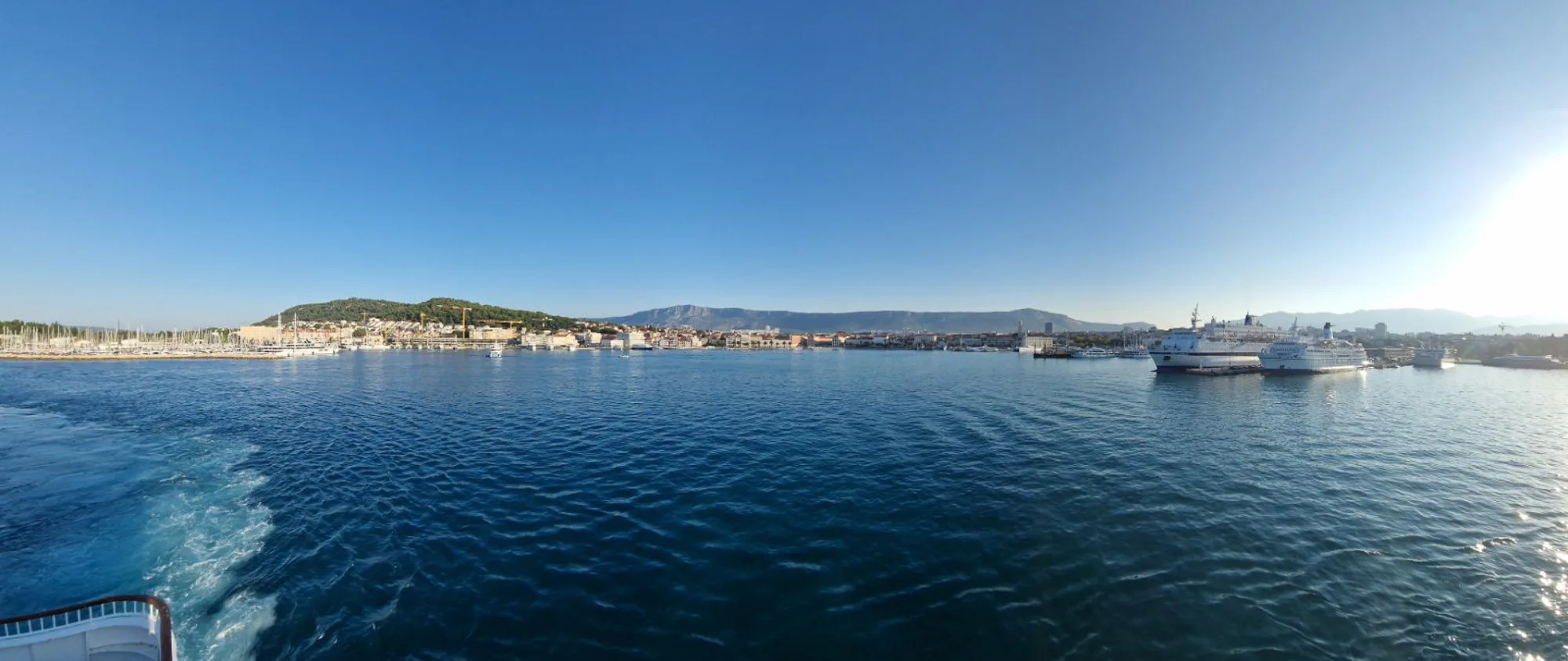
Split’s ferry port is one of the main reasons the city is so useful in a Croatia itinerary. Jadrolinija operates year-round and seasonal routes from Split, including services toward Brač, Šolta, Vis, Hvar connections and the Vela Luka-Lastovo route.
Current 2026 schedules show, for example, the Split-Supetar car ferry to Brač, Split-Rogač service to Šolta and Split-Vis ferry. Timetables are seasonal and can be adjusted, so do not build a tight flight connection around an old schedule. Check Jadrolinija for the sailing date you actually need.
Should you take a car to the islands?
Only if the island part of the trip benefits from it. A car is valuable for exploring larger islands independently, but it adds ferry logistics and can be unnecessary if you stay in a walkable town and use local excursions. Passenger catamarans and vehicle ferries are different services, so verify the vessel type before booking.
Getting around Split
Central Split is best explored on foot. The palace, Riva, Matejuška and much of Veli Varoš are compact. Local buses become more useful for eastern neighbourhoods, some beaches and locations farther from the historic core.
Taxis and app-based ride services can be convenient for luggage, late arrivals and beach transfers, but they do not solve old-town access: many central lanes are pedestrian-only.
Best time to visit Split
May, June, September and early October are particularly good for travellers who want to combine city sightseeing with coastal weather. July and August have the strongest summer atmosphere and widest seasonal transport network, but they are also the busiest and hottest months.
Winter is much quieter and works best for travellers interested in local life, food and history rather than a beach-focused trip. Use Croatia Weather by Month for broader seasonal planning.
Food to try in Split
Split is a good place to explore Dalmatian food rather than search for one signature dish. Look for grilled fish, octopus salad, black risotto, seafood stews, slow-cooked meat dishes, seasonal vegetables, local cheeses and simple konoba cooking.
The most atmospheric restaurant street is not automatically the best meal. Walk a few streets beyond the main visitor flow, compare menus and choose places that focus on a manageable range of dishes rather than trying to serve every Croatian speciality at once.
SplitCard and visitor information
Split’s tourist board currently offers the SplitCard to qualifying overnight visitors, with eligibility varying by season and length of stay. The card is designed to provide museum admissions and discounts and is issued through tourist information centres. Because conditions can change, confirm the current rules with the official tourist board when you arrive rather than relying on an old screenshot or blog post.
Best day trips from Split
Trogir
Trogir is one of the easiest historic-town day trips and is particularly logical if you are arriving through Split Airport, which lies between the Split and Trogir areas.
Omiš and the Cetina area
Omiš combines a compact old town, mountain scenery and access to the Cetina River. It works well for travellers who want an active day rather than another museum-heavy excursion.
Krka National Park
Krka can be reached on a day trip, although travellers with several bases may prefer to visit it while staying farther north. Always check current entrance arrangements and seasonal access before departure.
Brač or Šolta
A nearby island can work as a day trip, but ferry timing matters. Brač offers several different ports and destinations, while Šolta can feel less urban. If island life is a major priority, an overnight stay is usually more rewarding than a rushed return sailing.
Split without a car
Split is one of the easiest major Croatian destinations to visit without a car. The airport has shuttle and public transport options, the intercity bus station and ferry port sit beside the centre, and most principal sights are walkable.
A car becomes useful only when you want to explore inland or combine several smaller coastal stops. For many first-time visitors, renting a car after the Split stay rather than before it can avoid paying for parking while the vehicle sits unused.
Split with kids
Families can combine the old town with beaches, Marjan and short ferry trips. Bačvice and Firule are convenient for shallow-water swimming, while the renewed Žnjan zone adds playground and sports facilities. In summer, keep palace sightseeing short during the hottest part of the day and use the coast for breaks.
For the wider trip, see Croatia with Kids.
Split for couples
Split works well for couples who want energy rather than a quiet resort. Stay near Veli Varoš or the old town, walk Marjan late in the day, use the city for one good island connection and leave at least one evening unplanned for the Riva and old-town lanes.
For a wider romantic route, see Croatia for Couples.
A practical 2-day Split itinerary
Day 1: palace, Riva and Marjan
- Start early inside Diocletian’s Palace.
- See the Peristyle, palace lanes and cathedral area.
- Walk the Riva and stop for lunch away from the busiest central strip.
- Continue through Matejuška and Veli Varoš.
- Walk up toward Marjan for a late-afternoon viewpoint.
Day 2: market, museum and beach
- Begin around the market and eastern side of the old town.
- Visit one museum or spend more time on palace history.
- Have a slower lunch.
- Choose Bačvice, Firule, Trstenik, Žnjan or Kašjuni according to the atmosphere you want.
- Return to the centre for dinner and an evening walk.
A practical 3-day Split itinerary
Use the first two days for the city, then make day three either a proper beach-and-Marjan day or one carefully chosen excursion. Do not automatically take a long island day trip if Split is your only chance to slow down on the coast.
Common Split planning mistakes
- Treating Split only as a ferry terminal: the city deserves time in its own right.
- Driving into the centre without a parking plan: many central areas are pedestrianised or difficult to access.
- Booking an island ferry from an old timetable: schedules change by season and sometimes at short notice.
- Trying to see every nearby island as a day trip: choose one meaningful excursion or stay overnight.
- Visiting the palace only at midday: early morning and evening are far more atmospheric.
- Ignoring neighbourhoods outside the palace: Veli Varoš, Matejuška, Marjan and the beaches are part of the city experience.
Frequently asked questions
Is Split worth visiting if I am already going to Dubrovnik?
Yes. The two cities feel very different. Split is a living city built through an ancient palace and functions as a major island and transport hub, while Dubrovnik offers a more concentrated walled-city experience.
Can you walk from Split ferry port to the old town?
Yes. The ferry port and main bus station are immediately beside central Split, making onward walking practical for many travellers with manageable luggage.
Do you need a car in Split?
No for the city itself. A car is useful for wider regional exploration but can be inconvenient when you are staying in the historic centre.
Which Split beach is easiest from the centre?
Bačvice is the best-known easy walk from the central port and old-town area. Firule is just beyond it, while Žnjan and Marjan-side beaches usually require more time or transport.
Is Split a good base for Croatian islands?
Yes. Split is one of the country’s most important ferry hubs, with connections toward Brač, Šolta, Vis, Hvar-related routes and other Dalmatian islands. Always verify the current timetable for your exact travel date.
Final thoughts
Split is at its best when it is treated as a city rather than a checklist. Give the palace time, walk beyond the Riva, use Marjan and the beaches to break up sightseeing, and take advantage of the transport network without turning every day into an excursion. For many travellers, three nights is the point at which Split stops feeling like a connection and starts feeling like a destination.
Plan your trip
Planning a trip to Split?
Discover beaches, things to do, parking, food and practical travel information.