Croatia is one of Europe’s most rewarding countries for a road trip. Motorways make long north-south journeys straightforward, while secondary roads lead to hill towns, coastal viewpoints, national parks, islands and villages that are much harder to combine by public transport.
The key to a good Croatia road trip is not driving as far as possible. It is choosing a route with sensible distances, knowing when the motorway is worth using and leaving enough time for stops that are not on the main tourist circuit.
Is Croatia good for a road trip?
Yes. Roads are generally good, signage is clear and the main motorway network connects Zagreb with Istria, Kvarner, Zadar, Split and the south. Driving is especially useful for Istria, Plitvice, inland Dalmatia, Gorski Kotar and smaller coastal destinations.
For live traffic, roadworks, wind restrictions, border conditions and ferry traffic, use the Croatian Automobile Club (HAK). HAK updates road information throughout the day, which is particularly important on summer weekends and during strong bora winds.
Best Croatia road trip route for first-time visitors
A practical first road trip runs from Zagreb through Plitvice to northern and central Dalmatia, with the option to continue to Dubrovnik.
7-day route
- Day 1: Zagreb.
- Day 2: Zagreb to Plitvice area.
- Day 3: Plitvice to Zadar.
- Day 4: Zadar and Northern Dalmatia.
- Day 5: Zadar to Šibenik and Split.
- Day 6: Split and nearby coast.
- Day 7: Trogir or Omiš, then departure.
10-day route
- Days 1-2: Zagreb.
- Day 3: Plitvice.
- Days 4-5: Zadar and Northern Dalmatia.
- Day 6: Šibenik and coastal drive.
- Days 7-8: Split and Central Dalmatia.
- Day 9: Continue south.
- Day 10: Dubrovnik or Southern Dalmatia.
For alternatives and no-car versions, compare this with our Croatia itineraries.
Alternative road trip: Istria and Kvarner
If you prefer shorter drives and frequent stops, the northwest is ideal.
- Day 1: Rovinj.
- Day 2: Poreč and west-coast Istria.
- Day 3: Motovun and central Istria.
- Day 4: Pula and southern Istria.
- Day 5: Drive toward Opatija and Rijeka.
- Day 6: Kvarner coast or Krk.
- Day 7: Gorski Kotar or return.
Use the Istria travel guide and Kvarner travel guide to choose stops.
Motorways and tolls in Croatia
Much of Croatia’s motorway network uses distance-based toll collection. As of September 2026, Hrvatske autoceste still publishes toll information and operates ENC electronic toll collection on major motorways, while a new electronic tolling system called Crolibertas is being prepared.
Because the toll system is in transition, check the latest details directly with Hrvatske autoceste (HAC) shortly before your trip rather than relying on an old price table.
For most visitors, the motorway is worth the toll when moving between regions. Scenic coastal roads are better when the journey itself is part of the day.
Motorway or Adriatic coastal road?
Choose the motorway when:
- you need to cover a long distance efficiently;
- you are travelling between Zagreb and Dalmatia;
- summer heat or traffic makes a long scenic drive tiring;
- you have a fixed ferry or flight to catch.
Choose the coastal road when:
- you want viewpoints and small coastal towns;
- you are travelling slowly;
- weather is calm;
- you are comfortable with bends and local traffic.
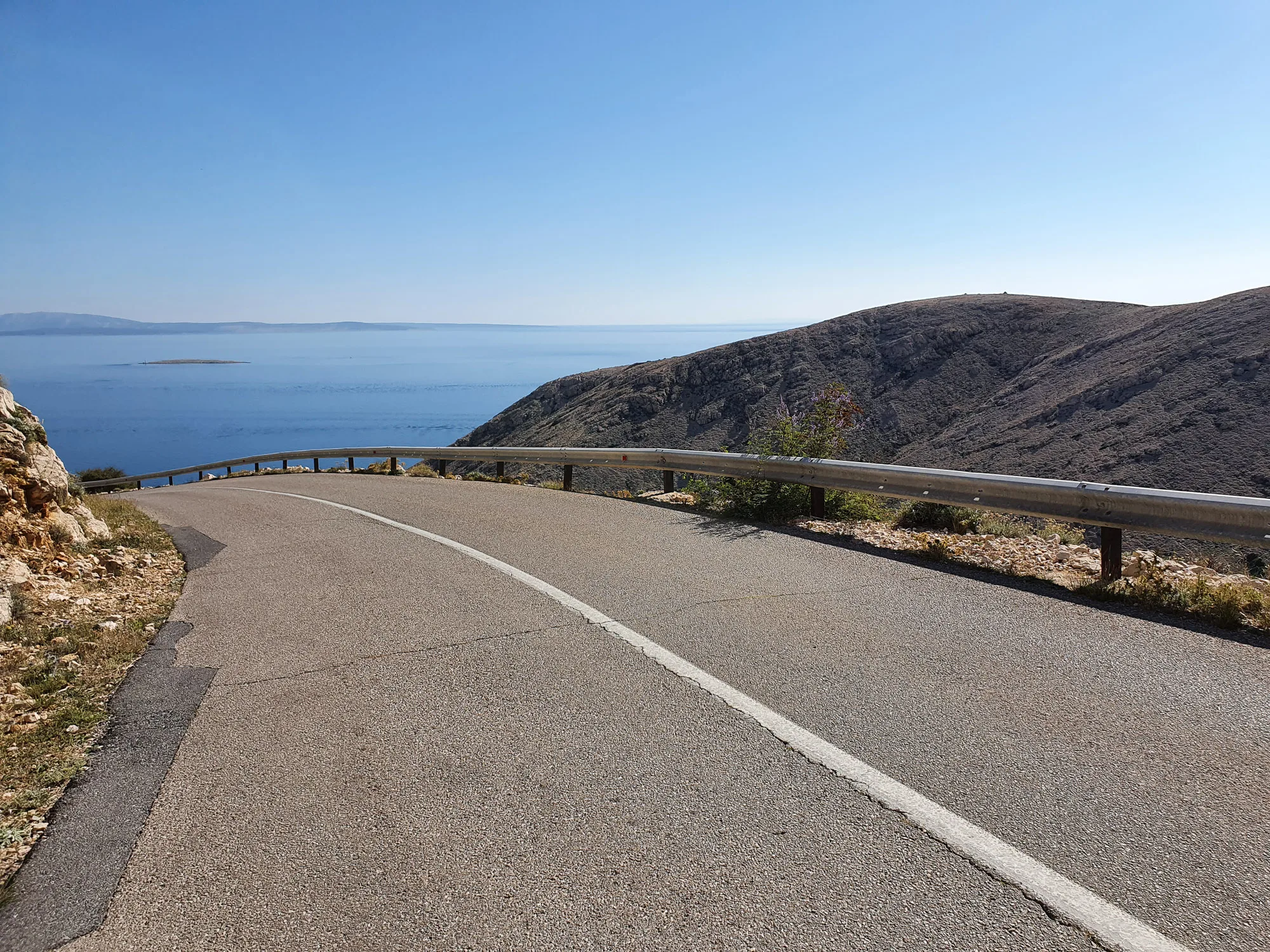
The coastal DC8 road can be spectacular, but exposed sections are vulnerable to strong wind. HAK may impose temporary restrictions on certain vehicles, including motorcycles and vehicles with trailers, when bora conditions are severe.
Driving to Croatian islands
A car can be extremely useful on larger islands such as Krk, Cres, Pag, Brač and Hvar, but you need to plan around ferry logistics. Some islands are connected by bridge, while others require a car ferry.
Jadrolinija publishes current 2026 ferry schedules and service notices. Some routes allow reservations for a specific departure, while on others a ticket may be valid for multiple departures on the same day. Always check the rules for the exact line at the official Jadrolinija website.
If your trip includes several islands, it may be more efficient to return the rental car on the mainland and travel by passenger ferry, depending on your route.
Summer driving in Croatia
July and August bring the highest traffic pressure, especially on weekends when holiday changeovers overlap with local travel. HAK publishes an annual traffic calendar and advises travellers to choose departure times carefully during peak periods.
- Start long drives early in the morning.
- Avoid arriving at popular coastal towns at the busiest midday period.
- Check parking before entering historic centres.
- Allow a buffer before ferries.
- Carry water, especially if traffic is heavy.
Winter driving
Winter conditions are very different inland and in the mountains. According to HAK, winter equipment is mandatory on designated winter sections of Croatian public roads from 15 November to 15 April, regardless of the immediate weather on those sections.
Snow, ice and fog can affect routes through Gorski Kotar, Lika and higher parts of the motorway network even when the coast is mild. Check current conditions before departure.
Crossing borders by car
Croatia is part of the Schengen Area, so routine border controls are generally absent when driving from other Schengen countries such as Slovenia or Hungary. Travellers entering from a non-Schengen neighbour cross an external Schengen border.
The EU Entry/Exit System is fully operational at external Schengen border crossing points as of 10 April 2026. It applies to many non-EU nationals travelling for short stays and records travel-document and biometric information. If your road trip enters Croatia from Bosnia and Herzegovina, Serbia or Montenegro, allow time for border formalities and check the latest EU entry requirements before travel.
Rental car tips
- Check whether your rental contract allows travel to every country on your planned route.
- Confirm any cross-border fees or documentation before leaving Croatia.
- If taking a car on a ferry, make sure the vehicle category is booked correctly where reservation is required.
- Inspect the car at pickup and photograph existing damage.
- Choose the smallest car that comfortably fits your group; it is easier in old towns and narrow coastal streets.
Parking in Croatian destinations
Parking is often the least enjoyable part of a Croatia road trip. Rovinj, Poreč, Zadar, Šibenik, Split and Dubrovnik all have historic centres where through-traffic is limited or impractical. The best approach is usually to park outside the pedestrian core and walk.
Do not assume your old-town hotel has private parking. Confirm the exact parking arrangement before booking.
Best months for a road trip
May, June, September and early October are excellent road-trip months. Roads are generally less pressured than in peak summer, sightseeing temperatures are more comfortable and most seasonal services are operating.
July and August are still very good if beach weather is the priority, but plan around traffic and heat. For a month-by-month overview, read Croatia weather by month.
How much driving is too much?
As a rule, avoid building a holiday around four- or five-hour drives every second day. A scenic route feels much better when the drive is two or three hours and you can stop for lunch, viewpoints or a smaller town.
For a seven-day trip, three accommodation bases are usually enough. For a 10- to 14-day trip, four or five bases can work if they follow a logical north-south route.
Useful regional road-trip links
- Istria for compact scenic driving, hill towns and food.
- Kvarner for islands, mountains and the Rijeka-Opatija coast.
- Northern Dalmatia for Zadar, Šibenik, islands and national parks.
- Northern Dalmatia road trip for a focused seven-day regional route.
- Central Dalmatia for Split, Trogir, Omiš and nearby islands.
- Southern Dalmatia for Dubrovnik, Pelješac and the far south.
FAQ
Do I need a car in Croatia?
No. Major cities and many islands can be visited without one. A car becomes most valuable when you want rural areas, national parks, smaller towns and multi-stop regional touring.
Is driving in Croatia difficult?
Most visitors find motorway driving straightforward. Coastal and mountain roads require more concentration because of bends, wind and seasonal traffic.
Can I take a rental car on ferries?
Usually yes, but check the rental company’s terms and the ferry operator’s booking rules. Vehicle space can sell out on popular departures.
Should I drive from Split to Dubrovnik?
It can work well as part of a longer road trip. If the car would otherwise sit unused in Dubrovnik, consider whether a bus or transfer is more efficient for that final leg.
Final advice
A Croatia road trip works best when the route follows geography rather than a checklist. Use motorways to move efficiently between regions, scenic roads for days when the journey matters, and ferries only where an island genuinely adds value. Check HAK, HAC and Jadrolinija immediately before travel for the latest road, toll and ferry information.
Plan your trip
Planning your trip to Croatia?
Explore practical guides, destinations and travel tips before you go.