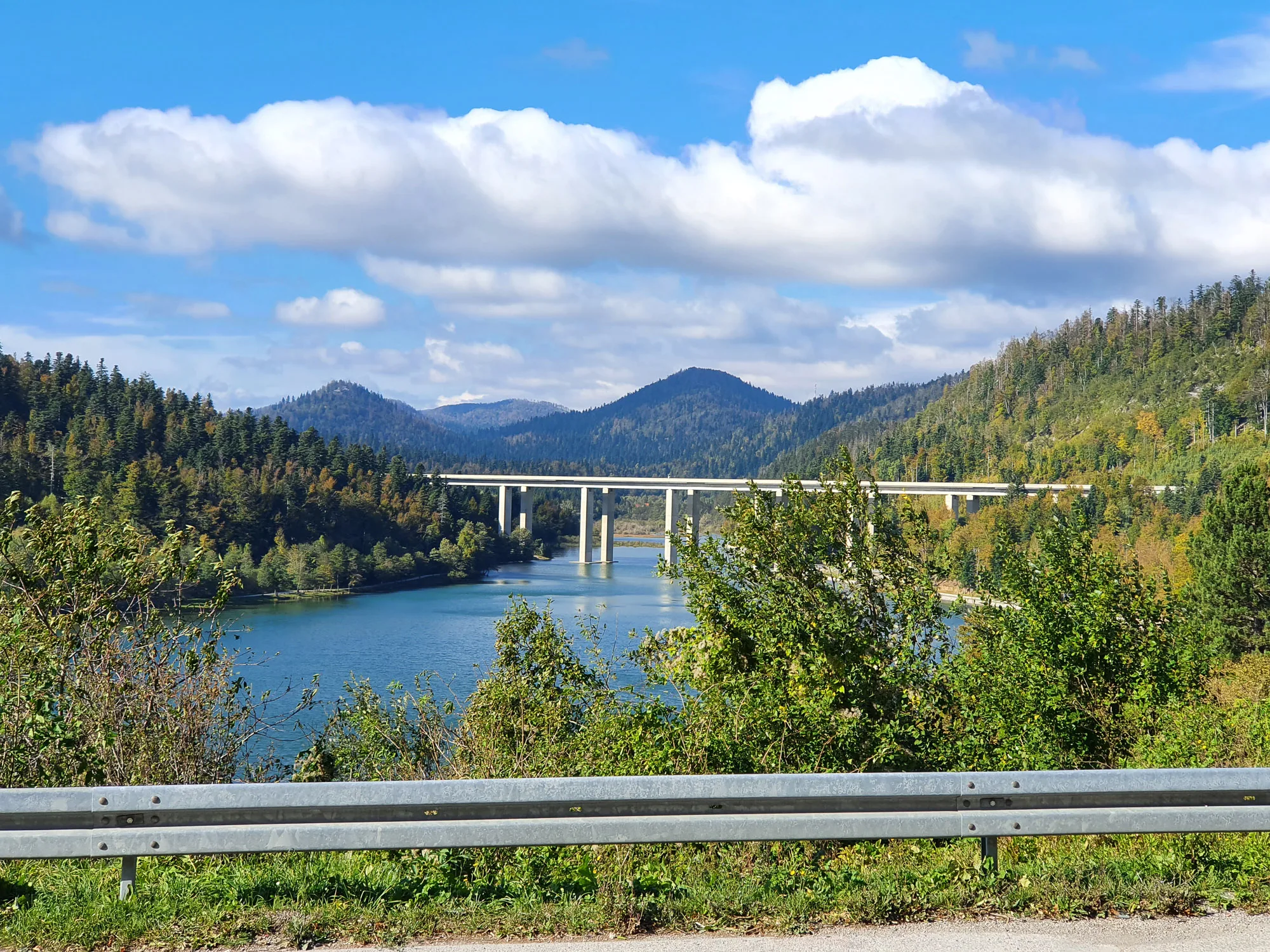
Gorski Kotar is Croatia’s green mountain region between the Adriatic coast and the country’s continental interior. Dense forests, cool summers, snowy winters, lakes, caves, rivers and small highland towns make it one of the best places in Croatia for travellers who want nature without heading far from Rijeka or the Kvarner coast.
Why Visit Gorski Kotar?
The biggest reason to visit is contrast. In a short distance, the scenery changes from Mediterranean coast to forests and mountain plateaus. Summer days are generally fresher than by the sea, autumn brings strong colour, winter can bring real snow, and spring turns the region into a landscape of rushing water and deep green woodland.
Gorski Kotar works well as a two- or three-day nature break, a road-trip stage between Zagreb and Rijeka, or a day trip from the coast. It is also one of the most underrated regions for active travel in Croatia.
Best Places to Visit in Gorski Kotar
Delnice
Delnice is the central town of Gorski Kotar and a practical base for exploring the region. Surrounded by forested hills, it sits high on the mountain plateau and has long been associated with outdoor sport and mountain travel. Nearby areas such as Petehovac and Japlenški Vrh add easy access to walking and viewpoints.
Fužine
Fužine is one of the most visitor-friendly bases in Gorski Kotar. The area is known for its lakes, especially Bajer and Lepenica, as well as walking, cycling and easy access to the Vrelo cave. Its combination of water and forest gives it a softer, more relaxed character than the higher mountain zones.
Lokve
Lokve is a strong stop for travellers interested in lakes, caves and forest scenery. Lokvarsko Lake is the main visual landmark, while Lokvarka Cave introduces the karst landscape below ground. Nearby Golubinjak Forest Park is another good reason to spend time in the area rather than simply drive through.
Mrkopalj
Mrkopalj is associated with highland landscapes, winter conditions and access toward some of Gorski Kotar’s wilder mountain terrain. It is a useful base for hikers who want to explore areas such as Bijele and Samarske stijene with appropriate preparation.
Vrbovsko and Kamačnik
Vrbovsko gives access to the Kamačnik canyon and stream, one of the region’s most attractive easy nature outings. The path follows water through a narrow forested gorge and offers a different experience from the higher mountain trails.
Brod na Kupi and the Kupa Valley
The Kupa valley is lower, greener and more river-focused. Brod na Kupi is a natural base for exploring the river, local heritage and outdoor activities such as kayaking, rafting and fishing when conditions and operators allow.
Risnjak National Park
Risnjak National Park is the region’s headline protected area and one of the strongest reasons to visit Gorski Kotar. The park protects mountain forests, karst landscapes and important wildlife habitat. Crni Lug is a key access point for the park, while the source of the Kupa is another major natural attraction within the wider protected area.
Visitors should treat Risnjak as a mountain environment rather than a simple city-park walk. Weather can change quickly, trails vary in difficulty and conditions may be very different from the coast on the same day. Check the national park’s current trail and access information before setting out.
Lakes of Gorski Kotar
Water is a major part of the region’s appeal. Fužine has several lakes that are easy to combine with village walks, while Lokvarsko Lake creates one of Gorski Kotar’s most recognisable landscapes. These areas are especially good for slower travel: picnics, easy walks, photography and relaxed time outdoors rather than only summit-focused hiking.
Caves and Karst Landscapes
Gorski Kotar’s limestone geology continues underground. Vrelo Cave near Fužine and Lokvarka Cave near Lokve are among the better-known visitor caves. Opening days and guided-entry times can change by season, so verify current access before travelling specifically for a cave visit.
Hiking and Outdoor Activities
The region supports a wide range of activities, from simple lake walks to serious mountain hiking. Depending on season and location, visitors can find hiking, cycling, rafting, kayaking, fishing, horse riding and winter activities.
For casual visitors, Fužine, Golubinjak and Kamačnik are easier introductions. Experienced hikers can look toward Risnjak, Snježnik and the rugged protected landscapes around Bijele and Samarske stijene.
Do not underestimate mountain weather. Carry water, suitable footwear and a layer for sudden temperature changes even if you left the coast in sunshine.
Gorski Kotar in Winter
Winter changes the region completely. Snow can cover the higher areas, and activities may include sledding, cross-country skiing and other winter recreation depending on conditions. This is one of the few parts of Croatia where a genuine snowy short break can be combined with an Adriatic trip.
Road and trail conditions should always be checked before driving into mountain areas after heavy snow or freezing weather.
What to Eat in Gorski Kotar
Gorski Kotar has one of Croatia’s most distinctive inland food identities. Expect hearty dishes suited to a mountain climate, including game, mushrooms, forest fruits, potatoes, cabbage, homemade soups and local cheeses. Wild berries and forest ingredients often appear in desserts, preserves and drinks.
Meals are an important part of the experience here. A good Gorski Kotar trip should include at least one traditional lunch in a village or mountain restaurant rather than treating the region only as an outdoor playground.
Where to Stay
- Fužine: best for first-time visitors who want lakes, restaurants and a convenient nature base.
- Delnice: practical for exploring the central region and Risnjak area.
- Lokve: good for caves, forest scenery and quieter stays.
- Mrkopalj: suitable for mountain-focused trips and winter atmosphere.
- Brod na Kupi: ideal for travellers interested in the river valley and water activities.
Holiday homes and cabins are a major part of the accommodation style in Gorski Kotar. For winter trips, check road access, heating details and whether snow equipment may be needed.
Best Time to Visit
There is no single best season because Gorski Kotar changes so much through the year.
- Spring: fresh forests, high water levels and good walking conditions when the weather cooperates.
- Summer: ideal for escaping coastal heat, lake walks, hiking and outdoor activities.
- Autumn: excellent for forest colour, food and photography.
- Winter: best for snow atmosphere and winter recreation when conditions allow.
How to Get to Gorski Kotar
Gorski Kotar lies between Rijeka and Zagreb, and the road corridor between the coast and capital makes it relatively easy to reach by car. Exits serve several major settlements including Delnice, Ravna Gora, Fužine and Vrbovsko.
Rail lines also pass through parts of the region, including Delnice and Fužine, but service frequency and journey times should be checked carefully before planning a car-free trip. A car gives much more freedom for reaching trailheads, caves, lakes and smaller villages.
A Simple 3-Day Gorski Kotar Itinerary
Day 1: Fužine and the Lakes
Walk around Bajer, explore the Fužine area and visit Vrelo Cave if it is open. Finish with a traditional mountain dinner.
Day 2: Risnjak and Delnice
Base the day around Risnjak National Park, choosing a route that matches your fitness and the weather. Stop in Delnice before or after the park for a meal or relaxed walk.
Day 3: Lokve or Kamačnik
Choose Lokve for lake, cave and forest scenery, or head toward Vrbovsko for the Kamačnik canyon. If you prefer river landscapes, use the day for Brod na Kupi and the Kupa valley instead.
Gorski Kotar with Kids
Families can have an excellent trip if they choose easy nature experiences rather than long mountain hikes. Lakes, short forest walks, caves and picnic areas provide enough variety for a relaxed weekend. In winter, snow itself can become the main attraction for children who live or holiday mainly on the coast.
Practical Tips
- Expect lower temperatures than on the Kvarner coast, often significantly so.
- Carry proper walking shoes even for short nature outings.
- Check national park, cave and trail information before departure.
- Do not rely on mobile signal in every forest and mountain area.
- In winter, monitor road conditions and equip the car appropriately.
- Combine nature with local food; the regional cuisine is part of the destination.
Is Gorski Kotar Worth Visiting?
Absolutely. It is one of the best places to understand how geographically diverse Croatia really is. Within a relatively small area, you can move from the Adriatic coast to dense mountain forest, lakes, caves, snow and river valleys. For travellers building a Kvarner itinerary, Gorski Kotar adds a completely different dimension without requiring a long detour.
FAQ
Is Gorski Kotar a city?
No. It is a mountainous region made up of towns, villages, forests and protected natural areas. Delnice is its main urban centre.
Can you visit Gorski Kotar as a day trip from the coast?
Yes. Fužine, Delnice and parts of the region are close enough to Rijeka and Kvarner for a day trip, although two or three days give a much better experience.
Do you need a car?
A car is strongly recommended for seeing several parts of the region. Rail and bus connections exist, but many nature sites and trailheads are easier to reach by road.
Is Gorski Kotar good in summer?
Yes. Its cooler forest and mountain climate makes it one of the best inland escapes from peak coastal heat.
If Gorski Kotar is part of a larger Croatian journey, start with our Croatia for first-time visitors guide for broader planning advice.
Plan your trip
Planning a trip to Gorski Kotar?
Discover beaches, things to do, parking, food and practical travel information.