Zagreb and Central Croatia offer a very different travel rhythm from the Adriatic coast. This is the part of the country for city breaks, baroque streets, castles, forested hills, river towns, thermal-spa countryside and some of Croatia’s most famous inland landscapes. The region works especially well for travellers who want to combine Zagreb with day trips, a short road trip or a slower route toward Plitvice Lakes.
This guide focuses on the places that add the most value to a Central Croatia itinerary. It is designed to help you decide what deserves a full day, what works as a half-day stop and which places combine naturally. For broader regional planning, start with the Zagreb and Central Croatia Travel Guide. If you are building a multi-region trip, the Croatia Road Trip guide and Croatia itineraries are useful companion resources.
1. Zagreb
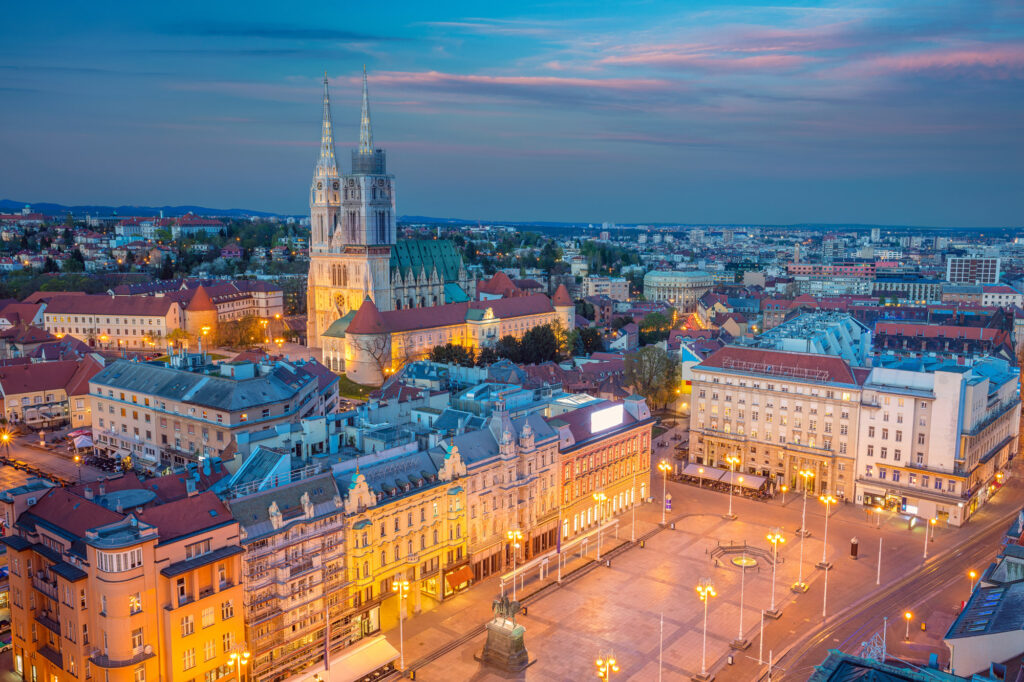
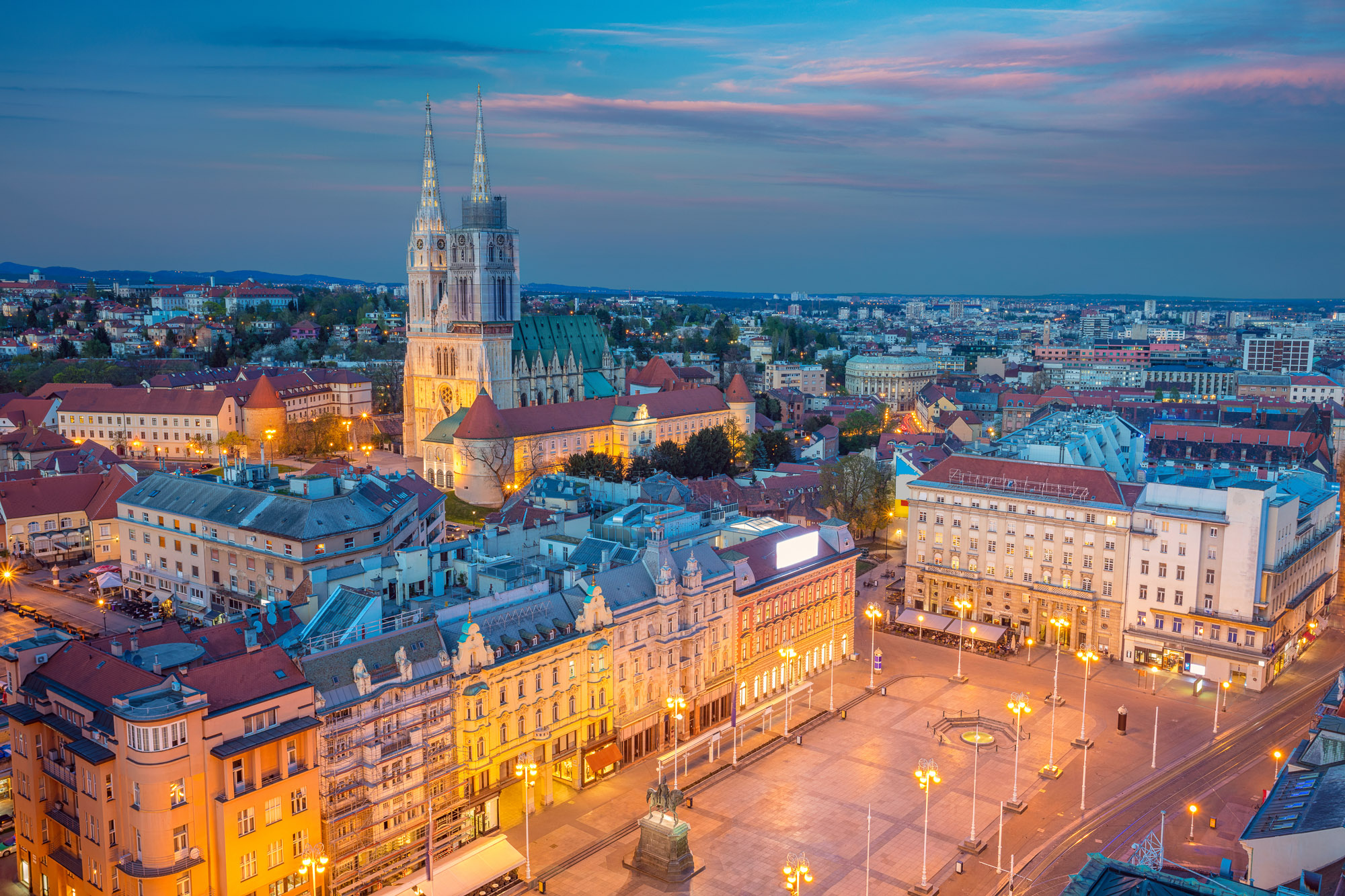
Zagreb is the natural starting point for most trips through Central Croatia. The city combines the historic Upper Town, Austro-Hungarian lower-city architecture, markets, museums, parks and one of the country’s strongest food and café scenes. It also has the best public-transport connections in the region, making it the easiest base if you do not want to rent a car immediately.
Allow at least two full days if this is your first visit. A compact first day can cover Ban Jelačić Square, Dolac Market, the Upper Town lanes, St Mark’s Church area, Lotrščak Tower surroundings and the lower-city parks. A second day gives you time for museums, Maksimir, neighbourhood cafés or a slower food-focused itinerary.
2. Plitvice Lakes National Park
Plitvice Lakes is the region’s headline natural attraction and one of Croatia’s most visited national parks. The protected lake system is linked by waterfalls, wooden paths, electric boats and panoramic vehicles, with routes ranging from short lower-lakes walks to much longer circuits.
Current planning note: for 2026 the park strongly recommends buying timed-entry tickets through its official webshop. In the June–September high season, adult day tickets are €40 before the late-entry discount period and €25 afterward; in September the lower rate begins after 15:00. Availability can sell out at busy times, so do not build a tight road-trip day around buying a ticket on arrival.
Plitvice works as a long day trip from Zagreb, but an overnight stay nearby is better if you want an early start, a quieter walk or a second half-day in the area.
3. Varaždin
Varaždin is one of Croatia’s most attractive inland historic towns. Its compact centre is known for baroque façades, elegant squares, church towers and the distinctive Stari Grad fortress surrounded by parkland. The town is small enough to explore on foot and large enough to justify a full day when museums, cafés and nearby castles are added.
Current 2026 note: the Varaždin City Museum states that the Stari Grad interior is temporarily closed because of energy-renovation work. The exterior, surrounding park and other museum venues remain relevant reasons to visit, but travellers should check the museum’s official website before planning around the castle interior.
4. Samobor
Samobor is one of the easiest escapes from Zagreb. Its pastel town centre, riverside setting, café culture and wooded hills make it ideal for a relaxed half-day or day trip. The town is especially associated with kremšnita, the local custard slice, but the real appeal is the combination of an easy old-town stroll, nearby walking routes and the atmospheric ruins of Samobor Castle above the town.
Samobor works particularly well on the first or final day of a road trip because it is close to Zagreb and does not require a complicated itinerary.
5. Rastoke and Slunj
Rastoke is a small historic mill settlement where the Slunjčica River breaks into cascades before meeting the Korana. Wooden houses, water channels and waterfalls give the village a very different character from Plitvice, even though the two are often paired on the same route.
For many travellers, Rastoke is best used as a one- or two-hour stop when driving between Zagreb or Karlovac and Plitvice Lakes. Staying overnight in Slunj can make sense if you prefer a quieter base and do not need to sleep directly at the national park entrances.
6. Trakošćan Castle
Trakošćan is one of Croatia’s most photogenic castles, set above a lake and forest park in Hrvatsko Zagorje. The castle museum, romantic architecture and surrounding landscape make it a strong half-day destination, especially when combined with Varaždin or a Zagorje road trip.
Current visitor note: a landslide has closed part of the pedestrian path around Trakošćan Lake. The official castle website says walking around the lake remains possible using the open section and posted signage. The full educational circuit is about five kilometres, so allow extra time if you plan to combine the castle interior with the lake.
7. Hrvatsko Zagorje
Hrvatsko Zagorje is not one single town but a landscape of low green hills, vineyards, villages, castles, spas and cultural sites north of Zagreb. It is best experienced by car, because the value comes from linking several smaller places rather than visiting one isolated attraction.
A good Zagorje day can include Trakošćan, Veliki Tabor, Kumrovec and a winery or spa stop, but trying to fit all of them into a single day usually feels rushed. Two nights in the region make the experience much more relaxed.
8. Krapina
Krapina is best known internationally for the Neanderthal site at Hušnjakovo and the Krapina Neanderthal Museum. It is an important cultural stop for travellers interested in prehistory, archaeology and human evolution, and it fits naturally into a wider Zagorje route.
Current 2026 note: the museum’s official visitor page currently states that the site is temporarily closed. Because reopening information can change, confirm the status before travelling specifically for the museum. Krapina can still be used as a regional stop, but at present it should not be the sole reason for a long detour.
9. Kumrovec
Kumrovec is known for the Old Village Museum, an open-air ethnographic complex of preserved rural houses, workshops and traditional architecture. It offers a clear picture of village life in Zagorje and is particularly useful for travellers who want cultural context beyond castles and city centres.
The village is easy to combine with Veliki Tabor and the western part of Zagorje. Families often find the open-air format more relaxed than a conventional indoor museum visit.
10. Veliki Tabor Castle
Veliki Tabor is a fortified hilltop castle with panoramic views across the Zagorje countryside. It is smaller and less theatrical than Trakošćan, but many travellers prefer its more compact medieval-fortress character.
It pairs especially well with Kumrovec because the two sites are close enough to create a coherent half-day or full-day cultural route. Check current museum opening days before setting out, because Monday closures are common at regional museums.
11. Karlovac
Karlovac was founded as a star-shaped Renaissance fortress city and sits at the meeting point of four rivers: the Kupa, Korana, Mrežnica and Dobra. The historic star plan is still visible in the city structure, while the rivers give Karlovac a relaxed outdoor character that is very different from Zagreb.
It is a practical stop between Zagreb and Plitvice, but it also deserves more time if you want to visit Dubovac Castle, walk the old centre or explore Aquatika freshwater aquarium. In warm months, the riverbanks are an important part of local life.
12. Medvednica and Sljeme
Medvednica rises immediately north of Zagreb and is the city’s main mountain escape. Forest trails, mountain huts, viewpoints and the Sljeme summit area make it one of the best places to add hiking to a city break without driving far into rural Croatia.
This is a flexible destination: a short outing can focus on the summit and viewpoints, while a full day can include a longer hike, Medvedgrad or one of the park’s heritage sites. Weather can change quickly on the mountain, so carry an extra layer even when central Zagreb is warm.
13. Žumberak–Samoborsko Gorje Nature Park
West of Zagreb, Žumberak–Samoborsko Gorje protects a quieter landscape of wooded ridges, meadows, traditional villages and long hiking routes. It is a better choice than the famous headline sights for travellers looking for nature, local roads and walking rather than museums.
General entry to the nature park is free, although individual visitor centres or programs may charge fees. A car is useful because trailheads and villages are dispersed.
14. Lonjsko Polje Nature Park
Lonjsko Polje is one of Croatia’s major wetland landscapes, known for floodplain meadows, traditional wooden villages, birdlife and a very different rural atmosphere from the Zagorje hills. It is especially appealing to nature travellers, cyclists and photographers.
The park is more spread out than a conventional single-gate attraction. Plan around one or two visitor areas rather than trying to see everything in a few hours, and check seasonal programs before travelling because water levels and wildlife activity shape the experience.
How to choose the right places
If you have 2–3 days
- First trip: Zagreb plus one day at Plitvice Lakes.
- City and culture: Zagreb plus Varaždin and Trakošćan.
- Easy weekend: Zagreb plus Samobor and Medvednica.
If you have 4–5 days
Combine Zagreb with Plitvice, Rastoke and either Varaždin–Trakošćan or Samobor–Zagorje. This gives you a good balance of city, nature and small-town Croatia without constant driving.
If you have a week
A seven-day route can link Zagreb, Samobor, Karlovac, Rastoke, Plitvice Lakes, Zagorje, Trakošćan and Varaždin. This is long enough to use two or three overnight bases rather than returning to Zagreb every evening.
Best places without a car
Zagreb is by far the easiest base without a car. Varaždin and Karlovac also have useful bus and rail connections, and organized transfers or buses can make Plitvice possible. Smaller castle, nature-park and village combinations are much easier with your own vehicle.
If you are relying on public transport, avoid building an itinerary that depends on reaching several rural attractions in one day. Instead, choose one main destination and allow time for connections.
Best time to visit Zagreb and Central Croatia
Spring and early autumn are excellent for road trips, walking and city sightseeing. Summer works well too, although Zagreb and Plitvice can be busy and hot. Autumn is particularly attractive in the forests and vineyards, while winter gives Zagreb a strong festive atmosphere and the countryside a quieter, more local feel.
For month-by-month conditions, see the Croatia weather by month guide.
Practical planning tips
- Book Plitvice in advance: timed tickets are the most important reservation on a Central Croatia itinerary.
- Check museum closures: Varaždin’s Stari Grad interior and the Krapina Neanderthal site currently have access restrictions.
- Do not overpack castle days: Trakošćan, Veliki Tabor and Kumrovec are better enjoyed with time for the surrounding landscape.
- Use Zagreb as a transport hub: it is the easiest place to start or finish a car-free segment.
- Keep rural days flexible: weather, seasonal opening hours and road conditions can affect smaller attractions more than city sights.
Final thoughts
Zagreb and Central Croatia are most rewarding when treated as a region rather than a collection of isolated day trips. Zagreb supplies the urban energy, Plitvice the major natural landmark, Varaždin and the Zagorje castles the cultural depth, and places such as Samobor, Rastoke, Žumberak and Lonjsko Polje add the slower local experiences that make an inland itinerary feel distinct.
For most first-time visitors, the strongest combination is Zagreb plus Plitvice and one northern route through Varaždin or Zagorje. Travellers with a full week can turn that into a circular road trip and see a side of Croatia that many coast-focused itineraries miss completely.
Plan your trip
Planning a trip to Zagreb & Central Croatia?
Discover beaches, things to do, parking, food and practical travel information.