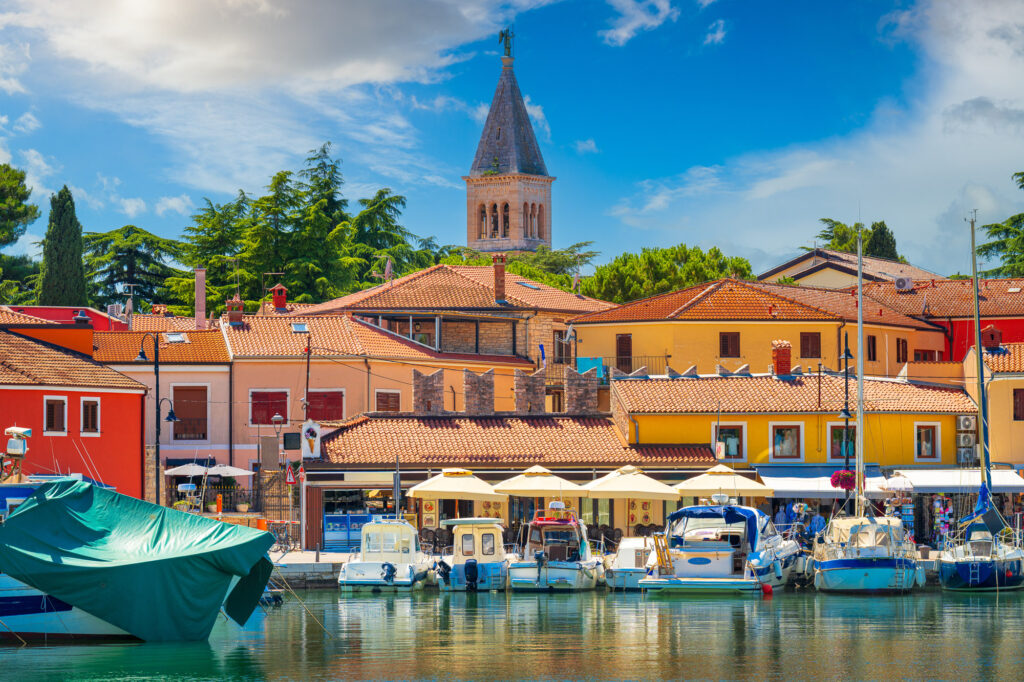
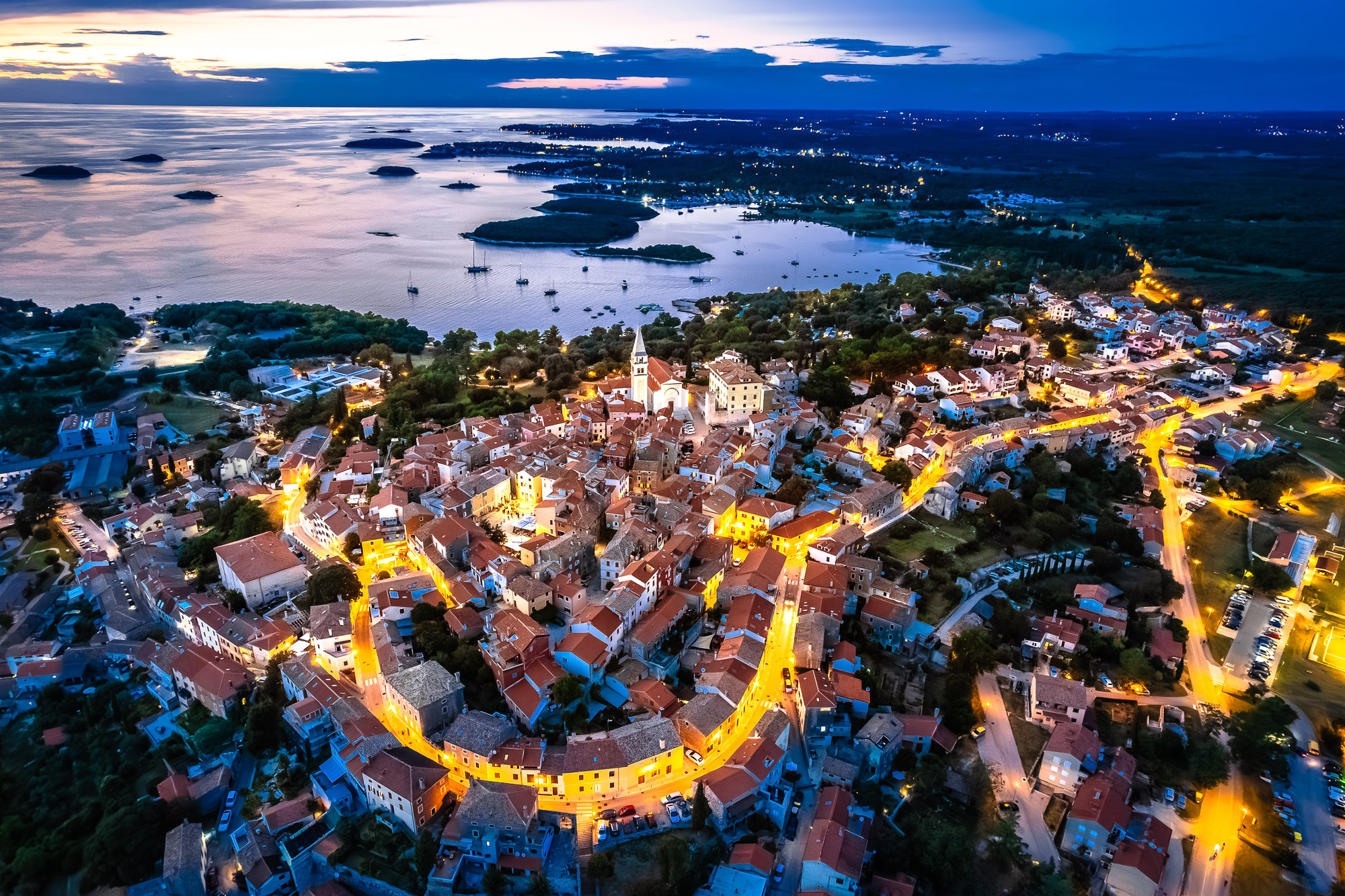
Vrsar is a small coastal town in western Istria, positioned at the entrance to Lim Bay between Rovinj and Poreč. Its appeal comes from the combination of a hilltop old town, a working harbour and marina, beaches, viewpoints, nearby islands and a strong connection with art and maritime life.
This guide focuses on what is actually worth seeing, how much time to allow, which parts of Vrsar suit different travelers, and how to combine the town with the surrounding Istrian coast.
Why Visit Vrsar?
Vrsar is a useful choice for travelers who want a coastal base that feels smaller and less urban than Istria’s largest resorts. The old town rises above the waterfront, while the coast spreads around a series of coves, beaches and small islands.
It works particularly well for:
- travelers who enjoy historic towns and sea views
- families looking for beaches and easy coastal activities
- couples interested in walks, sunsets and smaller restaurants
- cyclists and outdoor travelers exploring western Istria
- visitors who want to combine the coast with Lim Bay and nearby destinations
Vrsar Old Town
The historic centre is built on a hill above the sea, so exploring Vrsar involves some uphill walking. That is part of the experience: the higher streets lead to changing views over the waterfront, islands and surrounding coastline.
Walk through the stone streets toward the parish Church of St. Martin and the older parts of the settlement. Rather than following a strict sightseeing checklist, allow time to explore the small lanes and stop at the viewpoints.
Vrsar Viewpoints
Vrsar’s elevated position is one of its strongest advantages. The local tourist board identifies several viewpoints, including St. Anthony, St. Martin, Bepo and Tonina, Casanova and viewpoints toward Lim Bay.
The views change depending on the direction: some look toward the harbour and marina, while others open toward the islands, Valkanela and the Funtana archipelago. These are among the best reasons to explore the old town on foot rather than staying only at the waterfront.
The Bell Tower and Church of St. Martin
The parish Church of St. Martin is one of the main landmarks in the old town. Nearby, the Vrsar bell tower provides another elevated viewpoint over the town and surrounding area.
The present bell tower was built in 1991 and is 40 metres high. It also contains an exhibition of old bells and functions as a viewpoint, making it useful for travelers interested in both local history and photography.
Vrsar Harbour and Marina
The waterfront provides a very different atmosphere from the old town. Boats, the marina and the promenade give Vrsar a strong maritime character, and the harbour is a natural place to slow down after exploring the hilltop streets.
If you are staying in Vrsar, an evening walk from the old town toward the waterfront is an easy way to experience both sides of the town.
Beaches in Vrsar
Vrsar has a varied coastline rather than one single beach. Around the town you will find rocky sections, pebble areas and paved bathing platforms, often with natural shade.
Montraker Public Beach is about 500 metres from the old town and includes rocky, pebble and paved areas, natural shade, a children’s area, showers, sports facilities and places to eat.
Other beaches and bathing areas extend along the coast toward the nearby resorts and coves. For families, check the facilities of the specific beach before choosing it; the character of the coastline changes considerably from one location to another.
Vrsar and Lim Bay
Vrsar stands at the entrance to Lim Bay, one of the most distinctive natural features of this part of Istria. The bay is an important reason to combine Vrsar with a wider coastal or outdoor itinerary.
You can approach Lim Bay as a scenic stop, a viewpoint destination or part of a cycling and outdoor route. If your main goal is to explore the bay itself, allow additional time rather than trying to fit it into a rushed visit to Vrsar.
Why Vrsar Is Connected With Casanova
Vrsar has a long-standing connection with the Italian writer and adventurer Giacomo Casanova, who visited the town twice and later referred to Vrsar in his memoirs.
The connection is now part of the town’s identity, including the Casanova viewpoint. It is best understood as one layer of Vrsar’s history rather than the sole reason to visit.
Vrsar, Art and the Dušan Džamonja Sculpture Park
Vrsar has an unusually strong connection with sculpture. The Dušan Džamonja Sculpture Park, near Valkanela, combines the artist’s former summer residence, studio, gallery and outdoor sculptures in a Mediterranean landscape.
The complex is a protected cultural property and contains works displayed across a large sculpture park. It offers a useful contrast to the medieval character of the old town: instead of stone streets and historic buildings, the experience is about modern sculpture, landscape and the relationship between art and nature.
Visitor hours are seasonal, so check the current schedule before visiting.
Montraker and the Town’s Sculpture Tradition
Another unusual part of Vrsar’s identity is the abandoned Montraker quarry. Since 1991 it has hosted the Montraker International Summer School of Sculpture, where artists create works in stone.
Sculptures produced through the project can be found around Vrsar, including along the waterfront and in public spaces. This is one reason Vrsar feels different from a standard beach destination: contemporary art is integrated into the landscape rather than confined to a single museum.
How Long Should You Spend in Vrsar?
For a first visit focused on the old town, viewpoints and waterfront, half a day is usually a practical starting point. Add more time if you want to swim, visit the sculpture park, explore Lim Bay or spend time on the coast.
A full day works well if you want a slower pace and a combination of sightseeing, beach time and outdoor activities.
When Is the Best Time to Visit Vrsar?
Summer is the obvious choice for swimming, boating and the full coastal experience. However, late spring and early autumn can be better suited to walking, cycling and exploring the old town because the main focus can shift from beach time to sightseeing and outdoor activities.
If you visit outside the main summer period, check current opening hours for individual attractions and seasonal services before planning your day.
How to Get to Vrsar
Vrsar is on the western Istrian coast, between Rovinj and Poreč. A car is particularly convenient if you want to combine Vrsar with Lim Bay, Funtana, Poreč, Rovinj or other smaller coastal stops.
Travelers without a car should check current regional bus connections and seasonal transport options before departure. Local services can change between the main summer season and the rest of the year.
Vrsar as a Day Trip from Rovinj or Poreč
Vrsar is easy to combine with a wider western Istria itinerary. From Rovinj, it makes sense as a northern coastal stop; from Poreč, it works naturally as a southern coastal stop.
A useful itinerary could combine:
- Vrsar old town and viewpoints
- time at the waterfront
- a beach or coastal walk
- Lim Bay
- Rovinj or Poreč later in the day
Trying to visit every nearby attraction in one day is unnecessary. Choose the combination that matches your interests instead.
Who Is Vrsar Best For?
For couples: the hilltop streets, viewpoints, harbour and evening atmosphere make Vrsar easy to explore at a relaxed pace.
For families: the coastline includes beaches with children’s facilities, while the town provides enough variety for a half-day outing.
For active travelers: the coast, Lim Bay, cycling opportunities and water activities make Vrsar a useful base for outdoor experiences.
For art lovers: the Džamonja Sculpture Park and Montraker tradition give Vrsar a stronger contemporary-art identity than many comparable coastal towns.
Practical Tips for Visiting Vrsar
- Wear comfortable shoes because the old town is hilly.
- Explore the viewpoints rather than staying only on the waterfront.
- Allow extra time if you want to visit the Džamonja Sculpture Park.
- Check seasonal opening hours before visiting attractions outside the old town.
- Choose your beach according to the facilities you actually need.
- If visiting Lim Bay, treat it as a separate part of the day rather than a quick photo stop.
- For a broader Istria itinerary, combine Vrsar with Rovinj, Poreč, Funtana or Lim Bay rather than adding several similar small towns.
Is Vrsar Worth Visiting?
Yes, particularly if you want an Istrian coastal town that combines history, sea views, beaches and art without relying on one headline attraction.
Vrsar’s strongest feature is the way its different parts fit together: a hilltop old town, a working waterfront, an island-filled coastline, Lim Bay nearby and an unusually visible sculpture tradition. That makes it a flexible stop for a western Istria itinerary and a destination that can justify anything from a few hours to a full day.
Explore more of Istria
Planning more than one stop? These guides cover towns that combine well with Vrsar:
Plan your trip
Planning a trip to Vrsar?
Discover beaches, things to do, parking, food and practical travel information.