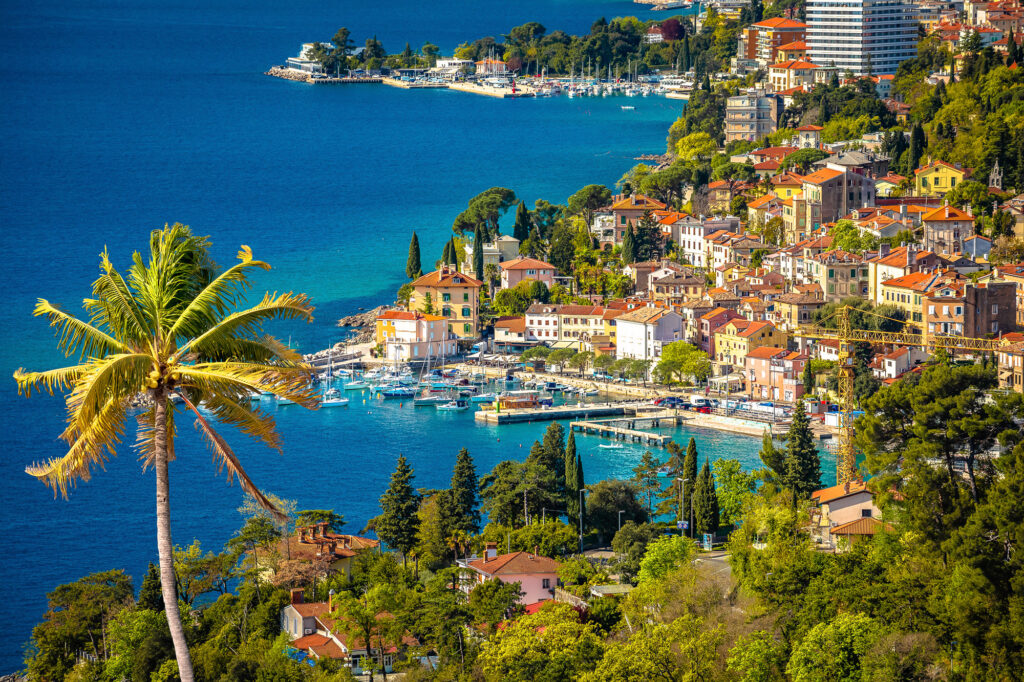
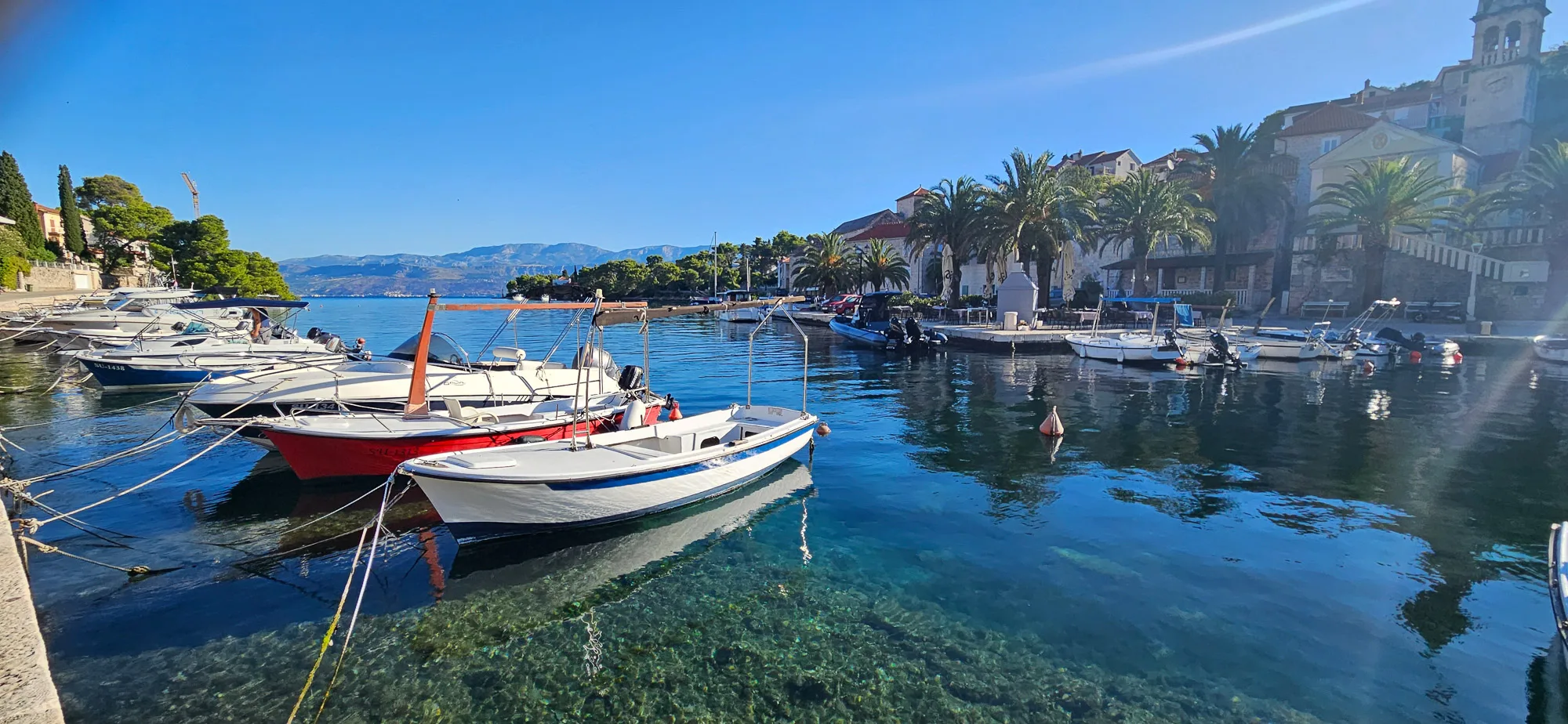
Kvarner is the bay and coastline of northern Croatia between Istria and Dalmatia: the port city of Rijeka, the old Habsburg resort of Opatija, the islands of Krk, Cres, Lošinj and Rab, and the forested mountains of Gorski Kotar just behind the coast. It is compact enough that you can swim on an island in the morning and walk in a cool mountain forest the same afternoon, and it is the closest part of the Croatian sea to Zagreb, Slovenia and Central Europe.
Where is Kvarner and how is it laid out?
Kvarner is named after the Kvarner Gulf, the deep bay that cuts in between the Istrian peninsula and the mainland coast. Rijeka sits at the top of the bay. To the west, the Opatija Riviera runs down the eastern side of Istria under the Učka mountain. To the south-east, the Crikvenica–Vinodol coast follows the mainland towards Senj. Out in the bay lie the big islands, and inland, within half an hour of the sea, the land climbs to Gorski Kotar.
In practice, travellers think of Kvarner in four parts:
- Rijeka and the Opatija Riviera – city, promenades, historic villas, easy day trips.
- The mainland coast – Crikvenica, Selce and Novi Vinodolski, classic beach resorts with no ferry needed.
- The islands – Krk (bridge), Cres and Lošinj (ferry, then joined by a bridge), Rab (ferry).
- Gorski Kotar – mountains, lakes and forests, including Risnjak National Park.
Because the region wraps around one bay, distances on the map look shorter than they feel. Getting from Opatija to Rab, for example, means driving round the bay and taking a ferry, so it pays to plan your bases carefully.
Best places to visit in Kvarner
Rijeka
Rijeka is Croatia’s third-largest city and its biggest port. It is a working city rather than a resort, which is exactly its appeal: the Korzo pedestrian street, Austro-Hungarian façades, the busy central market by the harbour, and cafés full of locals rather than tour groups. Rijeka was European Capital of Culture in 2020, and its industrial heritage – the old sugar refinery, port warehouses and the city’s link with the first modern torpedo – is now part of how it presents itself.
Above the centre, Trsat has a hilltop castle with wide views over the gulf and the Sanctuary of Our Lady of Trsat, one of Croatia’s oldest pilgrimage sites. You can walk up the long stone stairway from the Rječina river (several hundred steps; allow 20–30 minutes) or take a city bus. In winter, Rijeka Carnival, usually held in January and February, is the biggest event of the year.
Who it suits: travellers who like real cities, good food markets and a transport hub. Downside: the city beaches are fine for a dip but not the reason to come.
Opatija and the Riviera
Opatija grew up in the late 19th century as a winter health resort for Vienna’s and Budapest’s well-off, and it still looks the part: grand hotels, villas with gardens, Villa Angiolina and its park, and the Maiden with the Seagull statue on the rocks. The real highlight is the Lungomare, a seaside path of roughly 12 km that runs from the fishing village of Volosko through Opatija, Ičići and Ika to Lovran. Walk part of it in the morning, swim off the concrete platforms and rocks along the way, and take a bus back.
Volosko, a short walk north of Opatija, is the place for a long seafood dinner by the small harbour. Lovran, at the southern end, has a compact medieval centre and is known for its sweet chestnuts (maruni), celebrated each October. Further south, Moščenička Draga has one of the best pebble beaches on this stretch, with the old village of Mošćenice perched above it.
Behind the Riviera rises Učka Nature Park. The road up to Vojak, the highest peak at around 1,400 m, takes about 40 minutes from Opatija, and on a clear day the view takes in Istria, the islands and the whole Kvarner Gulf.
Who it suits: couples, older travellers, walkers and anyone who wants a comfortable base with good public transport. Downside: beaches are mostly small and built up; this is not a sandy-beach destination.
Krk Island
Krk is joined to the mainland by a bridge (toll-free since 2020), so it is the easiest Croatian island to visit by car – about 30 minutes from Rijeka to the bridge. It is also where Rijeka Airport is located, near Omišalj in the north.
- Krk Town – walled old town with a Romanesque cathedral, Frankopan castle and a lively harbourfront.
- Baška – in a valley on the south-east coast, with the long pebble Vela Plaža beach and mountain walks behind. The church of St Lucy in nearby Jurandvor is where the Baška Tablet, one of the oldest texts in Croatian (written in Glagolitic script, around 1100), was found; a copy is displayed there.
- Vrbnik – a village on a cliff above the sea, with narrow lanes and Žlahtina, the island’s dry white wine.
- Punat – a marina town on a sheltered bay; small boats run to the islet of Košljun with its Franciscan monastery.
- Malinska and Njivice – relaxed resort villages on the calmer west coast, good for families.
Downside: Krk is popular and very busy in July and August, and the bridge and the road to Baška can be slow on summer weekends.
Cres and Lošinj
Cres is long, wild and thinly populated: stone walls, sheep pastures, oak woods in the north and steep coastline. Cres Town has a small Venetian-style harbour; Beli in the north and Lubenice on its clifftop above a remote beach are the most striking villages. The island is home to a colony of griffon vultures and is known for its lamb, which grazes on herbs and salt-sprayed pasture. Lake Vrana, in the middle of the island, is a freshwater lake that supplies Cres and Lošinj with drinking water (swimming is not allowed).
At Osor, a short swing bridge over a narrow canal links Cres to Lošinj. Mali Lošinj is the main town, set at the end of a long sheltered bay, with pine-shaded promenades and coves around Čikat. The Museum of Apoxyomenos there displays an ancient Greek bronze athlete found in the sea nearby. Veli Lošinj, a few kilometres away, is smaller and quieter, and has a long tradition of dolphin research in the surrounding waters.
Who it suits: people who want a slower island stay, walking and quiet bays. Downside: you need a ferry, and driving from the Cres ferry ports down to Mali Lošinj takes well over an hour on a narrow road. These islands deserve at least three nights.
Rab
Rab is the southernmost of the Kvarner islands and the one with the best sandy beaches. Rab Town is instantly recognisable by its four bell towers lined up along a narrow ridge above the harbour, and its old streets are some of the most atmospheric in the region. On the north of the island, Lopar has shallow sandy bays – Rajska plaža (Paradise Beach) is the best known – ideal for young children. The Kalifront peninsula west of Rab Town is covered in holm oak forest with quiet rocky coves. Try Rab cake (rapska torta), a spiral almond pastry.
Downside: in peak season the sandy beaches are crowded, and ferry queues on summer Saturdays can be long.
Crikvenica and the Vinodol coast
Crikvenica, Selce and Novi Vinodolski line the mainland coast south-east of Rijeka, about 30–45 minutes’ drive away. They are straightforward resort towns with long promenades, pebble beaches, apartments and family hotels. Crikvenica’s main beach is sand-and-shingle and gently shelving. Inland, the Vinodol valley has small villages, Frankopan-era castles and quieter roads. This is the easiest beach base if you do not want to deal with ferries.
Gorski Kotar
Gorski Kotar is a different world from the coast: spruce and beech forest, alpine meadows and lakes, often 10 degrees cooler than Rijeka in summer. The A6 motorway crosses it, so it is easy to reach.
- Fužine – a lakeside village about 30 minutes from Rijeka, with an easy walk around Lake Bajer and the Vrelo cave in the village itself.
- Risnjak National Park – marked trails through forest to the 1,528 m summit of Risnjak, plus the source of the Kupa river on the park’s northern edge.
- Platak – a small ski and hiking area directly above Rijeka.
- Delnice and Lokve – practical bases with mountain inns and lakes nearby.
Gorski Kotar suits hikers, families escaping the summer heat and anyone driving between Zagreb and the coast who wants a break on the way.
Best beaches in Kvarner
Most Kvarner beaches are pebble or rock, with very clear water. The sandy exceptions are on Rab. A quick overview:
- Vela Plaža, Baška (Krk) – long pebble beach with mountains behind; busy but spacious.
- Stara Baška area (Krk) – rocky coves on a bare, dramatic coastline.
- Lopar beaches (Rab) – sandy and shallow; the best family choice in the region.
- Lubenice beach (Cres) – remote pebble cove below a clifftop village; reached on foot by a steep path (about 45 minutes down and longer back up), so bring water.
- Čikat (Mali Lošinj) – pine-shaded coves and rocks within walking distance of town.
- Moščenička Draga (Riviera) – the best pebble beach near Opatija.
- Crikvenica – easy, central beach with facilities, no ferry required.
Water shoes help on rocky entries. Swimming is generally good from June to late September; the sea in the northern Adriatic is a little cooler than in Dalmatia early in the season.
Things to do in Kvarner
- Walk a section of the Lungomare from Volosko to Opatija, then continue to Lovran if you have the legs.
- Climb the stairway to Trsat Castle in Rijeka for views over the gulf, then eat at the market area below.
- Drive up Učka for the panorama from Vojak.
- Take a boat from Punat to the Košljun monastery islet.
- See the Baška Tablet copy at St Lucy’s church in Jurandvor.
- Taste Žlahtina wine in Vrbnik.
- Walk the lanes of Lubenice on Cres and look down at the beach far below.
- Visit the Apoxyomenos museum in Mali Lošinj.
- Spend a day on the sandy beaches around Lopar on Rab.
- Hike in Risnjak National Park or circle Lake Bajer at Fužine.
Kvarner food and wine
Kvarner cooking sits between the Adriatic and the mountains. Things to look for:
- Kvarner scampi – prized across Croatia; often served na buzaru (with white wine, garlic, tomato and breadcrumbs). Expect them to be priced by weight.
- Šurlice – Krk’s hand-rolled pasta, typically served with goulash or lamb sauce.
- Cres lamb – roasted or cooked under the bell (peka).
- Rapska torta – Rab’s almond cake.
- Maruni – Lovran sweet chestnuts in autumn.
- Gorski Kotar dishes – game, mushrooms, trout and hearty stews, ideal after a hike.
- Žlahtina – the light dry white from Vrbnik, the region’s best-known wine.
A konoba (tavern) is usually the best bet for local dishes. In smaller places, check opening periods before you go out of season, as many close in winter.
How to get to Kvarner and get around
Arriving
- By car: the A6 motorway connects Zagreb and Rijeka in about 1 hour 45 minutes. From Ljubljana, allow around 2 hours; from Pula, about 1 hour 15 minutes via the Učka tunnel.
- By air: Rijeka Airport, on Krk, has mainly seasonal flights. Zagreb, Pula, Trieste and Ljubljana airports are all realistic alternatives.
- By bus: frequent intercity buses link Rijeka with Zagreb, Istria, Split and other cities.
Island ferries
Cres, Lošinj and Rab depend on ferries. The main car ferry routes are Valbiska (Krk) to Merag (Cres), Brestova (Istria) to Porozina (Cres), Stinica (mainland) to Mišnjak (Rab) and Valbiska to Lopar (Rab). Timetables change by season, so check the current schedule on jadrolinija.hr before you travel, and arrive early on summer weekends, when queues are common.
Getting around
Buses work well between Rijeka, Opatija, the Riviera and Crikvenica, and there are bus connections to the main island towns. For Cres villages, inland Krk, Gorski Kotar and multi-stop trips, a car makes life much easier.
A note on the bura: this strong, cold north-easterly wind blows mostly in autumn and winter. It can close the Krk bridge to some vehicles and cancel ferries at short notice, so build some slack into off-season plans.
Where to stay in Kvarner
| Base | Best for | Consider |
|---|---|---|
| Rijeka | City life, transport, food | Not a beach base |
| Opatija / Volosko / Lovran | Walking, comfort, day trips without a car | Small beaches, higher prices |
| Crikvenica / Selce | Simple family beach holidays | Resort feel, busy in August |
| Krk (Baška, Krk Town, Punat) | Island stay by car, variety | Summer traffic |
| Cres / Lošinj | Quiet, nature, longer stays | Ferry and long drives |
| Rab | Sandy beaches, small children | Crowded in peak season |
| Gorski Kotar | Hiking, cool summers, lakes | No sea |
Best time to visit Kvarner
- May and June: green landscapes, good walking, fewer people; the sea warms up through June.
- July and August: peak swimming season, but also the busiest roads, ferries and beaches. Book accommodation early.
- September: often the best month overall – warm sea, calmer towns.
- October: chestnut season on the Riviera, good for walking; many island businesses start to close.
- Winter: Rijeka Carnival, quiet Opatija and snow in Gorski Kotar; islands are very quiet.
How many days do you need in Kvarner?
- 2–3 days: Rijeka and the Opatija Riviera, with a drive up Učka, or a short Krk break.
- 5–7 days: base in Opatija for two or three nights, then move to Krk or Rab for the rest.
- 10 days or more: Riviera, Krk, a ferry to Cres and Lošinj, and a night or two in Gorski Kotar on the way to or from Zagreb.
Sample one-week route
- Days 1–2: Rijeka and Trsat, then Opatija and the Lungomare.
- Day 3: Učka in the morning, Lovran and Moščenička Draga in the afternoon.
- Days 4–5: drive to Krk – Krk Town, Vrbnik, Punat and Košljun.
- Days 6–7: Baška for beaches and walks, or a ferry from Valbiska to Cres.
For the wider picture, see our Kvarner region overview, or the official Kvarner tourist board for events and updates.
Frequently asked questions
Is Kvarner worth visiting?
Yes, especially if you want variety within short distances: a real city, a historic resort, several very different islands and mountains, all within about an hour of Rijeka. It is also much closer to Central Europe than Dalmatia.
What is the best base in Kvarner without a car?
Opatija or Rijeka. Both have frequent local buses along the Riviera, intercity links, and boat and bus connections to the islands.
Which Kvarner island is best?
Krk for easy access and variety, Rab for sandy beaches and families, and Cres and Lošinj for nature and a slower pace. If you only have a few days and a car, Krk is the practical choice.
Does Kvarner have sandy beaches?
A few. The best sandy beaches are around Lopar on Rab. Elsewhere, beaches are mostly pebble or rock, with Crikvenica having one of the softer mainland beaches.
Do you need a ferry to get to Krk?
No. Krk is connected to the mainland by a toll-free bridge. You only need a ferry to continue from Krk to Cres or Rab.
How far is Kvarner from Zagreb?
Rijeka is roughly 165 km from Zagreb, about 1 hour 45 minutes by motorway, passing through Gorski Kotar on the way.
Plan your trip
Planning a trip to Kvarner?
Discover beaches, things to do, parking, food and practical travel information.