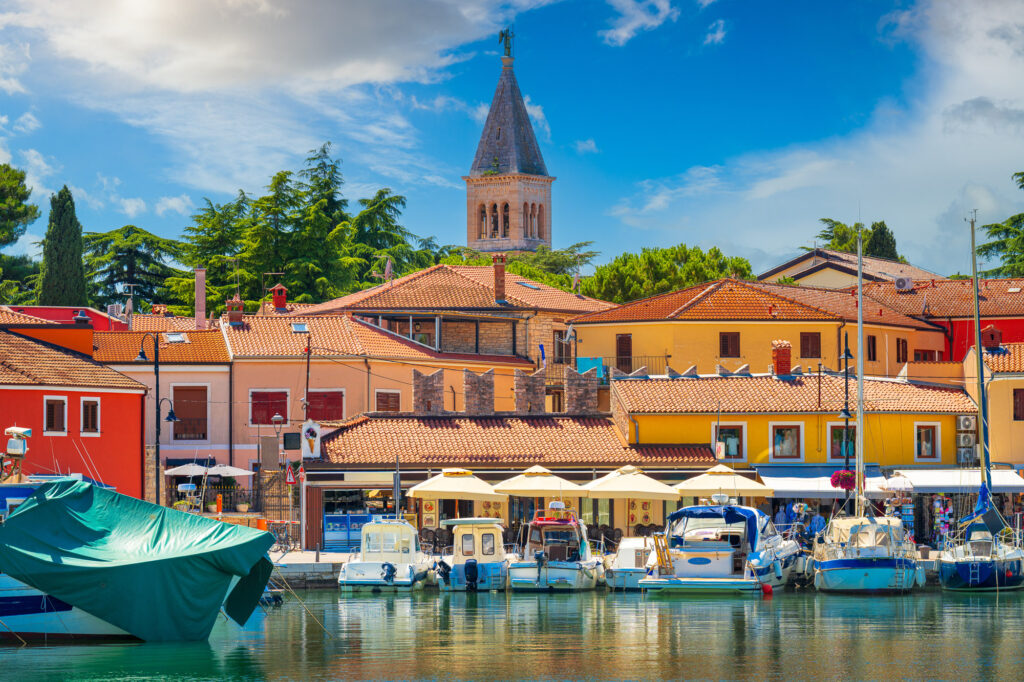
Pula is the largest city in Istria and one of Croatia’s most historically layered destinations. The city is best known for its Roman amphitheatre, but the Arena is only the starting point. Around it are an old town shaped by Roman streets, Venetian buildings, Austro-Hungarian architecture, a working harbour, museums, markets and a coastline with beaches and wooded bays.
This guide explains what makes Pula worth visiting, what to see, how to organize your time and which nearby places fit naturally into a trip. It is designed for travelers who want to understand the city rather than simply collect a list of attractions.
Why visit Pula?
Pula works particularly well for travelers who want history and the sea in the same destination. You can spend the morning walking between Roman monuments, have lunch in the historic centre, and reach a beach or coastal walking area later in the day. The city is also a useful base for exploring southern Istria and nearby places such as Fažana and the Brijuni Islands.
Its biggest advantage is variety. Pula is not a resort town built around one waterfront promenade. It is a real city with layers of history, everyday urban life and access to the Adriatic.
What to see in Pula
Pula Arena
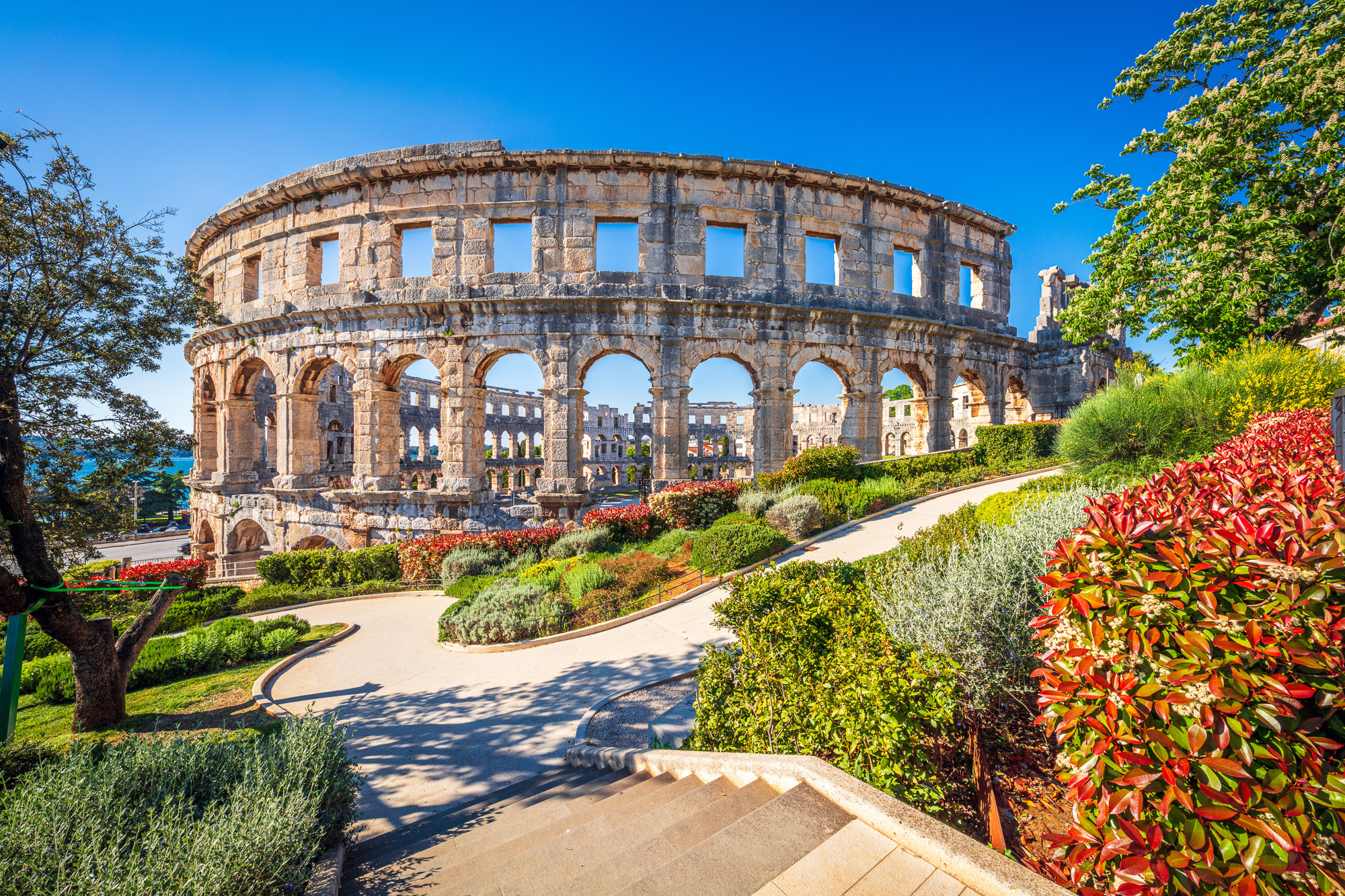
The Roman amphitheatre is Pula’s defining landmark and the first place most visitors should see. Built during the Roman period under Emperor Vespasian, the Arena is one of the most recognizable surviving monuments of Roman architecture in Croatia. Its scale becomes much clearer when you walk around the exterior and then enter the interior.
The underground area contains an exhibition connected with ancient olive growing and wine production in Istria. The amphitheatre is also still used for concerts, performances and other events, so it remains part of the living city rather than simply an archaeological monument.
Current admission information and opening hours can change seasonally, so check the official Pula tourism information before planning a timed visit.
Forum and the Temple of Augustus
The Forum is the historic centre of Pula’s civic and public life. The square dates back to Roman times and remains one of the most atmospheric places to walk through the old city.
The Temple of Augustus stands on the Forum and is one of the city’s best-preserved Roman monuments. It was built between 2 BC and AD 14 and has had several different functions during its long history. After being damaged during the Second World War, it was reconstructed in the 1940s and today houses a collection of ancient sculptures.
The Forum is especially good for a slow stop rather than a quick photograph. Sit for a while, look at the surrounding architecture and then continue into the narrow streets behind the square.
Arch of the Sergii
The Arch of the Sergii, also known as the Golden Gate, marks the entrance to the historic centre from the direction of the modern city. The monument was erected in the late first century BC in honour of members of the Sergii family.
From here, Sergijevaca Street leads toward the Forum. This is one of the most useful walking routes through central Pula because several historic sights are close together.
Kaštel and the Historical and Maritime Museum of Istria
Kaštel occupies the central hill above the old town. The Venetian fortress was built in the 17th century according to plans by the French military architect Antoine de Ville. Its elevated position reflects Pula’s long strategic importance as a port.
The fortress now houses the Historical and Maritime Museum of Istria. It is worth combining with a walk through the old town because the hill also gives you a different perspective on Pula’s historic centre.
City Market
Pula’s market is a useful stop if you want to see a more everyday side of the city. The market building dates from 1903 and is associated with the city’s Secession-era architecture. Inside and around the market you can find food shops, fish, local produce and places to stop for a coffee.
For travelers interested in local food, the market is more useful than treating the historic centre as a collection of monuments. It gives some context to how Pula functions as a city today.
How much time do you need in Pula?
One day: enough for the Arena, Forum, Temple of Augustus, Arch of the Sergii, Kaštel and a walk through the old town. Add the market if you start early.
Two days: gives you time to slow down, visit a museum, spend part of the day by the sea and explore more of the surrounding coastline.
Three or more days: makes sense if Pula is your base for southern Istria. You can combine the city with Fažana, the Brijuni Islands, Cape Kamenjak and other nearby destinations without turning every day into a long drive.
Pula beaches and the coast
Pula is not primarily a beach resort, but the city has easy access to several coastal areas. Popular areas around Stoja, Verudela and other parts of the southern coastline offer swimming, walking and places to spend a few hours by the sea.
Hidrobaza, west of the city centre, is another developed beach area. The beach stretches for roughly 700 metres and has walking, cycling and recreational facilities, with views toward the Brijuni Islands.
If your priority is dramatic natural coastline rather than an urban beach, plan a separate trip toward Kamenjak. It is better treated as a half-day or full-day excursion than something to squeeze into a short city walk.
Food and drink in Pula
Pula is a good place to use Istria’s food traditions as part of the trip rather than searching for a single signature dish. Look for seasonal seafood, fresh fish, pasta and fuži, olive oil, local wines and other Istrian ingredients.
The city market is useful for seeing local produce, while the streets around the Forum and the old town provide many options for a longer meal. For a broader Istrian food experience, consider combining Pula with an inland destination such as Grožnjan or Motovun, where the landscape and food culture are different from the coastal city.
Getting around Pula
The central historic sights are close enough to explore on foot. A typical sightseeing route can connect the Arena, Arch of the Sergii, Sergijevaca Street, Forum, Temple of Augustus and Kaštel without needing a car between each stop.
A car becomes more useful when you want to explore beaches, coastal areas and destinations outside the city. If you arrive by car during a busy period, check current parking information before driving directly into the historic centre. Pula’s tourism office provides current parking guidance and information about public transport options.
Where to park in Pula
Parking arrangements and regulations can change, especially around events and during different parts of the year. The official Pula tourism information lists current parking locations, including Karolina between the Arena and the waterfront.
For major events at the Arena, park-and-ride arrangements have also been used to connect peripheral parking areas with the city centre. Do not rely on an old parking article for a current trip; check the latest information before arrival.
Best time to visit Pula
Late spring and early autumn are particularly attractive if sightseeing is your priority. Temperatures are generally more comfortable for walking than during the hottest part of summer, and you can combine historic sites with time outdoors.
Summer is the obvious choice if swimming and events are important. It is also the busiest period, so start sightseeing earlier in the day and expect more demand around major attractions and beaches.
Winter offers a different experience. Pula remains a working city rather than closing down completely, but some visitor attractions and seasonal services operate on reduced schedules. Check opening information before making a dedicated museum or monument visit.
Day trips from Pula
Brijuni National Park
The Brijuni Islands are one of the most natural day trips from Pula. The archipelago lies off the western Istrian coast and is protected as a national park. Access is normally organized through Fažana, making it easy to combine with a southern Istria itinerary.
Plan Brijuni as a separate experience rather than trying to visit the islands between several Pula monuments. Allow enough time for the boat connection and island visit.
Fažana
Fažana is a small coastal town north of Pula and the main departure point for Brijuni. It works well as a short coastal stop, particularly if you are already traveling toward the national park.
Cape Kamenjak
The protected coastal area at the southern tip of Istria is a good choice for travelers who want rocky bays, swimming and nature rather than urban sightseeing. It fits naturally into a day focused on the southern Istrian coast.
Pula for families
Pula can work well for families because the main attractions are varied and the city can be combined with beach time. The Arena is visually impressive even for children who are not interested in detailed Roman history, while the coastline provides a change of pace.
For a family day, avoid packing every museum and monument into one schedule. Combine one or two major historic sights with lunch and time outdoors.
Pula for couples
Couples can combine the historic centre with a waterfront walk, dinner and a sunset by the coast. The Forum is particularly pleasant in the evening, while the old town streets offer a good setting for a slower walk after the main sightseeing period.
What makes Pula different from other Istrian destinations?
Pula is more urban and historically layered than many of Istria’s smaller tourist towns. Rovinj is known for its compact old town and waterfront character; Motovun and Grožnjan are hill towns surrounded by inland landscapes. Pula, by contrast, combines a substantial modern city with some of the most important Roman remains in the region.
That makes Pula particularly useful for travelers who want a destination with enough variety to support more than a quick photo stop.
Practical tips for visiting Pula
- Start with the Arena if you are visiting in summer and want to avoid the strongest midday heat.
- Explore the central historic sights on foot rather than moving the car between attractions.
- Check official attraction opening hours before visiting, especially outside the main season.
- Check current parking rules before driving into the centre.
- Leave time for the market and ordinary city streets, not only major monuments.
- If you want Brijuni or Kamenjak, plan them as separate excursions rather than adding them to an already full sightseeing day.
Is Pula worth visiting?
Yes, particularly if you want more than a traditional beach holiday. Pula combines Roman history, a walkable historic centre, museums, local food, beaches and access to several of southern Istria’s best day trips.
The best way to approach Pula is not as a checklist of monuments. Give the city enough time to connect its Roman past with its modern life, then use it as a base for exploring the coast and nearby islands.
Practical information such as opening hours, admission prices, parking rules and event schedules can change. Check the official attraction or local tourism website before your visit.
Explore more of Istria
Planning more than one stop? These guides cover towns that combine well with Pula:
Plan your trip
Planning a trip to Pula?
Discover beaches, things to do, parking, food and practical travel information.