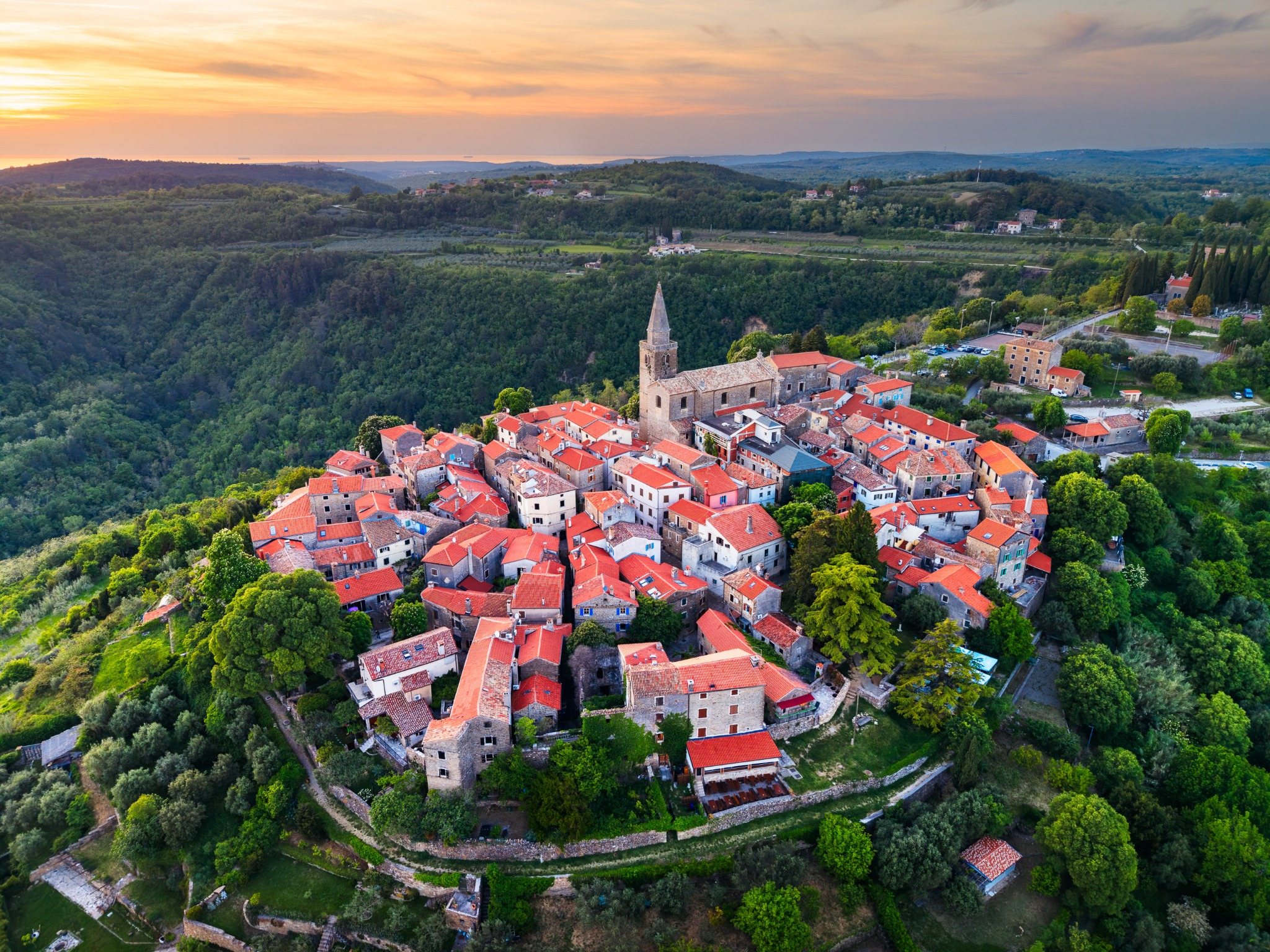
Grožnjan is a small hilltop town in northern Istria where medieval stone streets, galleries, music and wide views over the Mirna valley come together. Known as the Town of Artists, it offers a very different experience from Istria’s larger coastal resorts.
The historic centre is compact, but Grožnjan is worth more than a quick photo stop. Its appeal comes from the combination of architecture, creative life, countryside and the slower pace of inland Istria. This guide explains what to see, when to visit, how to arrive and how to combine Grožnjan with the rest of an Istrian itinerary.
Why visit Grožnjan?
Grožnjan is a good choice for travellers who want to experience historic Istria without spending the day in a large tourist centre. The old town is small enough to explore on foot, while its elevated position creates views across vineyards, olive groves and the Mirna valley.
The town also has a distinctive cultural identity. During the warmer months, workshops, exhibitions, music programmes and other artistic activities bring more life to the narrow streets and small squares. The official Istria Tourist Board describes Grožnjan as a place of significant cultural importance and highlights its summer music academies and artistic programmes.
Exploring Grožnjan Old Town
The best way to visit Grožnjan is simply to walk. There is no need for a complicated sightseeing route because the historic centre is compact. Enter the old town, follow the stone lanes, explore the small squares and look for viewpoints opening between the buildings.
Grožnjan retains elements of its medieval defensive structure and historic gates. The architecture reflects the town’s long connection with the Venetian and wider Istrian cultural landscape. The atmosphere is particularly enjoyable when you slow down rather than trying to tick off a list of sights.
Historic streets and viewpoints
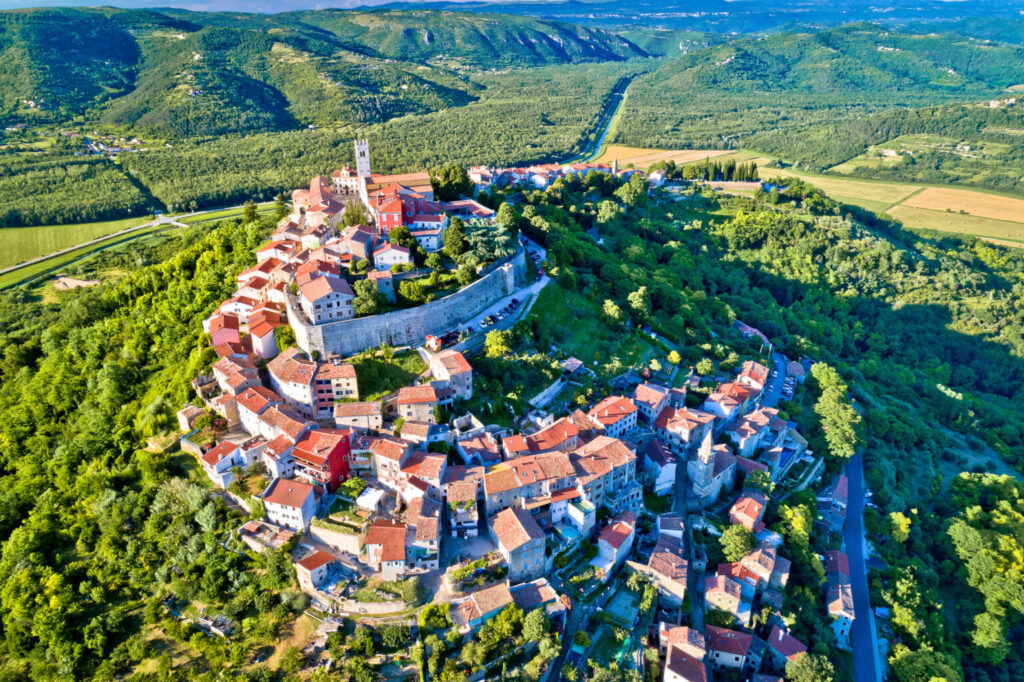
Some of Grožnjan’s best views are found simply by following the edge of the historic centre. From the elevated position, the landscape stretches towards the Mirna valley and the green interior of Istria.
Photography is one of the easiest ways to appreciate the town. Early morning and late afternoon are usually more comfortable for walking than the hottest part of a summer day, and the softer light can make the stone architecture and surrounding landscape particularly attractive.
Why is Grožnjan called the Town of Artists?
Art is not just a marketing label in Grožnjan. The town developed a strong creative identity through artists, galleries, workshops and music programmes that have become part of its modern character.
The summer season is especially important. The official tourism information notes that music academies and workshops in areas such as visual art, dance and drama bring additional activity to the town from spring onwards. In July and August, visitors may also encounter musicians performing in the streets and squares.
This makes Grožnjan particularly appealing if you enjoy combining sightseeing with culture. The experience can change depending on when you visit, so it is worth checking the local events calendar if music or exhibitions are an important part of your trip.
Galleries and cultural experiences
Small galleries and exhibition spaces are part of the character of the historic centre. Rather than expecting a large museum complex, think of Grožnjan as an open-air cultural destination where art is integrated into the old town.
One of the advantages of this format is that you can combine cultural stops with an unstructured walk. If you are travelling with someone who is less interested in galleries, you can still enjoy the architecture, viewpoints, cafés and surrounding scenery without following a formal museum itinerary.
Views over the Mirna Valley
Grožnjan’s position above the countryside is one of its strongest practical attractions. The town sits inland rather than directly on the Adriatic, so the views are dominated by the landscape of Istria rather than the sea.
Look beyond the immediate rooftops and you will see a patchwork of agricultural land, vineyards, wooded areas and smaller settlements. This is one reason Grožnjan works well as a stop on a road trip through northern and central Istria.
Grožnjan, food and Istrian wine
Grožnjan is not primarily a food destination, but it fits naturally into an Istrian food and wine itinerary. The surrounding countryside is part of one of Croatia’s most important gastronomic regions, known for products such as olive oil, wine and truffles.
If you are planning a full day inland, consider combining Grožnjan with a winery, local restaurant or another hill town rather than returning immediately to the coast. This gives you a better sense of the relationship between Istrian villages and the agricultural landscape around them.
Best time to visit Grožnjan
Grožnjan can be visited throughout the year, but the experience changes with the season.
- Spring: a pleasant period for walking and exploring inland Istria before the strongest summer heat.
- Summer: the most active period for cultural programmes, music and workshops, but also the period when visitor numbers and temperatures are higher.
- Autumn: a strong choice for travellers interested in food, wine and the quieter atmosphere of inland Istria.
- Winter: much quieter and atmospheric, although seasonal businesses and cultural programmes may operate differently.
If your priority is the artistic side of Grožnjan, check the current programme before travelling rather than assuming that every summer event runs on the same dates each year.
Parking in Grožnjan
Parking is one of the practical details worth checking before arriving. Visitors should expect to leave the car in designated parking areas and continue into the historic centre on foot rather than treating the old town as a normal drive-through settlement.
The Municipality of Grožnjan published 2026 parking information covering several public parking areas. Its 2026 notice states that paid parking operates during a main season from 15 April to 15 October, with a further paid period from 16 October to 31 December. Parking arrangements and tariffs can change, so check the municipality’s current notice before travelling.
For most visitors, the simplest approach is to allow a little extra time for parking and the walk into the historic centre. This is also one of the reasons Grožnjan is better experienced without a rushed schedule.
How to get to Grožnjan
For most travellers, a car is the most practical way to reach Grožnjan because the town is inland and the surrounding attractions are spread across the countryside.
Grožnjan also works well as part of a private day trip from Rovinj, Poreč or other Istrian bases. A private driver can make it easier to combine several stops without having to plan around limited public transport connections.
If you are driving yourself, treat Grožnjan as one stop in a wider route rather than as a destination that requires an entire day on its own. This is especially useful if you want to include Motovun, a winery or another historic village.
How long do you need in Grožnjan?
A first visit can be done in a few hours. That gives you enough time to walk through the historic centre, stop at viewpoints, visit a gallery or two and have a coffee or meal.
Allow longer if you are visiting during a cultural event, want to explore the surrounding countryside or plan to combine Grožnjan with food and wine stops. The town is small, so adding more time is less about seeing more monuments and more about experiencing the place at a slower pace.
Who is Grožnjan best for?
- Art lovers: for galleries, exhibitions, workshops and the town’s creative identity.
- Music lovers: particularly during the summer cultural season.
- Photographers: for stone architecture, narrow lanes and views across inland Istria.
- Couples: for a slower day away from the busiest coastal areas.
- Road-trip travellers: because Grožnjan combines easily with other northern and central Istrian destinations.
- Travellers interested in local culture: for a destination where art is part of the town itself rather than confined to one attraction.
What to combine with Grožnjan
Grožnjan makes the most sense as part of an inland Istria itinerary. Motovun is a natural companion for travellers interested in medieval hill towns, while wineries and countryside restaurants can turn the visit into a broader food and wine day.
You can also explore the smaller settlements around the Mirna valley or continue towards the northern Istrian coast. The best combination depends on where you are staying and how much driving you want to do.
Practical tips for visiting Grožnjan
- Wear comfortable shoes because the historic centre has stone streets and uneven surfaces.
- Allow time for parking and walking into the old town.
- In summer, consider visiting earlier or later in the day if you prefer cooler temperatures and a quieter walk.
- If art or music is your main reason for visiting, check the current event programme before travelling.
- Combine Grožnjan with another inland destination if you have a full day available.
- Do not rely on old parking information from travel blogs; municipal arrangements and tariffs can change.
Is Grožnjan worth visiting?
Yes, especially if you want to see a side of Istria that feels different from the major coastal towns. Grožnjan is small, but its combination of medieval architecture, artistic life and countryside views gives it a clear identity.
The best way to experience it is slowly: walk the old streets, look through the galleries, stop at the viewpoints and leave enough time to enjoy the surrounding landscape. Combined with Motovun, wine country or another nearby village, Grožnjan can become one of the most rewarding stops on an inland Istria day.
Explore more of Istria
Planning more than one stop? These guides cover towns that combine well with Grožnjan:
Plan your trip
Planning a trip to Grožnjan?
Discover beaches, things to do, parking, food and practical travel information.