Bale is a small hill town in southwestern Istria that rewards travelers who prefer compact historic centers, local character and a slower pace. It sits between Rovinj and Vodnjan, with the Adriatic coast only a short drive away.
Unlike Istria’s larger coastal destinations, Bale is easy to explore without a packed schedule. You can walk its stone streets, see the historic Soardo-Bembo complex, stop for a meal, and still have time to continue toward the coast or another southern Istrian destination.
This guide explains what to see in Bale, how it fits into an Istria itinerary, what to combine it with, and what to know before you go.
Why Visit Bale?
Bale works particularly well for travelers who want to add a smaller historic town to an Istria trip without spending an entire day sightseeing.
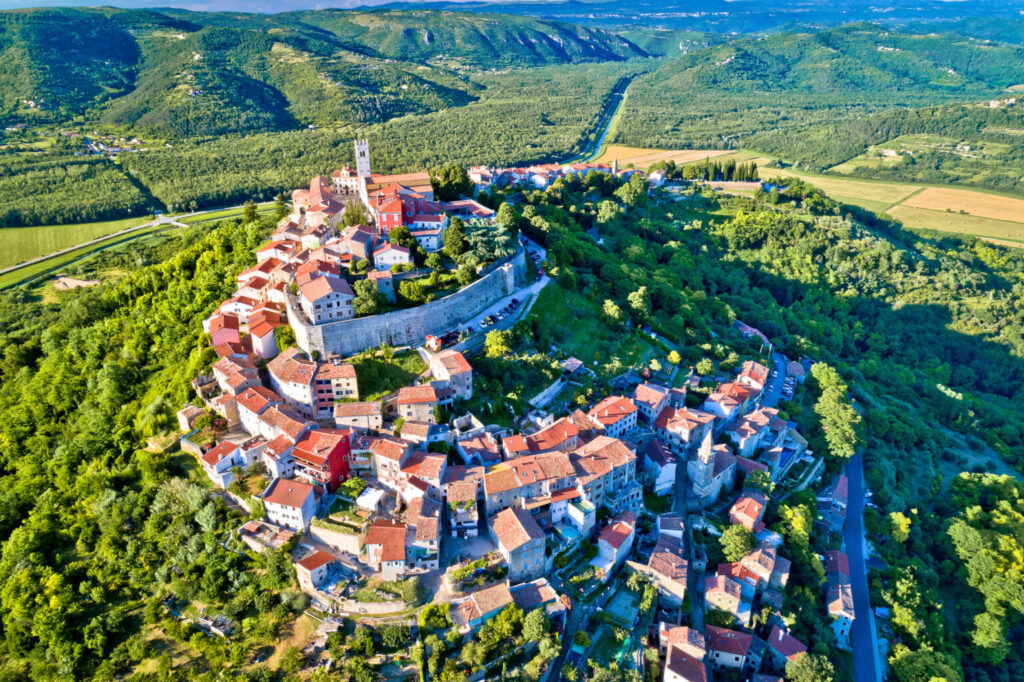
Its historic core is built around narrow streets and stone houses, while the surrounding area opens into olive groves, vineyards, fields and rural roads. The combination makes Bale different from both the major coastal resorts and the more dramatic hilltop destinations farther north.
It is especially suitable for:
- travelers interested in medieval and Venetian-era Istria
- visitors looking for a quieter alternative to larger tourist centers
- couples and slow travelers
- cyclists and walkers exploring the countryside
- travelers combining inland sightseeing with time on the coast
Bale’s Historic Centre
The best way to experience Bale is on foot. Start around the central square and walk through the old streets rather than treating the town as a quick photo stop.
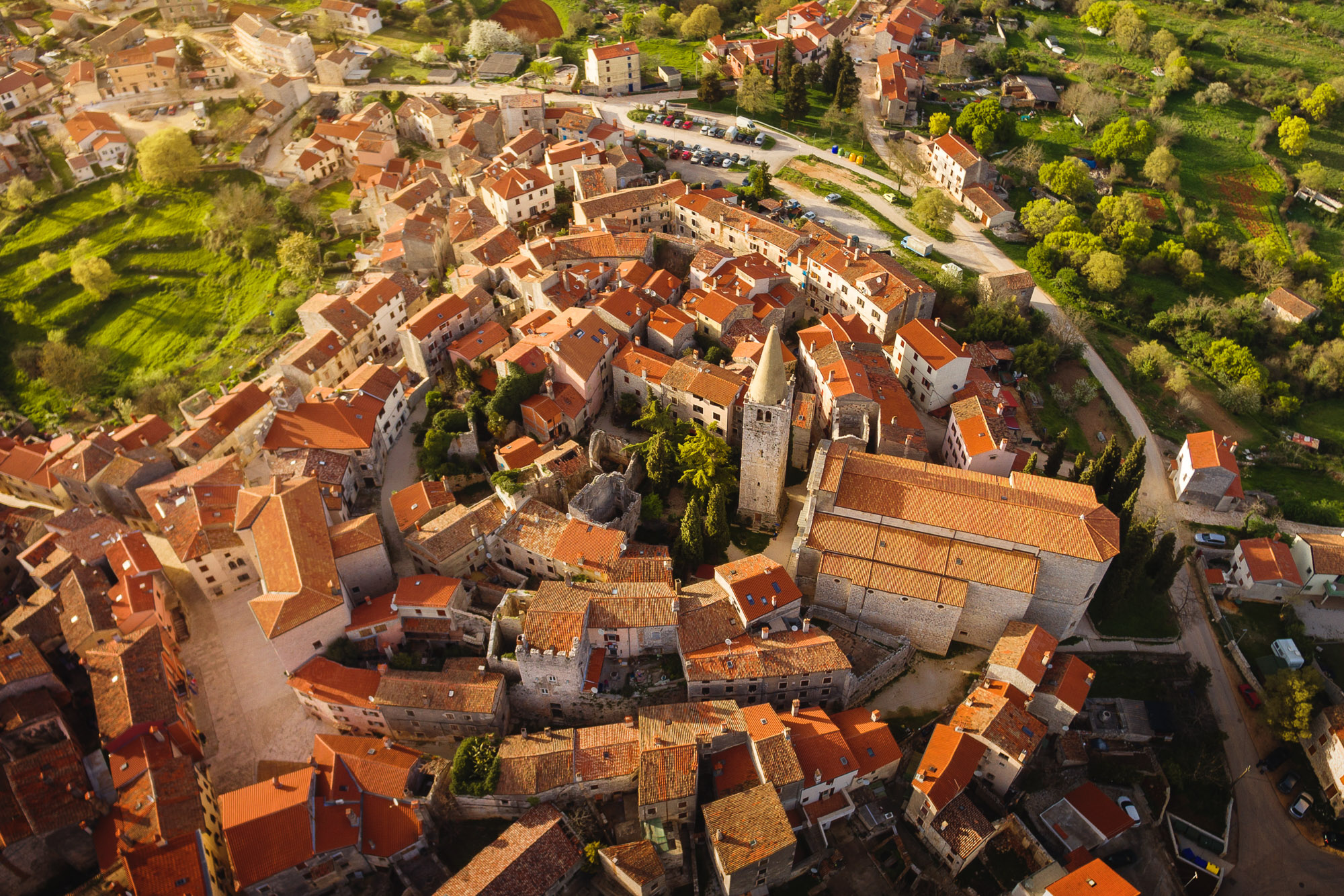
The historic settlement developed around a medieval castle associated with the Soardo and Bembo families. The wider town centre is protected as a historic area, with stone buildings and narrow lanes that preserve much of Bale’s traditional appearance.
The parish church of St. Julian and the town loggia are among the landmarks worth seeing as you walk through the centre.
Soardo-Bembo Castle
The Soardo-Bembo complex is Bale’s most recognisable historic building. It reflects the town’s medieval and later Venetian-era heritage and is closely connected with the history of the families who shaped Bale.
For visitors planning a trip specifically around the castle, check current opening information before arrival. The Istria Tourist Board currently lists the Soardo-Bembo palace as closed for reconstruction, so it should not be treated as an attraction with guaranteed interior access.
How Long Do You Need in Bale?
For most visitors, around two to three hours is enough to explore the historic centre at a relaxed pace, have a coffee or meal, and continue to another stop.
A longer visit makes sense if you want to combine Bale with the surrounding countryside, the coast, cycling or a meal focused on local products.
Bale is therefore better thought of as a flexible stop within an Istria itinerary than as a destination that requires a tightly scheduled full day.
Bale and the Coast
One of Bale’s advantages is the contrast between its inland historic centre and the nearby Adriatic coast.
The municipality has a long stretch of coastline, including the areas around San Polo and Colone. The coast is also associated with the Mon Perin resort area and outdoor activities.
This makes a simple combination possible:
- Explore Bale in the morning.
- Have lunch or coffee in the historic centre.
- Continue toward the coast.
- Spend the afternoon walking, cycling or swimming.
- Return to Bale or continue toward Rovinj or another southern Istrian destination.
The official Bale tourist board also lists a seasonal sightseeing train connecting the town with the Mon Perin coastal area. Because its timetable is seasonal, check the current schedule before relying on it for transportation.
Palud and Nature Around Bale
The landscape around Bale is one of the reasons the town works well for travelers who want more than historic architecture.
Olive groves, vineyards, fields and Mediterranean vegetation surround the settlement. Nearby Palud is an important wetland and bird habitat, adding a very different type of experience to a day focused on historic Istrian towns.
If nature is a priority, allow additional time rather than trying to fit every stop into a short visit.
Bale’s Dinosaur Heritage
The wider Bale coastline is known for significant paleontological discoveries, including dinosaur remains found in the area around Colone.
This is an unusual part of Bale’s identity and helps distinguish it from other Istrian hill towns. The local tourist offer includes dinosaur-related interpretation and attractions connected with the area’s paleontological heritage.
If you are traveling with children or have an interest in natural history, this can be a useful reason to combine the historic centre with the coastal area.
Food, Wine and Olive Oil
Bale is surrounded by the agricultural landscape that defines much of Istria.
Local products include olive oil, wine and traditional Istrian food. The area is particularly suited to travelers who prefer small producers, rural settings and local cuisine over a purely sightseeing-focused itinerary.
Look for Istrian varieties such as Malvasia and Teran, along with locally produced olive oil and regional cheeses.
Rather than trying to fit Bale into a checklist of attractions, it can be more rewarding to leave time for a meal and a slower walk through the town.
Bale for Cycling and Outdoor Travel
The countryside around Bale includes a network of rural and unpaved roads through olive groves, vineyards, fields and wooded areas.
This makes the area attractive for cycling and walking, particularly for travelers who want to see a less urban side of Istria.
Conditions and routes vary, so cyclists should choose routes appropriate to their equipment and experience rather than assuming every rural road is suitable for casual cycling.
How to Get to Bale
Bale is located in southwestern Istria between Rovinj and Vodnjan. The official Bale tourist board places the town about 13 kilometres from Rovinj and around 20 kilometres from Pula.
A car is the easiest option if you want to combine Bale with several other Istrian destinations on the same day.
The location is particularly convenient for itineraries such as:
- Rovinj → Bale → Pula
- Rovinj → Bale → the southern Istrian coast
- Pula → Bale → Rovinj
- Bale → Vodnjan → Pula
- Bale → Palud → Rovinj
Bale as a Day Trip from Rovinj
Bale is one of the easier small-town additions to a Rovinj stay.
The distance is short enough that you do not need to turn the visit into a major excursion. A few hours in Bale can add a very different atmosphere to a holiday based on the coast.
If you are traveling without a car, check current public transport options before setting out. If you want to combine several stops in one day, private transportation can be more practical than arranging separate connections.
What to Combine with Bale
Bale works best when combined with destinations that add something different rather than another nearly identical hill town.
Rovinj
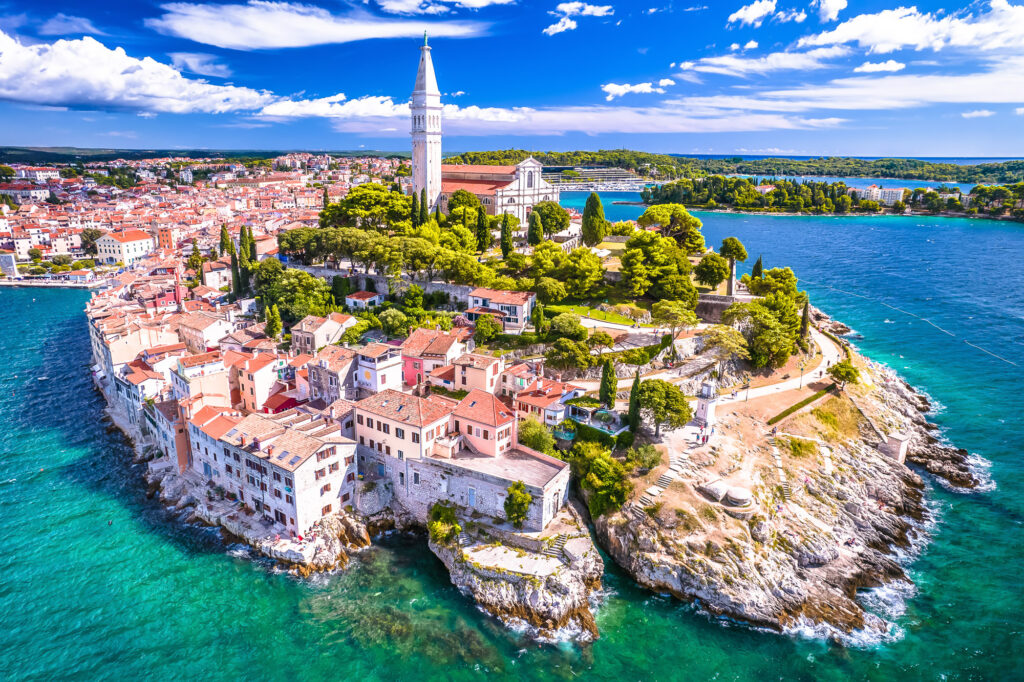
Rovinj provides the coastal counterpart to Bale, with its historic peninsula, waterfront and larger range of restaurants and accommodation.
Pula
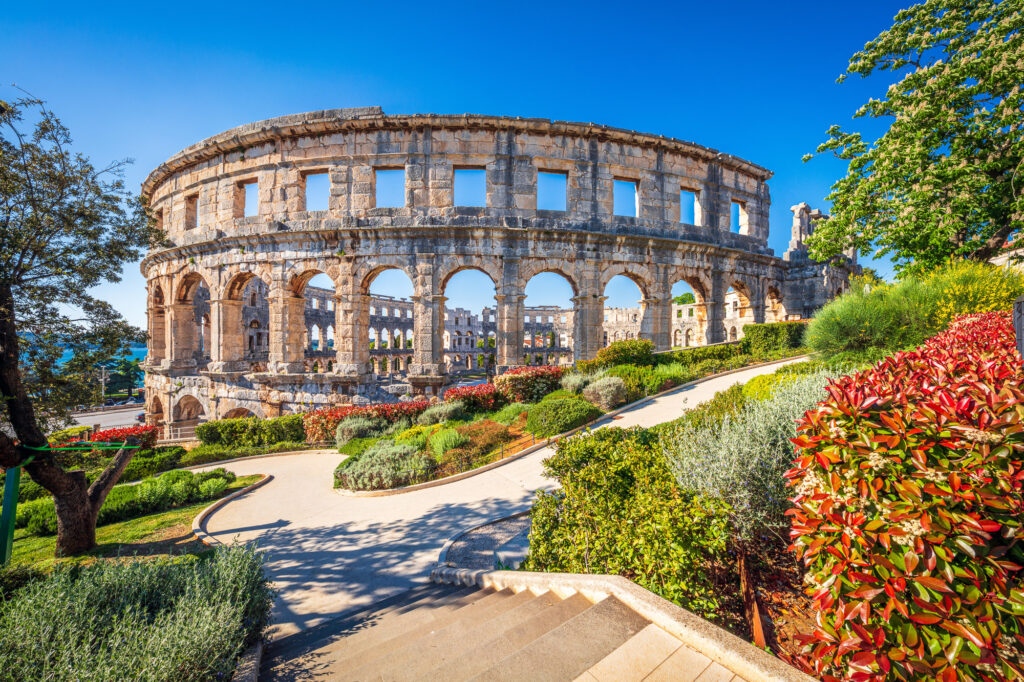
Pula is the logical choice if Roman history is a priority. Its Arena and historic centre provide a strong contrast with Bale’s smaller medieval setting.
Vodnjan
Vodnjan is another southern Istrian town known for historic architecture, olive oil and local heritage. It can be combined naturally with Bale when exploring the area between Rovinj and Pula.
Brijuni National Park
The Brijuni islands can be visited from Fažana. Combining Bale and Brijuni is possible, but allow enough time for the boat connection and the national park visit rather than treating both as quick stops.
Is Bale Worth Visiting?
Bale is worth visiting if you want to see a quieter side of Istria and prefer historic towns that can be explored at your own pace.
It is not the place to visit for a long list of major monuments. Its appeal is the combination of a compact medieval centre, surrounding countryside, nearby coast and local food culture.
For many travelers, the best way to use Bale is as part of a southern Istria day rather than as an isolated destination.
Practical Tips for Visiting Bale
- Explore the historic centre on foot.
- Allow at least two hours if you want more than a quick look.
- Wear comfortable shoes for stone streets and uneven surfaces.
- Check current opening information for the Soardo-Bembo complex before planning around an interior visit.
- If you want to visit the coast as well, plan the route before arriving.
- Check the current sightseeing-train timetable if you intend to use the seasonal connection to the coast.
- Combine Bale with Rovinj, Vodnjan, Pula or another southern Istrian stop.
- Leave time for lunch or a local-food experience rather than filling the entire visit with sightseeing.
Bale in Your Istria Itinerary
Bale does not need to compete with Rovinj, Pula or Motovun to be worthwhile. Its role is different.
It is a compact historic town that fits naturally between the larger destinations of southern Istria and the coast. For travelers building an itinerary rather than collecting isolated attractions, that flexibility is one of its main advantages.
If you are exploring Istria by car, Bale is an easy place to add to a day that already includes Rovinj, Pula, Vodnjan or the western coast.
Explore more of Istria
Planning more than one stop? These guides cover towns that combine well with Bale:
Plan your trip
Planning a trip to Bale?
Discover beaches, things to do, parking, food and practical travel information.