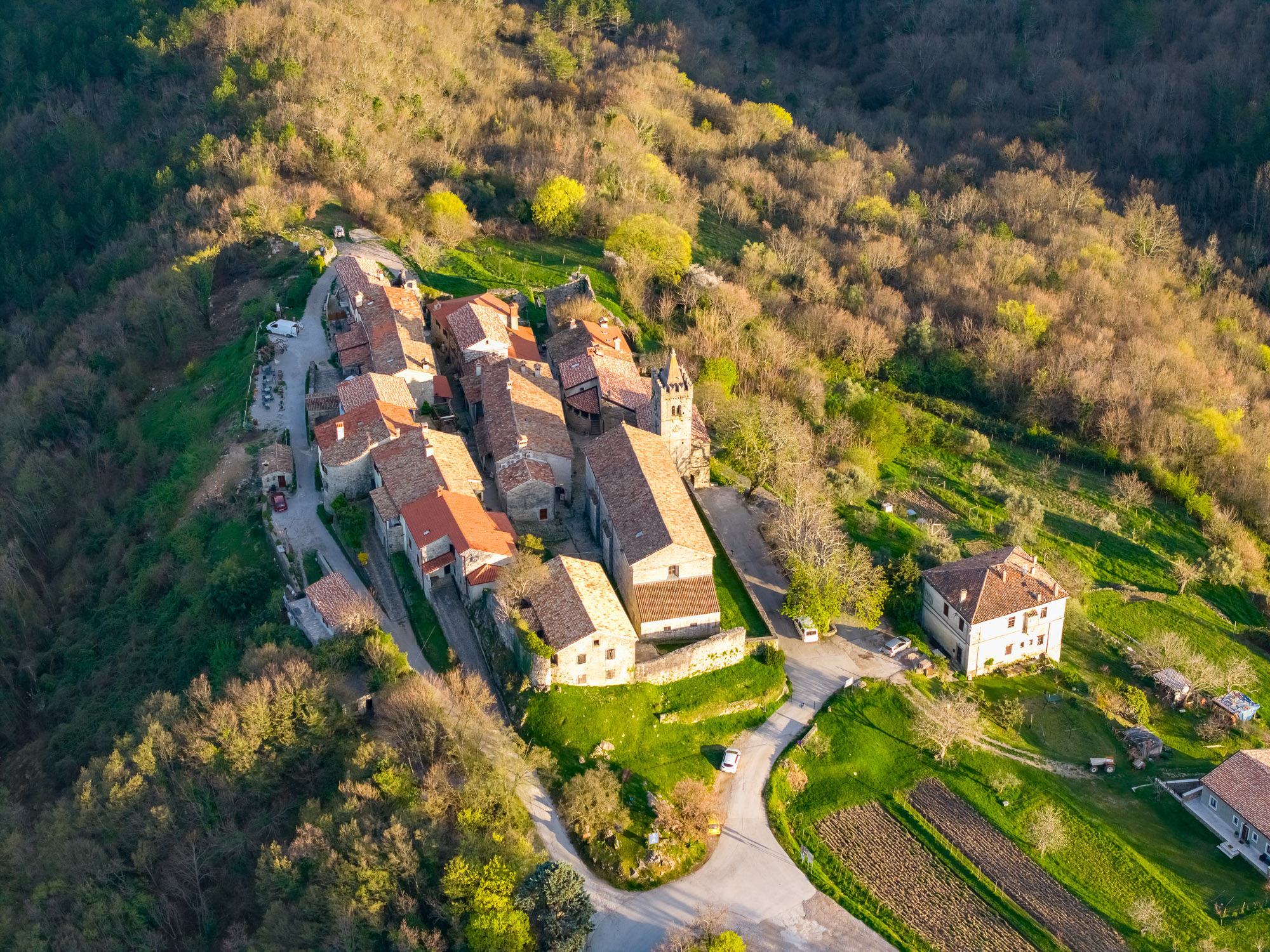
Hum is one of the most unusual places to visit in Istria. Hidden in the hills of northern Istria, this tiny medieval settlement is famous for being known as the “smallest town in the world”. But the number on the map is only part of the story. Hum is also closely connected with Glagolitic culture, traditional Istrian customs, the local biska brandy tradition and the historic landscape around Roč and the Mirna River.
Because Hum is so small, it is easy to see it quickly and move on. That would miss much of what makes the place interesting. The best way to visit is slowly: enter through the historic gates, walk the short stone streets, look at the church and town loggia, learn about Glagolitic heritage, and use Hum as a starting point for exploring northern and central Istria.
Why Visit Hum?
Hum offers a very different experience from Istria’s larger coastal towns. There is no waterfront promenade or large resort district. Instead, the settlement is a compact historic ensemble surrounded by green inland landscapes.
Hum was first mentioned in 1102 and developed as a fortified medieval settlement. Its small size has remained one of its defining characteristics, while its cultural importance is much greater than its physical scale. The town is also the final point of the Glagolitic Lane, a seven-kilometre monument route connecting Hum with Roč and commemorating the history of Glagolitic literacy in Istria.
What to See in Hum
The Historic Town Gates
The entrance to Hum is part of the experience. The medieval settlement is entered through its historic gates, with Glagolitic inscriptions forming an immediate introduction to the town’s cultural identity. The town’s compact layout includes the main square, loggia, historic houses and parish church within a remarkably small area.
The Town Loggia
The loggia is one of Hum’s characteristic historic buildings and is connected with the town’s traditional civic life. Hum has preserved an unusual custom in which a prefect is elected for a year during the annual Town of Hum celebration. The ceremony uses a traditional wooden voting stick known as a raboš.
Church of the Assumption
The parish church of the Assumption of the Blessed Virgin Mary stands at the highest point of the settlement. The present church dates from 1802 and occupies the site associated with the medieval castle of Hum.
Church of St. Jerome
For visitors interested in medieval art, the small Church of St. Jerome is one of the most important stops near Hum. Its interior contains remarkable frescoes dating from the second half of the 12th century, including scenes from the life and Passion of Christ. Glagolitic graffiti is also preserved on the painted walls, including the famous Hum graffito.
The church is at the cemetery outside the compact town centre. The key is kept at the local tavern, according to the Istria Tourist Board, so access is not the same as visiting a conventional museum with continuous opening hours.
The Glagolitic Lane from Roč to Hum
One of the best reasons to combine Hum with Roč is the Glagolitic Lane. This seven-kilometre route is marked by 11 monuments dedicated to the history of Glagolitic literacy and Croatian medieval culture.
The monuments begin near Roč and continue through the countryside towards Hum. Along the way are memorials dedicated to Cyril and Methodius, Clement of Ohrid, Grgur Ninski, Žakan Juraj and other figures and themes connected with the Glagolitic tradition. The route ends at the gates of Hum.
You do not need to be a specialist in medieval history to enjoy the route. It works particularly well as a slow cultural walk through the landscape, with the monuments providing context for the villages and countryside around them.
Hum and Biska
Hum is also associated with biska, a traditional Istrian brandy made with mistletoe. The Istria Tourist Board describes Hum as the town of biska and notes that the recipe is traditionally associated with the settlement. A brandy exhibition is held in Hum towards the end of October, bringing producers together for a competition.
For travelers interested in local food and drink, this is an important part of Hum’s identity. Rather than treating the town simply as a medieval photo stop, it is worth looking at the local traditions that are still part of life in the area.
Museum of Hum Aura
The Museum of Hum Aura focuses on the everyday traditions, crafts and customs of the region. The museum presents historic interiors and objects and also interprets aspects of Glagolitic culture. Visitors can write a postcard using Glagolitic characters, explore themed displays and learn about the traditional production and use of local products.
The official tourism information currently lists the museum as open year-round, with seasonal opening hours. Because opening times can change, check the current information before making the museum the main reason for your visit.
Things to Do Around Hum
Visit Roč
Roč is the natural companion to Hum. The two settlements are connected by the Glagolitic Lane, making it possible to combine history, walking and rural Istrian scenery in one outing.
Explore Buzet
Buzet lies further north and is a useful base for exploring this part of Istria. Its medieval old town occupies a hill above the Mirna valley and the area is particularly well known for truffles. The official Istria tourism portal currently highlights Hum, Roč, outdoor activities and the Museum of Hum Aura among experiences in the Buzet area.
Walk or Hike in the Mirna Valley
Hum can also be included in longer walking routes. One official route linking Buzet, Kotli and Hum is approximately 12 kilometres between Buzet and Hum and takes around four hours at a leisurely pace. The wider route can be extended to about 30 kilometres.
This is better suited to travelers who want an active day rather than a short sightseeing stop.
How Long Do You Need in Hum?
For the historic centre alone, one to two hours can be enough. If you want to visit the Museum of Hum Aura, see the Church of St. Jerome and take time for food or a drink, allow several hours.
A full half-day or day makes more sense if you combine Hum with Roč, the Glagolitic Lane or another destination around Buzet. This is also a good way to experience the surrounding landscape rather than treating Hum as a single isolated attraction.
When Is the Best Time to Visit Hum?
Spring and autumn are particularly attractive for exploring inland Istria because walking conditions are generally more comfortable than in the hottest part of summer. These seasons also fit well with the area’s food, walking and cultural experiences.
Summer can still be enjoyable, especially early or later in the day. If you are planning to walk the Glagolitic Lane or a longer trail, avoid the hottest part of the afternoon and carry enough water.
Hum also has seasonal events. The official Istria tourism calendar lists the Town of Hum celebration in June and the Review of Istrian Grappa in October; dates change from year to year, so check the current calendar before travelling.
How to Visit Hum
Hum is best approached by car, especially if you want to combine it with Roč, Buzet or other inland villages. Its small size means that the historic centre itself is explored on foot.
If you are travelling by bicycle or planning a walking day, the wider network of routes around Buzet and Hum offers more opportunities to explore the countryside. For longer walks, check route conditions and local information before setting out.
Where to Eat in Hum
Hum is a place to look for traditional Istrian flavours rather than an extensive restaurant scene. Local dishes and products can include homemade pasta, seasonal ingredients, soups, local cured products and regional spirits such as biska.
The official tourism information specifically mentions traditional Istrian cuisine and biska among the experiences available around Hum.
Hum as Part of an Istria Itinerary
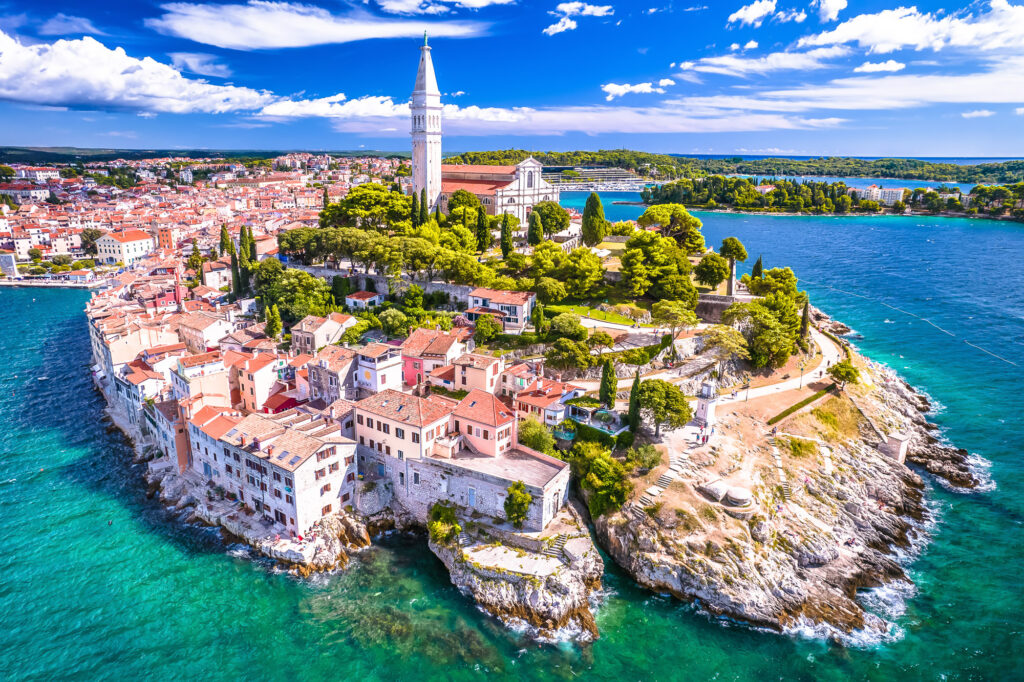
Hum works especially well as part of an inland Istria day. One possible route is Rovinj or Poreč in the morning, followed by central Istria and then Hum, although the exact route depends on where you are staying.
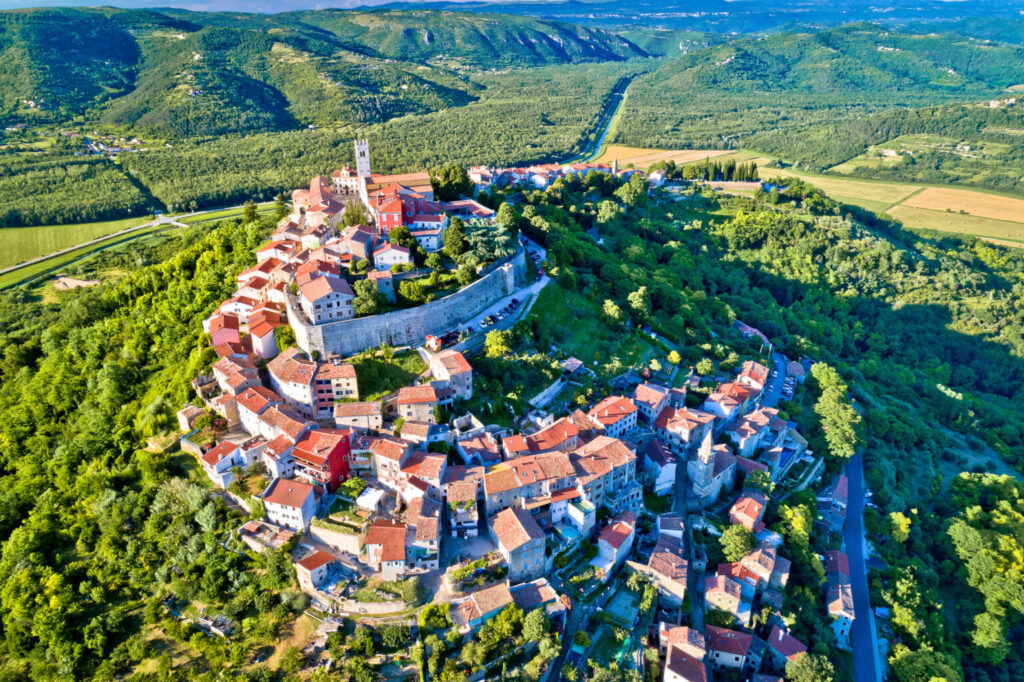
If you are focusing on inland Istria, a more natural combination is Motovun, Pazin, Hum and Buzet over one or two days. Each destination offers a different perspective: Motovun for the hilltop medieval setting and truffle country, Pazin for its dramatic cave and castle, Hum for Glagolitic heritage and Buzet for the northern Istrian landscape.
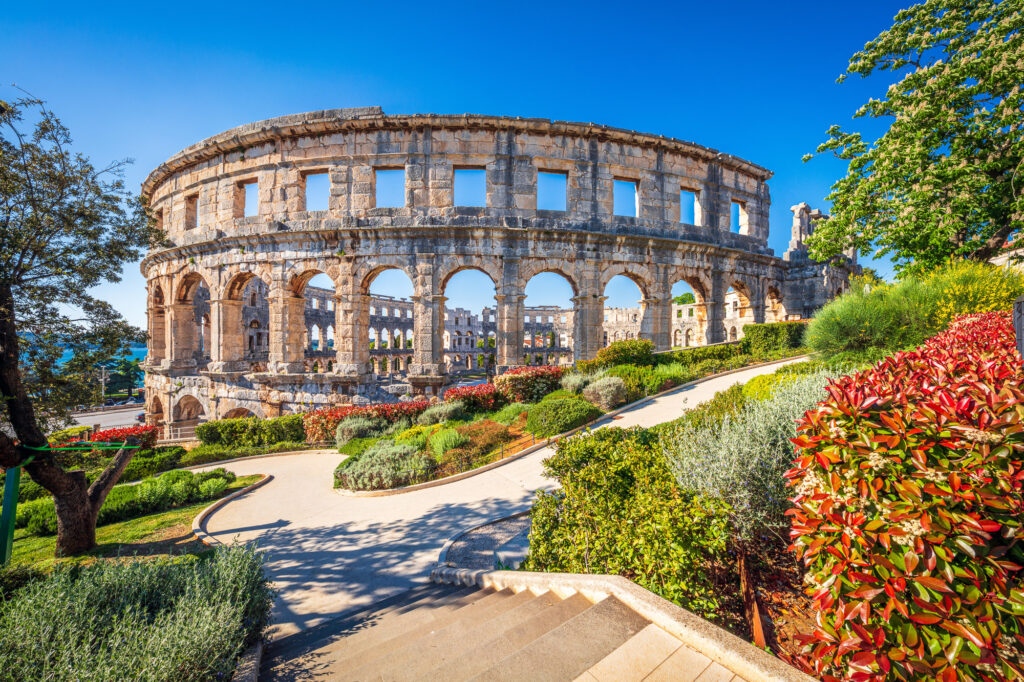
Read the existing CroatiaPoint guides to Motovun, Pazin, Grožnjan and Pula when building a wider Istria itinerary.
Is Hum Worth Visiting?
Yes, particularly if you are interested in history, traditional culture, medieval architecture and quieter parts of Istria. Hum is not a destination for a long list of attractions. Its appeal comes from the combination of scale, atmosphere, heritage and the surrounding landscape.
The best visit is therefore not about rushing through the “smallest town in the world”. It is about understanding why such a tiny settlement has remained culturally significant. Walk through the gates, explore the old centre, visit St. Jerome if access is available, learn about Glagolitic heritage and continue towards Roč or Buzet.
Practical Tips for Visiting Hum
- Wear comfortable shoes because the historic streets are paved with stone.
- Combine Hum with Roč and the Glagolitic Lane for a richer cultural experience.
- Check opening information before visiting the Museum of Hum Aura or Church of St. Jerome.
- If hiking, carry water and check weather conditions before setting out.
- Do not rely only on the “smallest town” label; allow time to discover the cultural history.
- Autumn is an especially interesting period if you want to experience local food and drink traditions.
Frequently Asked Questions About Hum, Croatia
Is Hum really the smallest town in the world?
Hum is widely promoted by the Istria Tourist Board as the smallest town in the world. Its exceptionally compact medieval settlement and historic urban features are central to that identity.
What is Hum famous for?
Hum is famous for its tiny medieval town centre, Glagolitic heritage, the Glagolitic Lane, traditional biska brandy and the annual custom of electing the town prefect.
How far is Hum from Roč?
Hum is about seven kilometres from Roč, and the two are connected by the Glagolitic Lane.
Can you visit Hum as a day trip?
Yes. Hum is easy to combine with Roč, Buzet and other inland Istrian destinations, and the compact historic centre can be explored in a short visit.
What is biska?
Biska is a traditional Istrian brandy associated with Hum and made with mistletoe. Hum hosts a traditional brandy event towards the end of October.
Final Thoughts
Hum may be one of the smallest destinations in Croatia, but it offers one of the most distinctive cultural experiences in Istria. Its medieval walls, Glagolitic heritage, traditional customs and connection with Roč make it much more than a quick photo stop.
If you are travelling through Istria and want to see a quieter side of the peninsula, put Hum on your route. Give yourself enough time to slow down, explore the stone streets and then continue into the surrounding hills and villages. That is where the real character of inland Istria begins.
Plan your trip
Planning a trip to Hum?
Discover beaches, things to do, parking, food and practical travel information.