Zadar is one of the best all-round bases on Croatia’s northern Dalmatian coast. Its compact old town combines Roman ruins, medieval churches, Venetian fortifications and two modern waterfront installations, while beaches, islands and major nature destinations are close enough to turn a city break into a much broader holiday.
This guide explains what to see in Zadar, where to swim, how long to stay, where to base yourself, how to get around and which day trips fit naturally into a northern Dalmatia itinerary.
Last updated: September 2026.
Why Visit Zadar?
Zadar works particularly well for travellers who want more than one type of trip. You can spend the morning among Roman remains and medieval churches, swim from the city coastline in the afternoon, watch sunset from the waterfront and use the next day for an island or national-park excursion.
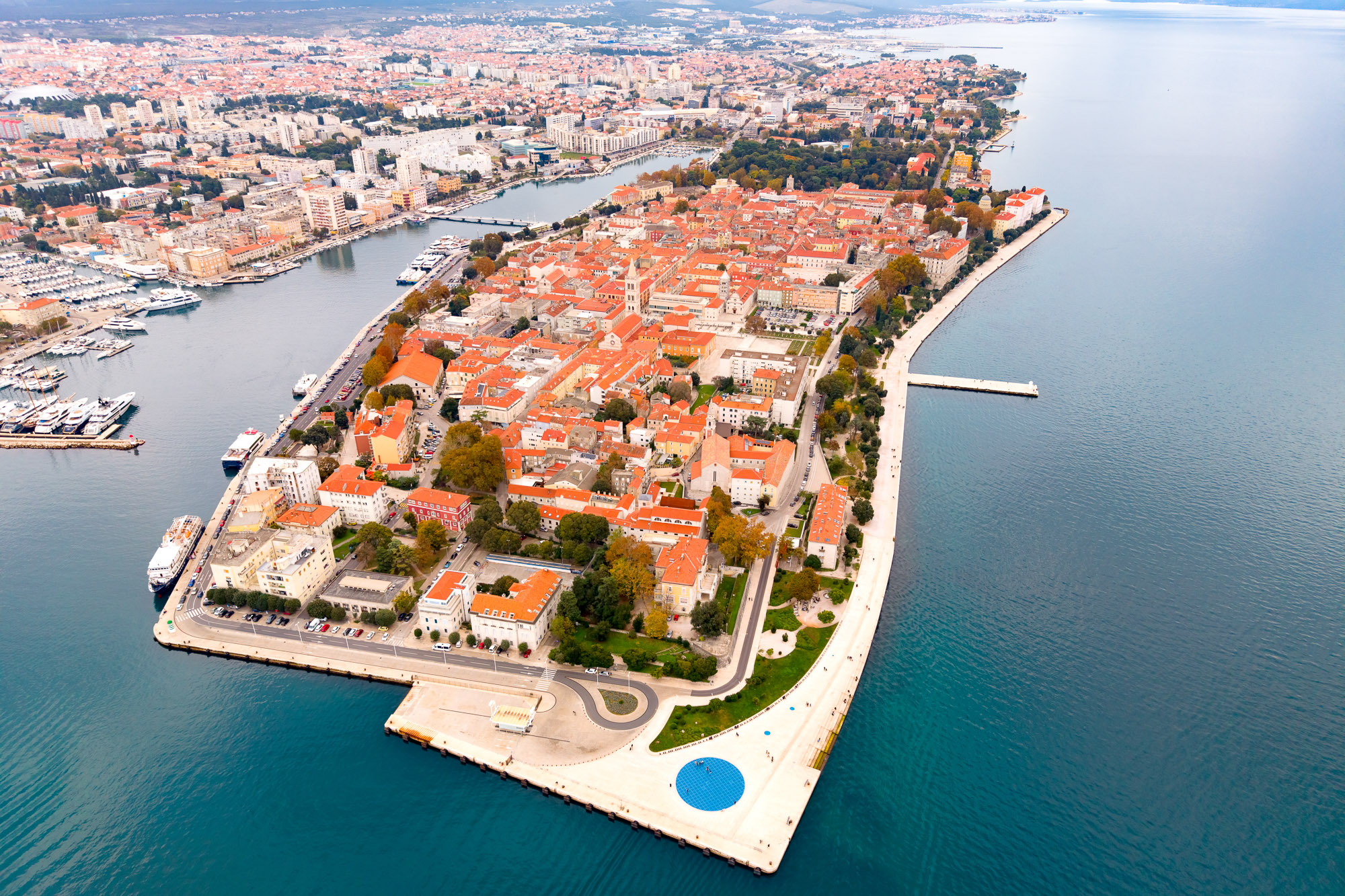
The historic centre occupies a peninsula and is easy to explore on foot. Outside it, residential neighbourhoods extend along the coast toward Borik, Puntamika and Diklo, while the wider Zadar region opens toward Nin, Pag, Dugi Otok, Ugljan, Pašman, Paklenica and other natural and cultural destinations.
Zadar is also a practical transport hub. It has an international airport, a major bus station and ferry connections serving the archipelago, which makes it useful both as a destination and as a starting point for a longer Croatia trip.
Best Things to Do in Zadar
Walk the Old Town Peninsula
The best introduction to Zadar is simply to walk the historic peninsula without rushing. The centre is compact enough to cross on foot, but the density of churches, stone streets, archaeological remains, squares and waterfront viewpoints makes it worth giving the area several hours.
Start around the Roman Forum and Church of St Donat, continue toward the cathedral and old streets, then loop through the squares and fortifications before reaching the western waterfront.
See the Roman Forum
Zadar’s Roman Forum was the civic centre of ancient Iader. Today its remains form an open archaeological space beside the Church of St Donat and the Archaeological Museum, creating one of the most distinctive historic settings in the city.
You do not need to treat the Forum as a separate excursion. It works naturally as part of an Old Town walk and helps explain why layers of Roman, early Christian, medieval and later architecture sit so closely together.
Visit the Church of St Donat
The circular Church of St Donat is Zadar’s most recognisable historic monument. The current building dates from the 9th century and is one of the clearest examples of pre-Romanesque architecture in Croatia.
The church is no longer used for regular liturgy and is known for its acoustics, which have made it a setting for musical performances. Even if you do not enter, its position beside the Roman Forum makes it an essential stop.
See the Cathedral of St Anastasia
Zadar Cathedral adds another layer to the city’s architectural story. Its Romanesque façade and position in the heart of the peninsula make it easy to combine with St Donat, the Forum and the surrounding historic streets.
If access to towers or interior spaces is important to your visit, check current opening arrangements locally because hours can vary by season and religious services.
Listen to the Sea Organ
The Sea Organ is one of Zadar’s defining modern attractions. Built into the waterfront, it uses wave movement to push air through pipes beneath the stone steps, producing changing sounds according to the sea.
There is no fixed performance time. The experience depends on the water and weather, which is part of the appeal. It is especially atmospheric near sunset, although that is also when the waterfront is busiest.
See the Greeting to the Sun
Immediately beside the Sea Organ, the Greeting to the Sun is a circular solar-powered installation that collects energy during the day and produces a light display after dark. The installation consists of 300 glass solar panels arranged in a circle 22 metres in diameter.
Visit once in daylight to understand the design and return after sunset if you want to see the illuminated version.
Walk the Riva at Sunset
Zadar’s western waterfront faces across the channel toward the islands and is one of the city’s most popular evening gathering places. Sunset is a major part of the Zadar experience, but you do not need to fight for a single viewpoint. Walk farther along the waterfront or arrive before the busiest period to find a more relaxed place to sit.
Explore Foša and the Land Gate
Foša is the small historic harbour on the southeastern side of the peninsula. The walk beside the harbour and Renaissance fortifications leads toward the monumental Land Gate and provides a quieter contrast to the busy western waterfront.
Zadar’s defensive system forms part of the UNESCO-listed Venetian Works of Defence between the 16th and 17th centuries, a serial World Heritage property shared across Croatia, Italy and Montenegro.
Browse the Market and Local Food Shops
Zadar’s market area is a useful stop for seasonal fruit, vegetables and local products. For travellers staying in an apartment, it is also a practical place to shop for simple meals or picnic supplies.
Look for regional olive oil, Pag cheese, Dalmatian cured meats, fresh produce and local wines. Markets are generally most interesting earlier in the day.
Best Beaches in Zadar
Zadar is not a resort built around one huge sandy beach. Instead, swimming is spread along the urban coastline, with pebble, rocky, paved and mixed beach areas.
Kolovare Beach
Kolovare is the most convenient city beach for many visitors because it lies close to the historic centre. The Zadar Tourist Board highlights its bays and city seawater pool, and it is one of the easiest places to combine sightseeing with a swim.
Punta Bajlo
South of Kolovare, Punta Bajlo has a rockier and greener feel. It is better suited to travellers who prefer a less urban swimming setting while remaining close to the city.
Borik and Puntamika
Northwest of the Old Town, Borik and Puntamika form one of Zadar’s main coastal leisure areas. Borik includes pebble and sandy sections and is popular with families, while the wider coastline offers swimming, cafés and sunset views.
Diklo
Diklo is farther northwest and works well for travellers who want accommodation near the sea rather than directly in the historic centre. The coastline has numerous places to swim and is generally more residential than the peninsula.
For a dedicated beach holiday, the wider Zadar region offers far more choice than the city itself. Nearby Petrčane, Nin and the islands can all add different types of beaches to the trip.
Where to Stay in Zadar
Old Town
Stay on the peninsula if your priority is atmosphere, historic sights, restaurants and being able to walk almost everywhere. This is especially convenient for a short city break.
The trade-off is vehicle access. Much of the historic core is pedestrianised, parking is outside or around the peninsula, and carrying luggage through stone streets can be less convenient than staying elsewhere.
Kolovare
Kolovare is a strong compromise between beach access and proximity to the centre. It suits travellers who want to swim regularly but still walk into the Old Town.
Borik and Puntamika
These areas suit beach-focused stays, families and travellers who prefer larger hotels or apartments outside the historic core. You can reach the centre by local transport, taxi, bicycle or a longer walk depending on the exact location.
Diklo
Diklo works best for a quieter coastal stay, particularly if you are comfortable being farther from the main sights. It can be a good choice for longer summer holidays where swimming matters more than stepping directly into the Old Town.
How Many Days Do You Need in Zadar?
One day is enough for the main Old Town sights, waterfront and a quick swim, but it leaves little room for the surrounding region.
Two to three days is a better first visit. It allows one full city day plus time for beaches, a nearby island or another regional excursion.
Four to seven days works well if Zadar is your base for northern Dalmatia. You can then mix city time with islands, Nin, Paklenica, Krka, Dugi Otok or other destinations without changing accommodation every night.
For a broader Croatia route, see our Croatia itineraries and Croatia road trip guide.
Best Day Trips from Zadar
Nin
Nin is one of the easiest cultural day trips from Zadar. The small historic centre, salt tradition and nearby shallow beaches make it particularly suitable for combining sightseeing with a relaxed coastal afternoon.
Ugljan
Ugljan is one of the most accessible island escapes from Zadar. Ferries from Gaženica serve Preko on Ugljan throughout the year, and the crossing is short enough for a day trip.
The island works for swimming, cycling, walking and village exploration. If you want to take a car, check the current ferry timetable and vehicle conditions before travelling.
Dugi Otok and Telašćica
Dugi Otok offers a much larger island experience, with coves, villages, cliffs and access to Telašćica Nature Park. It deserves a full day at minimum and is even better with an overnight stay.
Transport logistics matter more here than on Ugljan. Build the trip around confirmed ferry or excursion schedules rather than assuming you can improvise connections on the day.
Paklenica National Park
Paklenica is one of the best options for travellers who want to add hiking and mountain scenery to a coastal holiday. The park lies beneath the Velebit range and is known for its canyons, trails and climbing.
Start early in warm weather, carry enough water and choose a route that matches your experience. Mountain conditions can differ significantly from the coast.
Krka National Park
Krka is another practical nature trip from Zadar, especially for travellers driving south toward Šibenik. The park’s river landscapes and waterfalls can be combined with a wider northern Dalmatian itinerary.
Entrance systems, access points and visitor rules change over time, so check current official park information before travelling.
Pag
Pag combines a striking rocky landscape with beaches, old settlements and one of Croatia’s best-known regional cheeses. It works particularly well by car because you can move between Pag Town, villages and coastal viewpoints at your own pace.
Zadar and the Islands
Zadar’s position opposite a large archipelago is one of its biggest strengths. Ferry and boat connections open access to Ugljan, Dugi Otok, Iž, Molat and other islands, while excursion boats also serve wider marine destinations.
Gaženica is the main passenger and vehicle ferry port outside the city centre. Some services use the peninsula, and routes can differ by operator and season, so always confirm the exact departure port rather than simply searching for “Zadar ferry.”
Jadrolinija publishes current sailing schedules online. Seasonal frequencies and temporary timetable changes are common, so ferry planning should be done before booking accommodation on an island.
Getting to Zadar
By Plane
Zadar Airport is about 8 kilometres from the city. The airport operates a public bus connection linking the airport with the main bus station and the Old Town, with the route also serving the Gaženica ferry-port area.
The airport publishes its shuttle timetable by month, so check the current schedule close to your travel date rather than relying on an old timetable. Zadar Airport also unveiled a new departures terminal in July 2026, increasing passenger-handling capacity.
By Car
Zadar is connected to the A1 motorway, making it straightforward to reach by road from Zagreb, Split and other parts of Croatia. A car is not necessary for exploring the historic centre, but it is useful for regional beaches, Paklenica, Pag and smaller inland destinations.
If staying in the Old Town, check parking before arrival. Do not assume your accommodation has vehicle access simply because it has a central address.
By Bus
Intercity buses connect Zadar with major Croatian cities and many regional destinations. The main bus station is outside the peninsula but is linked to the centre by local transport and taxis.
Schedules vary seasonally and by operator. Confirm the actual departure time and station details for your travel date.
By Ferry
Zadar is one of Croatia’s major island gateways. Gaženica handles many local vehicle and passenger ferries, including routes serving islands in the Zadar archipelago. The historic peninsula also has passenger services.
When travelling with a car, check whether the chosen route carries vehicles and whether the ticket guarantees a specific sailing.
Getting Around Zadar
The Old Town is best explored on foot. Most major sights are close together and driving inside the historic core is unnecessary.
For Borik, Diklo, the bus station and outer neighbourhoods, local buses and taxis are useful. Cycling can also work along parts of the coast, although summer heat should be considered.
A rental car becomes most valuable when Zadar is being used as a base for a regional road trip rather than a city break.
Best Time to Visit Zadar
Spring
April and May are good for sightseeing, walking and regional road trips. Swimming conditions depend on personal preference, but the city is generally easier to explore before peak summer.
June
June combines long days, increasingly warm sea temperatures and a lively summer atmosphere without necessarily reaching the busiest levels of July and August.
July and August
These are the busiest months for beaches, island trips and summer events. Expect stronger demand for accommodation, ferries and parking, especially around weekends and popular excursion times.
September
September is one of the strongest all-round months for Zadar. Sea temperatures are usually still suitable for swimming, while the city and region often feel easier to explore than at midsummer peak.
October to March
Zadar remains a real city outside summer, but the travel experience changes. Some seasonal restaurants, excursions and island services reduce, while museums, historic sights and local life become more central to the visit.
For broader seasonal planning, see our best time to visit Croatia guide.
Food to Try in Zadar
Zadar’s food reflects both Dalmatian coastal traditions and the produce of northern Dalmatia. Look for grilled or baked fish, octopus, shellfish, risotto, seasonal vegetables, olive oil and local cheeses.
Pag cheese is one of the region’s best-known products. Local wines and maraschino, the cherry liqueur historically associated with Zadar, also connect the city to its surrounding agricultural and trading traditions.
Rather than choosing restaurants solely by proximity to the waterfront, walk a few streets inland and compare menus. In summer, reservations are useful for popular restaurants at prime dinner times.
Zadar with Kids
Zadar can work very well for families because the historic centre is compact, the waterfront gives children open space between sightseeing stops, and city beaches are close to the centre.
The Sea Organ and Greeting to the Sun are easy family attractions because they require no long museum visit. Kolovare, Borik and the wider coastline add swimming options, while day trips can be adjusted according to children’s ages and tolerance for transport.
If travelling as a family, avoid planning a major national-park excursion, a long dinner and a full Old Town sightseeing programme on the same day. Zadar is more enjoyable when activities are spread out.
See also our Croatia with kids guide.
Can You Visit Zadar Without a Car?
Yes. Zadar is one of the easier Croatian destinations to visit without driving. The Old Town is walkable, the airport has public transport, buses connect regional towns and ferries open access to several islands.
A car becomes more useful for flexible national-park visits, remote beaches, Pag, Velebit and smaller inland destinations. If your itinerary is mainly Old Town plus ferries and organised excursions, renting a car may add more parking hassle than value.
Practical Tips for Visiting Zadar
- Wear comfortable shoes: the Old Town is compact but involves a lot of walking on stone surfaces.
- Carry water in summer, especially when combining sightseeing with long waterfront walks.
- Plan sunset loosely. The Sea Organ area is popular, but the entire western waterfront has views.
- Check ferry departure ports carefully; “Zadar” can mean the peninsula or Gaženica depending on the service.
- Confirm current national-park tickets, opening times and access rules on official websites.
- If driving, arrange parking before entering the centre rather than searching around the peninsula at peak times.
- Allow at least one unscheduled half-day for swimming or wandering. Zadar is especially good when the itinerary is not overfilled.
Frequently Asked Questions
Is Zadar worth visiting?
Yes. Zadar offers one of Croatia’s strongest combinations of historic-city sightseeing, urban beaches, island access and nearby nature. It is particularly useful for travellers who want a base rather than a destination with only one main attraction.
Is Zadar better than Split?
They suit different trips. Split is larger and has stronger ferry links to several famous central Dalmatian islands, while Zadar feels more compact and is especially well positioned for the northern Dalmatian archipelago, Paklenica, Pag and nearby nature destinations.
Is Zadar better than Dubrovnik?
Dubrovnik offers the more monumental walled-city experience. Zadar is less concentrated around one headline attraction and can be easier to use as a practical regional base. Travellers choosing between them should decide whether they prioritise Dubrovnik’s historic setting or Zadar’s mix of city, beaches, islands and day trips.
How many nights should you stay in Zadar?
Two or three nights is a strong first visit. Stay longer if you want to use Zadar as a base for islands, national parks and northern Dalmatia.
Can you swim in Zadar?
Yes. Kolovare is close to the centre, while Borik, Puntamika, Diklo and other parts of the coastline provide additional swimming options.
Do you need to book Zadar ferries in advance?
It depends on the route, season and whether you are travelling with a vehicle. Check the current operator timetable and ticket conditions. Popular summer vehicle sailings deserve more advance planning than simple passenger trips.
Is Zadar a Good Base for Northern Dalmatia?
For many travellers, yes. Zadar has enough history, food and beaches to justify its own stay, while its airport, bus connections, ferry ports and road links make it one of the most practical bases in the region.
The strongest Zadar itineraries usually combine one full day in the city with one or two carefully chosen regional experiences rather than trying to visit every nearby island and national park. Use our best places to visit in Croatia guide to place Zadar within a wider route.
For current attraction information, events and local visitor services, consult the official Zadar Tourist Board. For flights and airport transport, use Zadar Airport’s official website, and for ferry schedules check the relevant operator before travelling.
Plan your trip
Planning a trip to Zadar?
Discover beaches, things to do, parking, food and practical travel information.