Plitvice Lakes National Park is worth visiting in every season, but the experience changes dramatically through the year. Spring brings powerful waterfalls and fresh green forest, summer offers the longest operating hours but the largest crowds, autumn adds vivid foliage, and winter can transform the lakes into a quiet snowy landscape with reduced services.
For most first-time visitors, the best time to visit Plitvice Lakes is late spring or early autumn. May, early June, late September and October usually offer the best balance of attractive scenery, manageable temperatures and fewer visitors than the July-August peak. The best choice, however, depends on whether your priority is waterfalls, photography, low prices, long daylight hours or the quietest possible visit.
Best Time to Visit Plitvice Lakes at a Glance
- Best overall balance: May, early June, late September and October.
- Best for strong waterfalls: spring and periods following sustained rain.
- Best for long opening hours: June to September.
- Best for fewer crowds: April, May, October and winter weekdays.
- Best for autumn colors: usually October, with timing varying from year to year.
- Best for lower ticket prices: November through March.
- Best for snow scenery: winter, although snow is never guaranteed and route access can be reduced.
Plitvice Lakes by Season
Spring: Waterfalls, Green Forest and Cooler Walking Weather
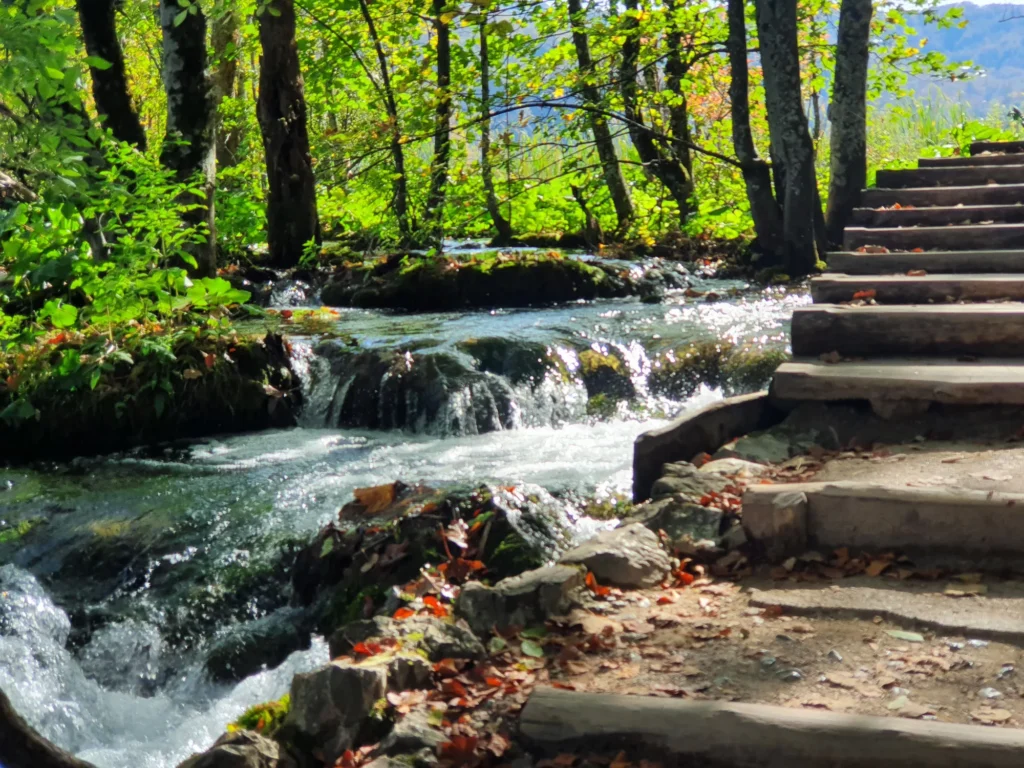
Spring is one of the most rewarding seasons at Plitvice Lakes. Snowmelt and rainfall often give the waterfalls and streams more volume, while the beech and fir forests become intensely green. Temperatures are generally more comfortable for several hours of walking than in midsummer.
April can still feel cool and unsettled, especially in the morning. May is usually a stronger all-round choice because days are longer, vegetation is well developed and the busiest summer period has not yet started. Visitors should still bring a light waterproof layer because rain is part of the reason the park looks so lush.
In the park’s published spring 2026 information, ticket sales at Entrance 1, Entrance 2 and the Flora auxiliary entrance ran from 07:00 to 17:00, with parking open until 21:00. Operating times change seasonally, so always check the official national park website shortly before travel.
Summer: Long Days, Full Services and Peak Crowds
Summer provides the longest days and the broadest operating window, making it easier to combine the Upper and Lower Lakes in one visit. Electric boats and panoramic vehicles usually run frequently, and all main visitor infrastructure is in its high-season rhythm.
The trade-off is crowding. July and August are the busiest months, especially from late morning through early afternoon. Boardwalk bottlenecks can make a route feel much slower than the distance suggests. If visiting in peak summer, reserve a timed ticket in advance and choose the earliest practical entry slot.
For summer 2026, the official park information listed ticket sales from 07:00 to 16:00 and parking from 07:00 to 20:00. The 2026 adult ticket price for the June-September period was €40 during the main daytime pricing window and €25 after the designated afternoon cutoff. In June through August the lower-price period began after 16:00, while in September it began after 15:00.
An afternoon ticket can be useful for a shorter visit, but do not choose it only for the lower price if you want to complete a long route. Boats, panoramic vehicles and ticket desks finish progressively earlier than the park itself, so check the current timetable before committing to a late entry.
Autumn: Fall Color and a Quieter Atmosphere
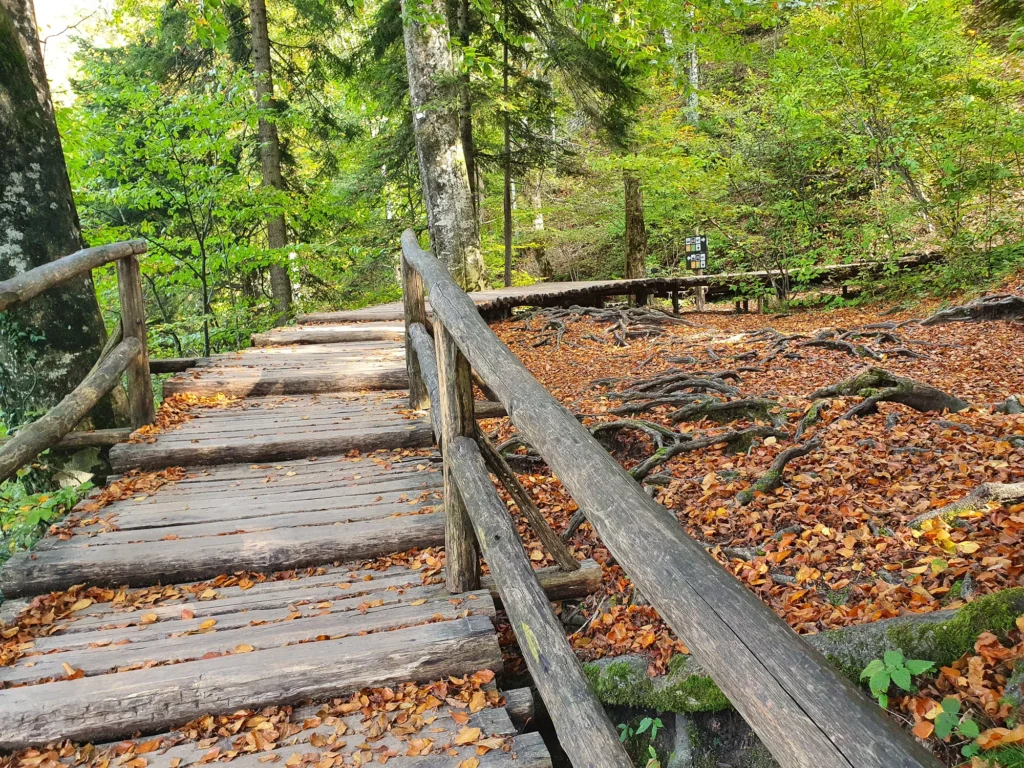
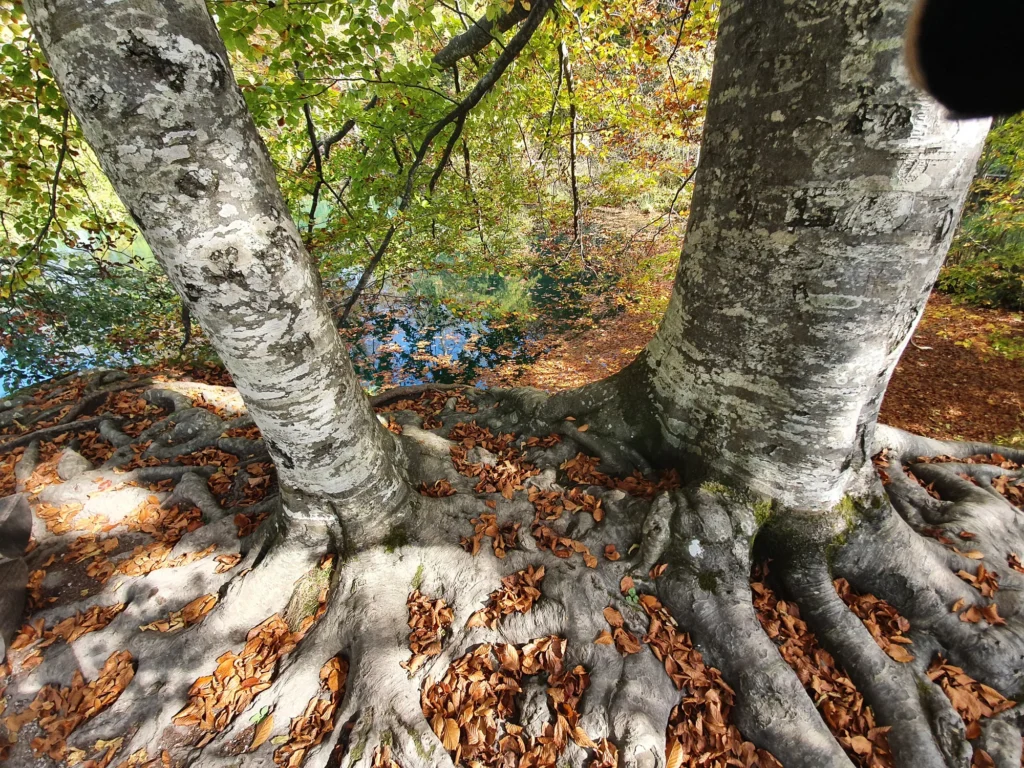
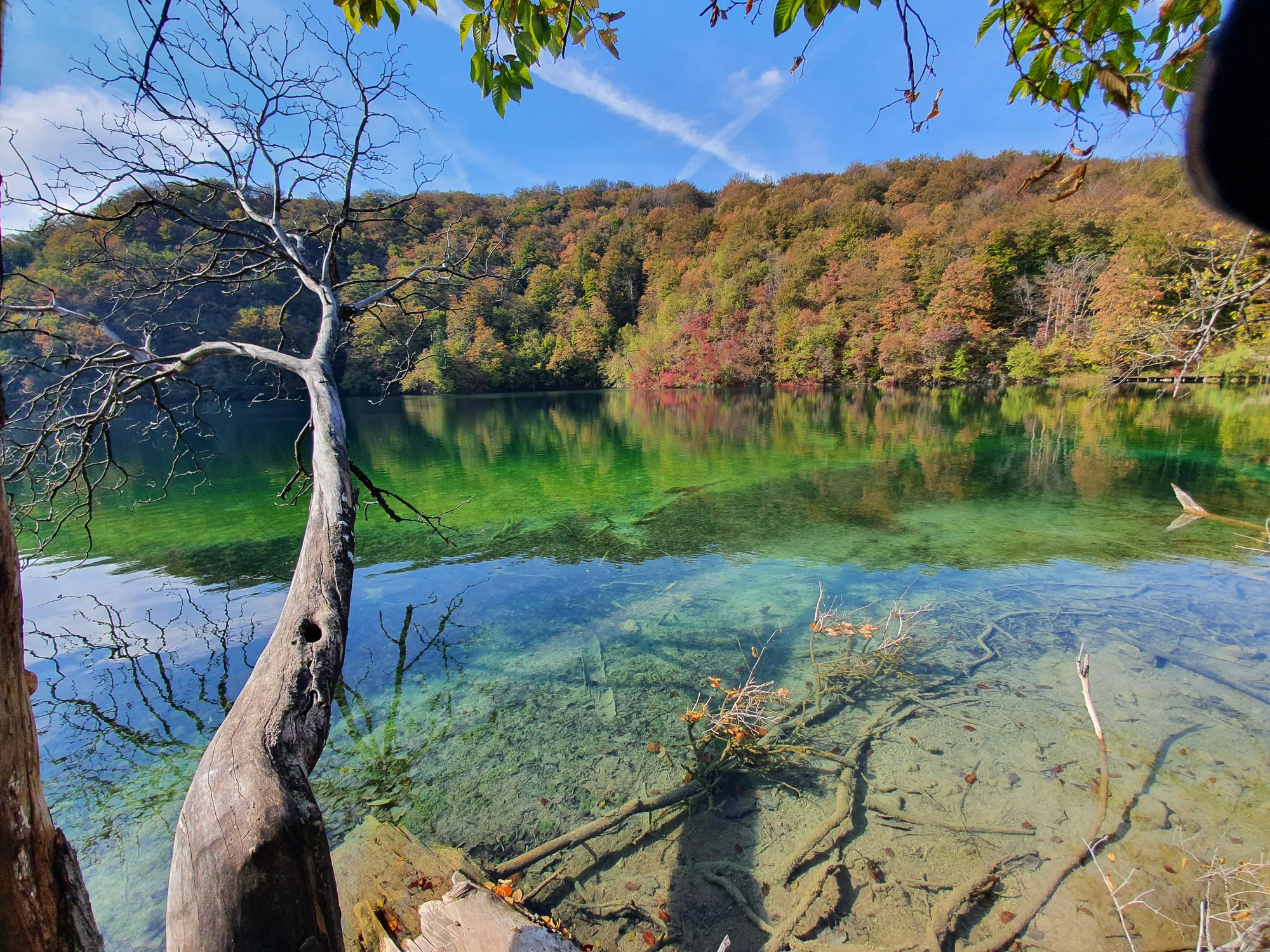
Autumn is arguably the most photogenic season at Plitvice. The forest surrounding the lakes changes from green to yellow, orange and copper, while misty mornings can create excellent photography conditions. September still feels relatively summery, but crowd levels often begin to ease after the main school-holiday period.
October is particularly attractive for travellers who prefer cooler hiking weather and seasonal color. The exact timing of peak foliage varies with temperature and rainfall, so it is better to think of October as a broad window rather than plan around one specific week.
By November, daylight is much shorter and park operations are reduced. The official autumn information for late 2025 showed ticket sales ending at 13:00, with more limited boat and panoramic-vehicle schedules. Similar reductions should be expected in late autumn, but visitors should verify the current year’s schedule before arrival.
Winter: Quiet, Dramatic and Weather-Dependent
Winter offers the quietest version of Plitvice Lakes. Frost, ice and snow can turn the waterfalls and forest into a completely different landscape, but conditions are less predictable. Snow is possible rather than guaranteed, and some paths or visitor services can close temporarily for safety.
During the 2025-2026 winter season, the park published shorter ticket-sale hours, from 08:00 to 13:00 at Entrance 1 and the Flora auxiliary entrance, with reduced boat and panoramic-vehicle timetables. This illustrates an important winter rule: plan a shorter visit and check current route availability on the morning of travel.
Winter is best for flexible travellers who value atmosphere over completing every sightseeing program. It is less suitable if this may be your only visit to Plitvice and you want maximum route choice.
Best Months for Different Types of Trip
Best Time for First-Time Visitors
May and late September are excellent choices for a first trip. Both periods generally provide a good combination of scenery, comfortable walking conditions and full or near-full visitor services without the heaviest midsummer pressure.
Best Time for Waterfalls
Spring is usually the strongest season for water flow, especially after a wet period. The exact appearance of the waterfalls changes constantly because Plitvice is a living karst water system influenced by precipitation, groundwater and seasonal conditions.
If waterfalls are your main reason for visiting, avoid assuming that a specific date will guarantee maximum flow. Recent rainfall matters more than the calendar alone.
Best Time for Photography
Photographers have several strong options:
- Spring: fresh green foliage and lively water.
- Early morning in summer: softer light and fewer people on the boardwalks.
- October: autumn color and atmospheric conditions.
- Winter: snow, frost and ice when weather conditions cooperate.
For the cleanest compositions, entering early is usually more important than choosing a particular month.
Best Time for Families
May, June and September are generally the easiest months for families because temperatures are more comfortable than during peak summer heat and operating hours are still generous. Families with young children should avoid building an itinerary around the longest route; a shorter lake program leaves more flexibility for breaks and transport connections.
For broader family planning, see Croatia with Kids.
Best Time for Couples
Couples seeking a quieter atmosphere should consider May, late September or October. Early mornings and evenings around the accommodation areas are especially peaceful once day-trip groups have left.
If Plitvice is part of a wider romantic trip, the Croatia for Couples guide can help with route planning.
Best Time for Budget Travellers
Ticket prices are lowest in winter. In the official 2026 price list, the adult one-day ticket was €10 from January through March and again from November through December. The adult price was €23 in April, May and October, compared with the higher summer rate.
Lower admission prices do come with shorter days and reduced transport schedules, so budget travellers should balance savings against how much of the park they want to see.
2026 Plitvice Lakes Ticket Seasons
The official 2026 price list divides the year into clear seasonal periods:
- 1 January-31 March and 1 November-31 December: adult day ticket €10.
- 1 April-31 May and 1 October-31 October: adult day ticket €23.
- 1 June-30 September: adult day ticket €40 during the main daytime period and €25 after the designated afternoon cutoff.
Children, students and groups have separate rates, and admission conditions can change. Buy tickets only through the official park system or authorized channels, and confirm the current price and entry time before travel.
When Are Plitvice Lakes Most Crowded?
The highest visitor pressure is generally in July and August, particularly between late morning and early afternoon. Weekends and public-holiday periods can also be busy in spring and autumn.
The simplest crowd-avoidance strategy is to stay near the park and enter early. This gives you a head start before many day-trip buses arrive from Zagreb, Zadar and Split. Another option is a carefully planned late-afternoon visit, but only if your chosen route fits the remaining boat and panoramic-vehicle operating hours.
Morning or Afternoon: What Time of Day Is Best?
Morning is the best choice for most visitors. Temperatures are cooler, boardwalks are quieter and you have the largest margin for route changes or transport delays.
Afternoon works well for visitors who want a shorter route, softer light or the reduced summer ticket period. It is less suitable for a full-day itinerary because internal transport services have fixed last departures.
Weather at Plitvice Lakes
Plitvice lies inland at higher elevation than much of the Croatian coast, so conditions can be cooler and more changeable than travellers expect from a Croatia holiday. Even in summer, mornings can be fresh. Spring and autumn rain showers are common enough that a lightweight waterproof layer is useful.
For country-wide planning, compare the park with the broader Croatia Weather by Month guide.
How Seasonal Conditions Affect Your Route
Plitvice offers several official lake-tour programs beginning from Entrance 1 and Entrance 2. The shortest programs take only a few hours, while longer routes combine walking with the electric boat and panoramic vehicle.
Season matters because the last boat and panoramic-vehicle departures determine how late you can realistically start. The official park currently lists multiple programs from both entrances and includes internal boat and panoramic transport with a valid entrance ticket within the selected program.
In peak season, start early if you want a longer circuit. In winter or late autumn, plan around the shorter operating window rather than trying to recreate a summer itinerary.
Should You Stay Overnight?
Staying near Plitvice is especially useful in July and August because it allows you to use the earliest entry slot without a pre-dawn journey from another city. It is also helpful in autumn and winter when daylight is limited.
If Plitvice is one stop on a longer driving holiday, see the Croatia Road Trip guide. Travellers building a multi-day route can also use the Croatia Itineraries guide for national trip planning.
Practical Seasonal Tips
- Reserve summer tickets early: timed-entry slots can sell out.
- Check the official operating-hours page: boat, panoramic-vehicle and ticket-office times change through the year.
- Wear proper footwear: boardwalks and paths can be wet in any season.
- Carry rain protection: weather can change quickly, especially in spring and autumn.
- Do not over-plan winter: snow, ice or maintenance can alter the available route.
- Match your entry time to your route: a late discounted summer ticket is not ideal for the longest programs.
- Check conditions shortly before travel: the park itself recommends confirming current conditions before arrival.
So, When Is the Best Time to Visit Plitvice Lakes?
For most travellers, May, early June, late September and October provide the strongest overall experience. You get attractive landscapes, comfortable walking weather and generally lighter crowds than in July and August.
Choose spring if waterfalls are the priority, summer if you need the longest operating hours, autumn for color and photography, and winter for quiet scenery and the lowest admission prices. There is no single perfect month; the best time is the season that matches the experience you value most.
Frequently Asked Questions
What is the single best month to visit Plitvice Lakes?
May is one of the best all-round choices because the forest is green, waterfalls are often strong and visitor numbers are usually lower than in peak summer. Late September is another excellent option.
Is Plitvice Lakes too crowded in summer?
It can be very busy in July and August, but an early timed entry makes a major difference. Staying near the park the night before is the easiest way to arrive before large day-trip groups.
Is October a good time to visit Plitvice Lakes?
Yes. October offers cooler walking weather, lower admission prices than summer and the possibility of strong autumn color. Operating hours become shorter, so check the current timetable.
Can you visit Plitvice Lakes in winter?
Yes, the park operates in winter, but opening arrangements, routes and internal transport are more limited. Snow and ice can also affect access, so verify conditions before travelling.
When are Plitvice Lakes waterfalls strongest?
Spring and wet periods often produce stronger water flow, but waterfall volume depends on recent precipitation and hydrological conditions rather than the calendar alone.
Do Plitvice Lakes tickets cost the same all year?
No. The official price structure is seasonal, with lower prices in winter and higher prices during the June-September peak period.
Should I buy Plitvice Lakes tickets in advance?
Advance booking is strongly recommended for summer and other busy dates because entry is organized by time slot and popular periods can sell out.
Current-information note: seasonal prices and operating hours in this guide were checked against Plitvice Lakes National Park information for 2026. Always verify the official park website shortly before travel because schedules, route access and conditions can change.
Plan your trip
Planning a trip to Plitvice Lakes?
Discover beaches, things to do, parking, food and practical travel information.