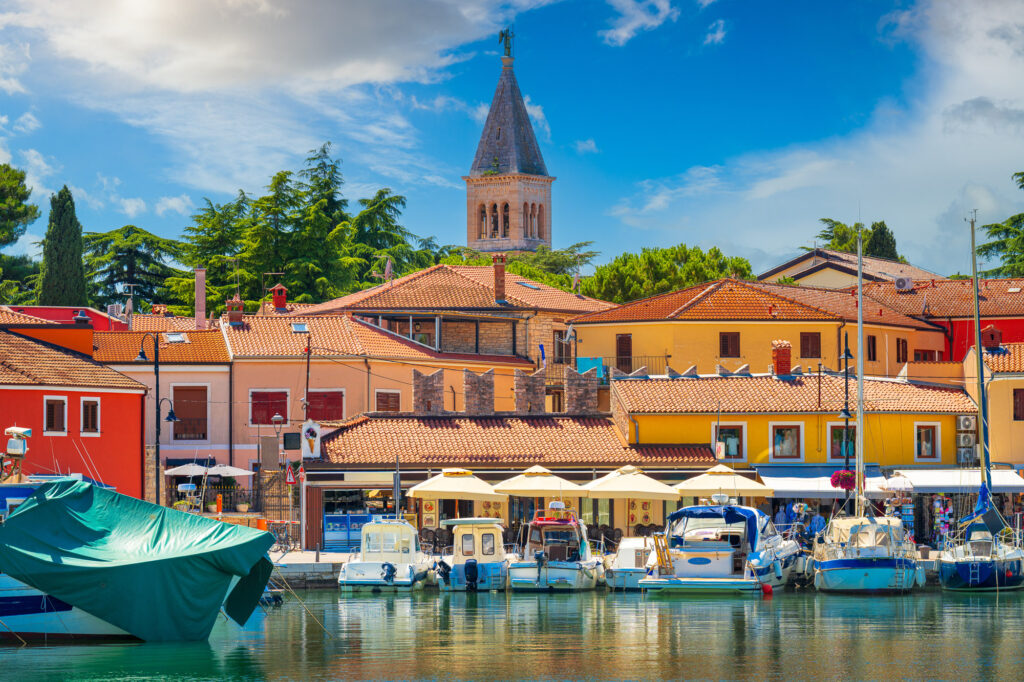
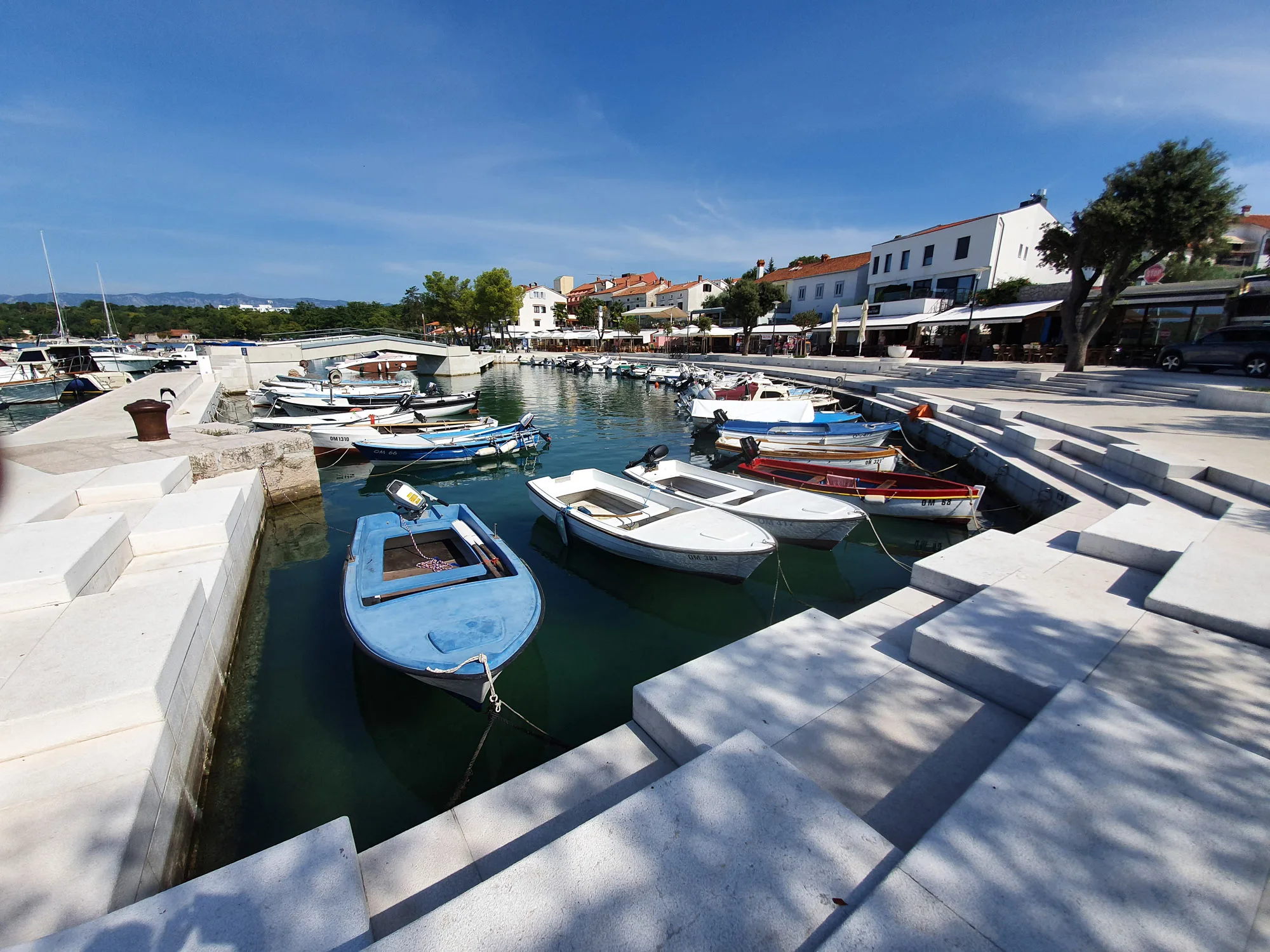
Umag is a small coastal town in the far north-west of Istria, about 10 kilometres from the Slovenian border. It suits travellers who want an easy beach base with a walkable old town, a long seafront promenade, good cycling and quick access to the wine villages and hill towns of northern Istria.
This guide covers what to see in the old town, where to swim, what to eat, the best day trips and the practical details that make a stay easier. For the wider region, see our Istria travel guide.
Umag at a glance
- Where: north-west coast of Istria, close to the border crossings with Slovenia and about an hour by car from Trieste in Italy.
- Best for: relaxed beach holidays, families, cyclists, tennis fans and anyone who wants to combine the coast with inland wine country.
- Character: a compact historic centre on a small peninsula, surrounded by resort zones, campsites and low coastline rather than dramatic cliffs.
- How long: half a day for the old town; three to five nights if you use Umag as a base for northern Istria.
- Downsides: the coast is mostly rocky or concrete platforms with few natural sandy beaches, and the large resort areas can feel busy and package-orientated in July and August.
Umag old town
The historic centre sits on a low peninsula that was once almost an island. It is small: you can walk from one end to the other in ten minutes, so the best approach is to wander rather than follow a fixed route. The main street runs along the spine of the peninsula, with narrow side lanes leading down to the water on both sides.
Umag was part of the Venetian Republic for centuries, and that shows in the stone houses, small squares and the remaining sections of the old defensive walls and towers. Look out for:
- The parish church of the Assumption of Mary and St Pelegrin, the town’s main church, with its separate bell tower rising above the rooftops.
- Surviving sections of wall and towers on the edges of the peninsula, best seen as you walk the waterfront around the old town.
- The main square, where cafés spill out on summer evenings and occasional concerts and markets take place.
- The small town museum, which covers local archaeology and history. Check opening times locally, as they change by season.
The old town is at its best in the early evening, when day-trippers leave and people come out for a walk before dinner. It is quiet out of season, with many seasonal restaurants closed from late autumn to spring.
The seafront promenade
Umag’s coastline is low and gently indented, which makes it well suited to walking and cycling. A seafront path links the old town with the surrounding bays and resort zones, and the city has been extending it so that more of the coast can be walked continuously, including a section towards Moela. Expect a mix of paved promenade, gravel paths and stretches under pine trees.
A good easy walk is to start in the old town, follow the coast past the marina and continue towards the resort areas, stopping for a swim on the way. Bring water in summer, as shade is patchy on some stretches.
Best beaches in and around Umag
Umag does not have one big town beach. Instead, the coast is lined with dozens of small bathing areas: flat rocks, concrete sunbathing platforms, pebble coves and a few artificial gravel beaches. Water shoes are useful almost everywhere. Because the coast shelves gently in many places, it is often a good choice for children, though some spots are shallow and weedy close to shore.
Katoro
Katoro, north of the centre, is a large resort zone with organised beaches, bars, sunbed hire and sports facilities. It is practical for families and one of the beaches that has held Blue Flag status. Nearby are the remains of Sipar, a late Roman and early medieval settlement on a small headland, partly submerged. There is little to see beyond low walls, but it makes a pleasant walk.
Stella Maris
Stella Maris sits just north of the old town and is known for its sports facilities and the tennis centre. Swimming areas here are mostly paved or rocky, with easy access to the water.
Punta and the southern coast
South of the town, the coast towards Lovrečica and Dajla is quieter, with campsites and smaller coves. It is a good direction to cycle if you want less crowded swimming spots.
Zambratija and Savudrija
Further north, the bay at Zambratija is a shallow, sheltered spot popular with families. Underwater archaeologists have found remains of a prehistoric settlement here. Beyond it, the coast around Savudrija has small coves, a lighthouse and pine woods, and feels noticeably less built-up than Umag’s resort zones.
Things to do in Umag
Watch tennis, or play it
Tennis is a big part of Umag’s identity. The town hosts an ATP tournament each July at the tennis centre in Stella Maris, and many hotels and resorts have clay courts that visitors can book. If you plan to visit during tournament week, book accommodation early and check the official tournament website for dates and tickets.
Cycle the coast and hinterland
The flat coastline and quiet back roads make Umag one of the better cycling bases in Istria. Easy rides follow the coast towards Savudrija or south towards Novigrad, while longer routes climb gently inland through vineyards to Buje and Momjan. Bike hire is widely available in summer. The regional tourism website istra.hr publishes cycling route maps for the area.
Visit Savudrija lighthouse
Savudrija, about 15 minutes by car north of Umag, is Croatia’s westernmost point and home to a 19th-century lighthouse, often described as the oldest working lighthouse in the Adriatic. The lighthouse grounds are a pleasant spot for a short walk and sunset, and there are swimming spots on the rocks nearby. The cycle path along the coast makes it an easy ride from Umag.
Explore northern Istria’s wine country
The hills behind Umag are part of one of Istria’s main wine areas. The local white grape, Malvazija istarska, dominates, alongside the red Teran and the sweet Momjan muscat. Small family wineries around Buje, Momjan and Brtonigla welcome visitors, often by appointment, so call or message ahead rather than turning up. Never drive after a tasting; consider a guided tour or a designated driver.
Take a boat trip
In summer, boats leave from Umag harbour for trips along the coast, fish picnics and sunset cruises. Compare the route, duration and what is included before booking at the harbour, and check how the trip handles bad weather.
Check the summer events calendar
Umag has a busy programme of concerts, sports events, food festivals and markets, especially from June to September. The schedule changes every year, so check the current calendar on the local tourist board website before you travel.
Food and wine in Umag
Umag’s food combines the Adriatic coast with the Istrian countryside. On the coast, look for grilled fish, squid, shellfish and seafood pasta. Inland, the menus lean towards Istrian classics:
- Fuži and pljukanci – local handmade pasta, often served with truffles, game or beef sauce.
- Istrian pršut – dry-cured ham, usually served with local cheese and olives as a starter.
- Maneštra – a thick vegetable and bean soup, more common in cooler months.
- Fritaja – an omelette, made with wild asparagus in spring.
- Truffles – black truffles appear much of the year; white truffle season is in autumn.
- Olive oil – northern Istria produces some of Croatia’s most highly rated olive oils; many farms sell directly.
For a meal with views, eat in the old town or along the waterfront. For simpler, more traditional food, drive ten to twenty minutes inland to a konoba (a rustic family restaurant) in the villages around Buje or Momjan. Many open only in the evening or have shorter hours out of season, so check before you go.
Day trips from Umag
Umag’s position makes it easy to explore northern and western Istria without long drives. Approximate times by car:
| Destination | Approx. drive | Why go |
|---|---|---|
| Savudrija | 15 minutes | Lighthouse, coastal walks, quiet coves |
| Novigrad | 20 minutes | Small walled town, harbour and seafood |
| Grožnjan | 35 minutes | Hilltop artists’ town with galleries |
| Poreč | 40 minutes | Euphrasian Basilica and old town |
| Motovun | 45 minutes | Walled hill town above the Mirna valley |
| Rovinj | 55 minutes | Istria’s most photogenic old town |
| Trieste (Italy) | about 1 hour | Coffee houses and grand squares |
Novigrad
Just down the coast, Novigrad is a compact walled town with a harbour, a seafront walk and a good choice of seafood restaurants. It makes an easy evening trip or a stop on a cycling day.
Grožnjan and Motovun
Inland, the landscape changes completely. Grožnjan is a quiet hilltop town with art galleries and summer music courses, while Motovun sits on a steep hill above the Mirna valley and its truffle forests. Combine the two in one day, with lunch in a konoba between them.
Poreč and Rovinj
Further south, Poreč has the UNESCO-listed Euphrasian Basilica and a lively old town, and Rovinj is the most visited town on the Istrian coast. Both work as full-day trips; go early in summer to find parking more easily.
Trieste and Slovenia
Umag is close enough to the border to visit Piran on the Slovenian coast or Trieste in Italy. Take your passport or ID card and check current border and vehicle rules, including whether you need a motorway vignette for Slovenian roads.
How to get to Umag
By car
A car is the most flexible way to explore Umag and northern Istria. From the north, you arrive via Slovenia and the border crossings near Kaštel or Plovanija. From inland Croatia, the Istrian motorway (the Istrian Y) brings you close to Umag. Allow extra time at the border on summer weekends, when queues can be long.
By air
The nearest airports are Pula and Trieste, both roughly an hour to an hour and a quarter by car. Ljubljana and Venice are further away but often have more flights. There is no airport shuttle you can rely on for every flight, so plan a hire car, transfer or bus connection in advance.
By bus
Umag has bus connections with other Istrian towns as well as longer routes to Zagreb, Rijeka and Trieste. Services are more frequent in summer. Read our guide to travelling around Croatia by bus for how tickets and luggage work, and check current timetables before you travel.
Parking
The old town is mostly pedestrian. Use the paid car parks on its edge and check the signs for zones and payment methods. Resorts usually have their own parking for guests.
Where to stay in Umag
- Old town and centre: best for walking to restaurants and the evening atmosphere; choose private apartments or small hotels. Parking can be harder.
- Stella Maris and Katoro: large resort zones with pools, sports facilities and beaches; good for families and tennis players, less local in feel.
- Campsites along the coast: Umag has many large, well-equipped campsites, popular with visitors arriving by car or campervan.
- Inland villages: rural houses and agritourism stays near Buje or Momjan suit people who want quiet and wine country, but you will need a car.
When to visit Umag
June and September are the best months for most travellers: the sea is warm, restaurants are open and the resorts are less crowded. July and August bring the fullest programme of events and the busiest beaches, plus higher prices and heavier traffic. May and October are good for cycling, walking and wine, though the sea is cooler and some seasonal businesses are shut. Winter is very quiet, which suits a short stop but not a beach holiday. See our guide to the best time to visit Croatia for month-by-month detail.
Umag for families
Umag works well with children. The water is shallow and calm in many bays, resorts have pools and playgrounds, and distances are short. Choose accommodation close to a beach so you can walk there, bring water shoes for rocky entries, and plan swimming in the morning and late afternoon to avoid the strongest midday sun. Cycling along the flat coast is easy for older children.
Is Umag worth visiting?
Yes, if you want a relaxed, practical base rather than a dramatic postcard town. Umag’s old town is pleasant but small, and the coast is built for comfort rather than wild scenery. Its real strength is location: within an hour you can reach most of northern and western Istria, the Slovenian coast and Trieste. If you want a striking old town on your doorstep, Rovinj or Novigrad may suit you better; if you want space, sport and easy day trips, Umag is a good choice.
Frequently asked questions
What is Umag known for?
Umag is known for its annual ATP tennis tournament, its small Venetian-era old town, a long coastline with many bathing areas and its location near the wine villages of northern Istria.
Does Umag have sandy beaches?
Very few. Most beaches are rocky, pebbly or paved platforms, with some artificial gravel areas in the resorts. The water is clear and often shallow, which suits children, but water shoes are recommended.
How far is Umag from the Slovenian border?
About 10 kilometres. The nearest crossings are reached in around 15 minutes by car, though summer weekend queues can add much more time.
Can you visit Umag without a car?
Yes, for a beach stay. The old town, promenade and nearby beaches are walkable or easy by bike, and buses link Umag with other Istrian towns. For wine villages and hill towns, a car or organised tour is far more practical.
How many days do you need in Umag?
Half a day is enough to see the old town. Stay three to five nights if you want beach time plus day trips to Novigrad, Grožnjan, Motovun and the coast.
What is the best day trip from Umag?
For a short trip, cycle or drive to Savudrija lighthouse. For a full day, head inland to Grožnjan and Motovun for hilltop towns, views and Istrian food.
Plan your trip
Planning a trip to Umag?
Discover beaches, things to do, parking, food and practical travel information.