Croatia’s most beautiful places are spread across a surprisingly varied landscape: medieval walled cities, limestone mountains, waterfall systems, vineyard islands, quiet hill towns and long sections of Adriatic coast. The country rewards travelers who look beyond a single resort and combine at least two different regions.
This guide focuses on places that are visually memorable but also genuinely worth building into a trip.
1. Dubrovnik Old City
Dubrovnik’s walled historic center is one of the most recognizable urban landscapes on the Adriatic. Stone streets, terracotta roofs and fortifications rise directly above the sea, creating a setting that feels dramatic from almost every angle.
The Old City is a UNESCO World Heritage Site, valued for its Gothic, Renaissance and Baroque architecture as well as its long history as a major Mediterranean maritime power. Walk the walls early or late in the day for the clearest sense of the city’s scale.
2. Plitvice Lakes National Park
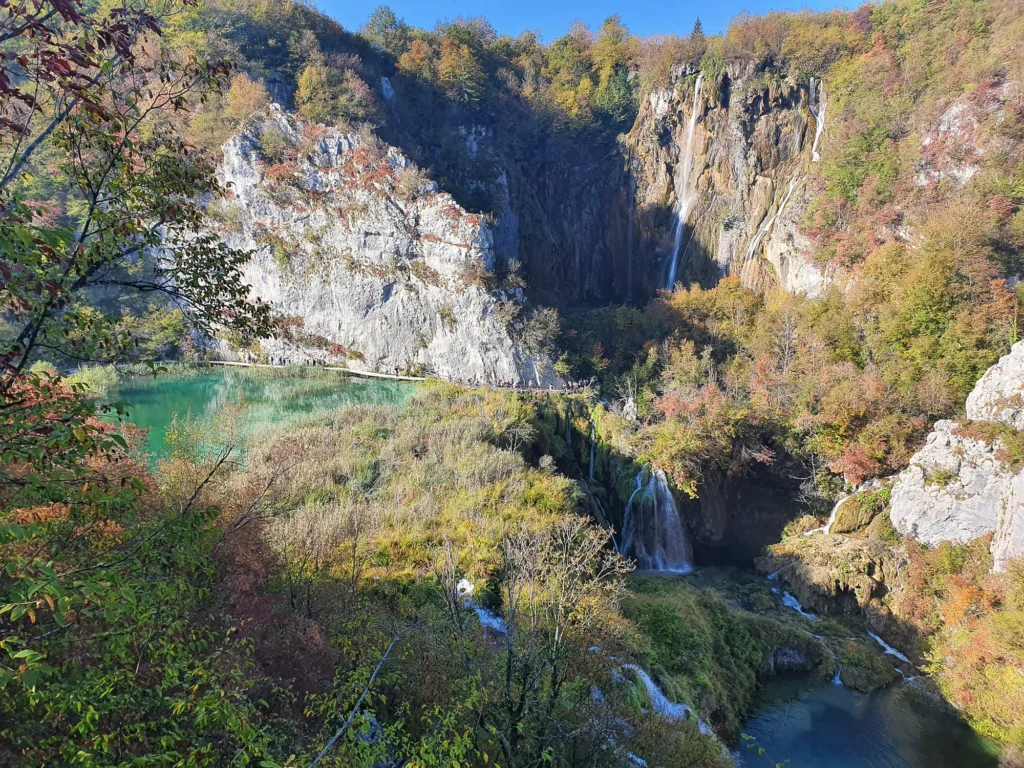
Plitvice is Croatia’s classic inland natural wonder. A chain of lakes, waterfalls and forested limestone canyons is shaped by active travertine-building processes that continue to change the landscape.
The park is also a UNESCO World Heritage Site. Stay nearby if you can, because visiting outside the busiest middle part of the day makes the experience much more rewarding.
3. Rovinj
Rovinj’s old town rises on a compact peninsula beneath the Church of St. Euphemia, with narrow streets descending toward small harbors and rocky edges of the Adriatic. The town is photogenic, but it also works as a practical base for beaches, cycling and inland Istria.
Use the Rovinj travel guide to plan more than a quick old-town walk.
4. Hvar Town and the Pakleni Islands
Hvar Town combines Venetian-era architecture, a broad waterfront, stone lanes and a hilltop fortress. Just offshore, the Pakleni Islands break the horizon into wooded islets and coves.
The town can feel very lively in high summer, but early mornings, shoulder season and overnight stays reveal a calmer side.
5. Korčula Town
Korčula Town sits on a small fortified peninsula with stone walls, towers and narrow streets arranged around a central spine. The surrounding island adds vineyards, villages and beaches, making it one of Croatia’s strongest combinations of architecture and landscape.
6. Krka National Park
Krka follows a karst river through waterfalls, gorges and historic sites. Skradinski Buk is the best-known section, but the park extends much farther upstream to places such as Roški Slap, Burnum and Manojlovac.
Because access arrangements vary by entrance and season, check the national park’s current visitor information before deciding how to structure your day.
7. Zlatni Rat, Brač
Zlatni Rat near Bol is a long pale-pebble beach that projects into the sea and changes subtly with currents and wind. From above, especially from the slopes toward Vidova Gora, its shape becomes one of the most recognizable coastal views in Croatia.
8. Motovun
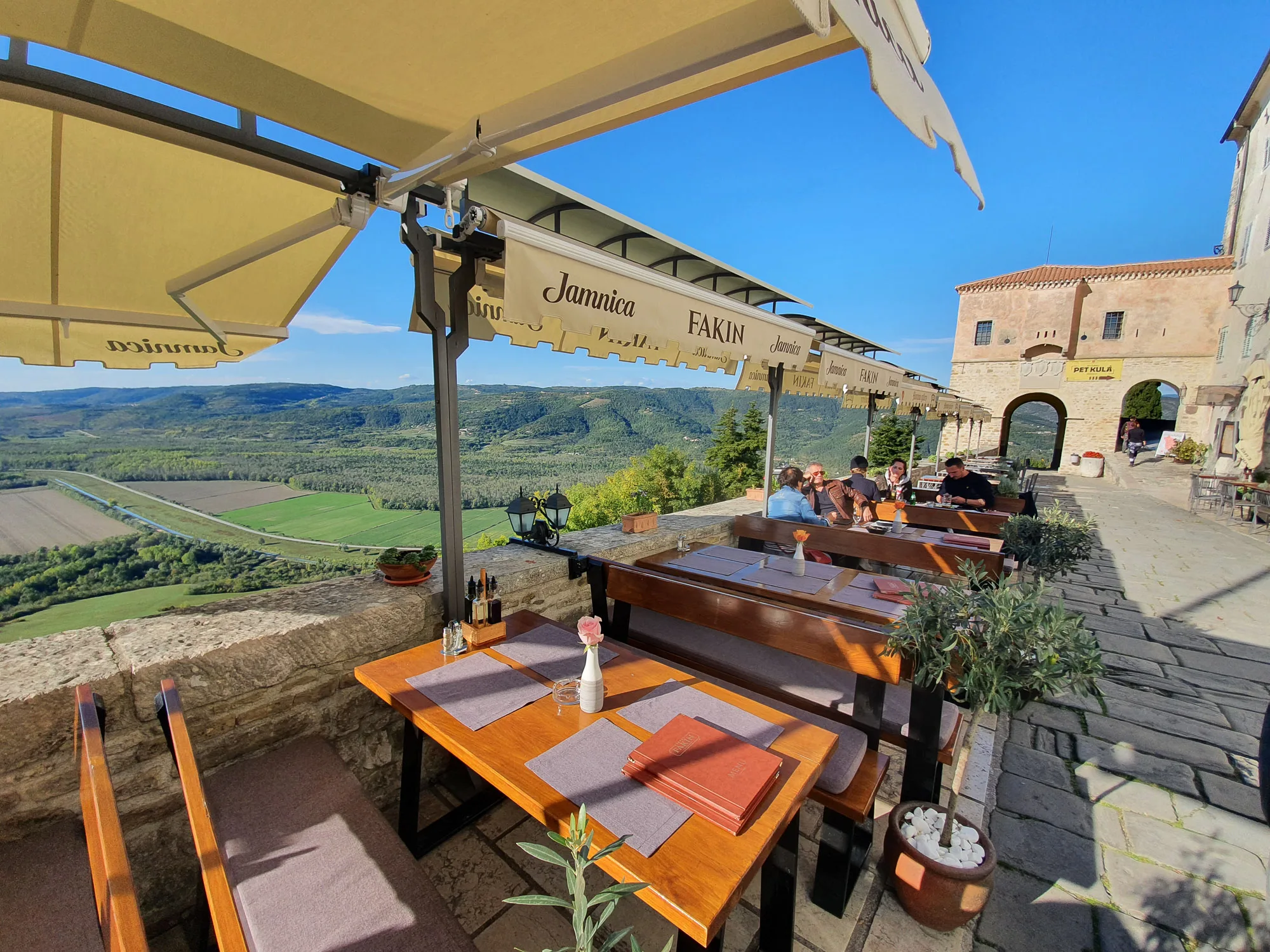
Motovun crowns a hill above the Mirna Valley in inland Istria. The medieval walls, surrounding vineyards and forested countryside create one of the region’s most distinctive panoramas.
It is worth visiting slowly rather than just taking a photograph from the valley. See the Motovun travel guide for practical ideas.
9. Šibenik
Šibenik’s stone old town climbs steeply from the waterfront toward a series of fortresses. At its center, the Cathedral of St. James is one of Croatia’s most important Renaissance buildings and part of the city’s UNESCO heritage.
The mix of sea, stairways, fortifications and compact neighborhoods gives Šibenik a different visual character from Split or Dubrovnik.
10. Trogir
Trogir’s historic core occupies a tiny island between the mainland and Čiovo. Romanesque, Gothic, Renaissance and Baroque buildings are packed into a very small area, making it one of the easiest Croatian towns to explore on foot.
It is particularly attractive in the evening after many day visitors have left.
11. Diocletian’s Palace and Split Old Town
Split’s historic center is not a preserved monument separated from daily life. Cafes, homes, shops and small squares occupy the remains of the Roman imperial palace, producing a layered cityscape that is best appreciated by wandering rather than following a single route.
12. Stiniva Cove, Vis
Stiniva is a small cove enclosed by towering cliffs on Vis. Its narrow opening to the sea makes it feel hidden, although its fame means it is no longer undiscovered.
Arrive with realistic expectations: the land approach is steep, and the cove can become busy when excursion boats arrive.
13. Mljet National Park
Western Mljet is covered in dense forest and centered on two saltwater lakes. Paths and quiet roads circle the water, while the islet of St. Mary with its monastery creates one of the most serene landscapes on the southern Adriatic.
14. Kornati National Park
The Kornati archipelago is beautiful because of its austerity: pale rock, low vegetation, dry-stone patterns and intensely blue channels between islands. It is best experienced from the water, where the scale of the archipelago becomes clear.
Most visitors join a boat excursion or sail through the area rather than treating Kornati as a conventional beach destination.
15. Zadar at sunset
Zadar’s waterfront is especially memorable in the final hours of the day. The Sea Organ turns wave movement into sound, while the open western horizon gives the city one of the Adriatic’s broadest sunset views.
The historic center behind the waterfront adds Roman, medieval and Venetian layers within an easy walking area.
16. Paklenica National Park
Paklenica brings deep limestone canyons and high Velebit peaks almost directly to the coast. It is one of the best places in Croatia for travelers who want a dramatic mountain landscape without leaving the Adriatic region.
The park is known for hiking and climbing, but even a shorter walk into Velika Paklenica gives a strong sense of the canyon scenery.
17. Cape Kamenjak
At the southern tip of Istria, Cape Kamenjak is a rugged coastline of low vegetation, rocky headlands and small coves. It is most enjoyable when you explore several swim spots rather than driving to only one.
Combine it with time in Pula; the Pula travel guide can help you structure the wider area.
18. Rastoke
Rastoke sits where the Slunjčica River breaks into small waterfalls and channels before meeting the Korana. Traditional houses, mills and water create a compact landscape that feels very different from the coast.
It pairs naturally with a road trip toward Plitvice Lakes, but it deserves time of its own rather than only a roadside photo stop.
19. Pelješac Peninsula
Pelješac combines steep mountains, vineyard slopes, stone villages and long views across channels toward Korčula and the mainland. The drive itself is part of the appeal.
Ston and Mali Ston provide a historic gateway, while Orebić, Viganj and the wine villages farther along the peninsula give travelers several distinct bases.
20. Lastovo
Lastovo is one of Croatia’s most remote inhabited islands and feels markedly different from the heavily visited central-Dalmatian islands. Forested hills, small settlements, sheltered bays and a dark night sky make it an excellent choice for travelers who value quiet.
21. Lubenice, Cres
Lubenice is a tiny stone village set high above the western coast of Cres. The drama comes from its position: houses sit near a steep edge with wide views over the Adriatic and a pale beach far below.
The descent to the beach is demanding, so the village viewpoint itself may be the better experience for many visitors.
22. Grožnjan
Grožnjan is a small hill town in northern Istria known for stone lanes, galleries and views over the surrounding countryside. It is especially attractive when paired with a slower drive through inland Istria rather than a rushed coast-only itinerary.
23. Pazin Gorge
Pazin is often overlooked in favor of Istria’s coastal towns, but its castle and dramatic gorge create one of the peninsula’s most unusual inland scenes. The Pazinčica River disappears into the karst below the old town.
For more ideas nearby, see the Pazin travel guide.
24. Velebit
Velebit is Croatia’s great coastal mountain barrier, rising above the Adriatic and creating extraordinary contrasts between sea, bare limestone ridges and forested slopes. Northern Velebit National Park and Paklenica National Park protect different parts of the range.
For walkers and road trippers, the mountain landscape is one of the strongest reasons to spend time away from the main coastal cities.
25. The Makarska Riviera beneath Biokovo
The Makarska Riviera is visually striking because the Biokovo massif rises abruptly behind a narrow strip of settlements and beaches. Places such as Brela, Baška Voda, Makarska and Tučepi all share this mountain-and-sea setting.
Even travelers who prefer quiet villages can appreciate the landscape by driving the coast, walking the seaside paths and choosing less crowded beaches outside peak hours.
Most beautiful places in Croatia for a first trip
If you are visiting Croatia for the first time and want the greatest variety, combine one major historic city, one island or coastal town and one inland natural area. Dubrovnik or Split can provide the urban history; Hvar, Korčula, Brač or Rovinj can provide the Adriatic atmosphere; and Plitvice can add a completely different natural landscape.
Most beautiful places without a car
Dubrovnik, Split, Rovinj, Zadar and Šibenik are all strong choices for travelers relying on buses, ferries and walking. Island towns such as Hvar Town and Korčula Town can also work without a car if you are comfortable organizing ferry connections and occasional local transport.
Most beautiful places for a road trip
Istria is ideal for a compact road trip linking Rovinj, Pula, Motovun, Grožnjan and Pazin. Farther south, the combination of Zadar, Paklenica, Šibenik, Split and the Makarska Riviera creates a route with cities, mountains and beaches. Pelješac and the Dubrovnik region are excellent for a slower southern extension.
When to visit
April, May, late September and October are especially good for cities, hill towns, walking and road trips. June and September offer a strong mix of swimming weather and manageable crowds. July and August are ideal for a classic high-summer island holiday, but famous places are busiest then, so early mornings and overnight stays become more valuable.
Final thoughts
The most memorable Croatia itinerary is usually not the one with the longest checklist. Choose a few places that contrast with one another and give each enough time: a walled city, an island, a mountain or waterfall landscape, and perhaps one smaller town where you can slow down. Croatia’s beauty is strongest in those transitions between coast, stone, forest, water and historic settlement.
Plan your trip
Planning your trip to Croatia?
Explore practical guides, destinations and travel tips before you go.