Getting around Croatia is easiest when you choose transport by region rather than trying to use one method for the entire country. Buses are often the most practical public transport between coastal cities, ferries are essential for many islands, trains work best on selected inland routes, and a car gives the most freedom for villages, national parks and multi-stop road trips.
This guide helps you decide which transport option makes sense for your itinerary, how to combine buses, ferries, trains and cars, and what to check before travelling in 2026. For route ideas, see the Croatia itineraries and Croatia Road Trip guide.
The best way to get around Croatia
There is no single best method for every trip. The right choice depends on whether you are travelling between major cities, visiting islands, exploring inland regions or moving through smaller coastal towns.
- Bus: usually the most useful public transport for intercity travel along the Adriatic coast.
- Ferry or catamaran: essential for island travel and useful for some coastal connections.
- Train: useful for Zagreb and parts of inland Croatia, but much less comprehensive on the coast.
- Car: best for flexible road trips, rural areas, national parks and accommodation outside town centres.
- Flights: useful for a limited number of long-distance domestic journeys when schedules align.
- Local public transport: buses, trams and local services vary by city.
Travelling around Croatia by bus
Intercity buses connect Zagreb with most major Croatian destinations and are especially important on the Adriatic coast, where the railway network is limited. Direct or one-change services commonly connect Zagreb, Rijeka, Zadar, Šibenik, Split and Dubrovnik, as well as many smaller towns.
Schedules and operators vary. Some routes run year-round, while others become much more frequent in summer. Buy important peak-season journeys in advance when possible, especially on Fridays, Sundays and summer changeover days.
Bus travel is best for
- travellers without a car;
- coastal city-to-city journeys;
- routes such as Zadar–Šibenik–Split;
- airport or regional transfers where a direct service exists;
- one-way itineraries where returning a rental car would be inconvenient.
What to check before booking a bus
Do not compare only departure time and price. Also check the exact departure station, luggage rules, whether seat selection is available, and whether the service makes many intermediate stops.
For coastal trips in July and August, allow extra time because road congestion can affect arrival times even when the bus leaves punctually.
Travelling around Croatia by ferry
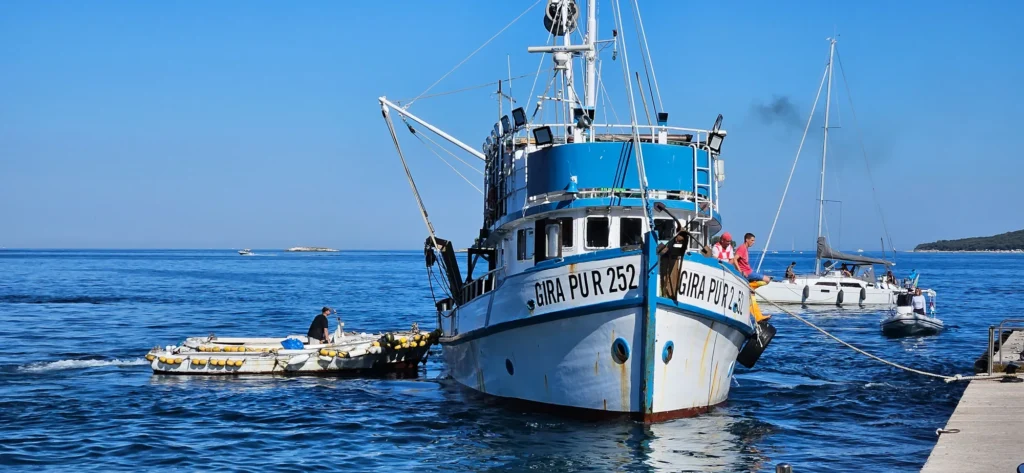
Ferries are part of everyday transport in Croatia, not just sightseeing. Vehicle ferries connect many islands with the mainland, while passenger-only catamarans link important coastal and island ports.
Jadrolinija is the largest operator, but other companies also run scheduled passenger services on some routes. Timetables change seasonally, so always search the exact travel date rather than relying on a generic summer timetable.
Vehicle ferry or catamaran?
A vehicle ferry carries cars as well as foot passengers. A catamaran or high-speed passenger vessel normally carries passengers only. This distinction matters if you are planning an island road trip.
On some Jadrolinija routes, a ticket is valid for the date rather than reserving one exact departure. On selected reservation-enabled routes, however, booking can secure a particular sailing. Read the conditions for the specific line.
Current 2026 ferry note
As of late September 2026, Jadrolinija states that its international ferry services are temporarily interrupted until 21 October 2026. Domestic routes continue according to their own current operational notices. Because weather and technical changes can affect sailing, check the operator again on the day of travel.
Travelling around Croatia by train
Croatia’s rail network is most useful in Zagreb and inland parts of the country. It is not the main transport backbone for the Adriatic coast.
HŽ Putnički prijevoz’s current 2025/2026 timetable is valid until 12 December 2026, with the latest major timetable revision effective from 7 September 2026.
Direct and connecting rail services link Zagreb with destinations including Split and Šibenik, but journey times can be longer than by road. Trains can still be attractive if you value space, dislike long-distance bus travel or want a relaxed inland journey.
Where trains work well
- Zagreb and its suburban area;
- selected inland city connections;
- some Zagreb–Split journeys;
- international rail travel through Slovenia, Austria and other Central European routes.
Where trains are less useful
There is no practical rail network covering most of the Dalmatian coast. Places such as Zadar and Dubrovnik are not served by direct passenger rail in the way visitors might expect from a Western European coastal route. For many coastal itineraries, bus plus ferry is more practical.
Driving in Croatia
A car gives the greatest freedom if you plan to explore inland Istria, rural Zagorje, remote beaches, villages, wine regions or several national parks. Motorways make long-distance journeys relatively simple, while local roads provide access to places that are difficult to reach by public transport.
A car is especially useful for
- multi-stop road trips;
- rural accommodation;
- national parks and nature areas;
- small villages and wineries;
- families carrying luggage and beach equipment;
- trips that combine coast and inland regions.
When a car becomes inconvenient
Central Split, Dubrovnik, Rovinj and other compact historic towns can be easier without a car. Parking may be expensive, restricted or far from the old centre. A useful approach is to drive between destinations, then leave the vehicle parked while exploring locally on foot.
If you are planning a road-based trip, the Croatia Road Trip guide provides a broader planning framework.
Domestic flights within Croatia
Domestic flights can save time on selected long-distance routes, particularly when crossing between Zagreb and the coast. However, frequencies vary by season and not every city pair has a useful nonstop flight.
A flight is most attractive when:
- the departure and arrival times fit your itinerary;
- you are travelling between distant regions;
- you have limited luggage;
- the airport transfer does not cancel out the time saved.
For short coastal hops, buses and ferries are often more practical once airport travel time is included.
Getting around Zagreb
Zagreb has the strongest urban public transport network in Croatia, with trams and buses covering the city and surrounding districts. For most short city visits, a car is unnecessary in the centre.
If you are combining Zagreb with Plitvice Lakes, Hrvatsko Zagorje or other inland destinations, decide whether to rent a car immediately or only after your city stay. Delaying the rental can save parking costs and reduce city-centre driving.
See the broader Zagreb and Central Croatia guide when planning the region.
Getting around Istria
Istria is one of the regions where a car adds the most value. Coastal towns can be reached by bus, but hilltop towns, wineries, rural restaurants and scattered villages are much easier to combine by car.
If your trip is based only in Rovinj, Pula or Poreč, you can manage without a car for several days. If you want to link the coast with Motovun, Grožnjan, central Istria and rural food experiences, driving is usually far more efficient.
Start with the Istria Travel Guide for regional planning.
Getting around Kvarner
Kvarner combines mainland cities, mountain areas and islands. Buses work well for major mainland connections, while ferries are important for Krk-area connections and travel to islands such as Cres, Lošinj, Rab and Pag depending on route.
A car is valuable if you plan to combine Rijeka, Opatija, Gorski Kotar and several islands in one trip, but foot-passenger travel can work well for a simpler city-and-island itinerary.
See the Kvarner Travel Guide.
Getting around Northern Dalmatia
Northern Dalmatia is relatively friendly to public-transport travellers because Zadar, Šibenik and several coastal towns have useful bus connections, while ferries link Zadar with nearby islands.
A car becomes more useful for national parks, rural areas and flexible combinations of smaller towns. If travelling without a car, base yourself in a transport hub rather than moving accommodation every night.
See the Northern Dalmatia Travel Guide.
Getting around Central Dalmatia
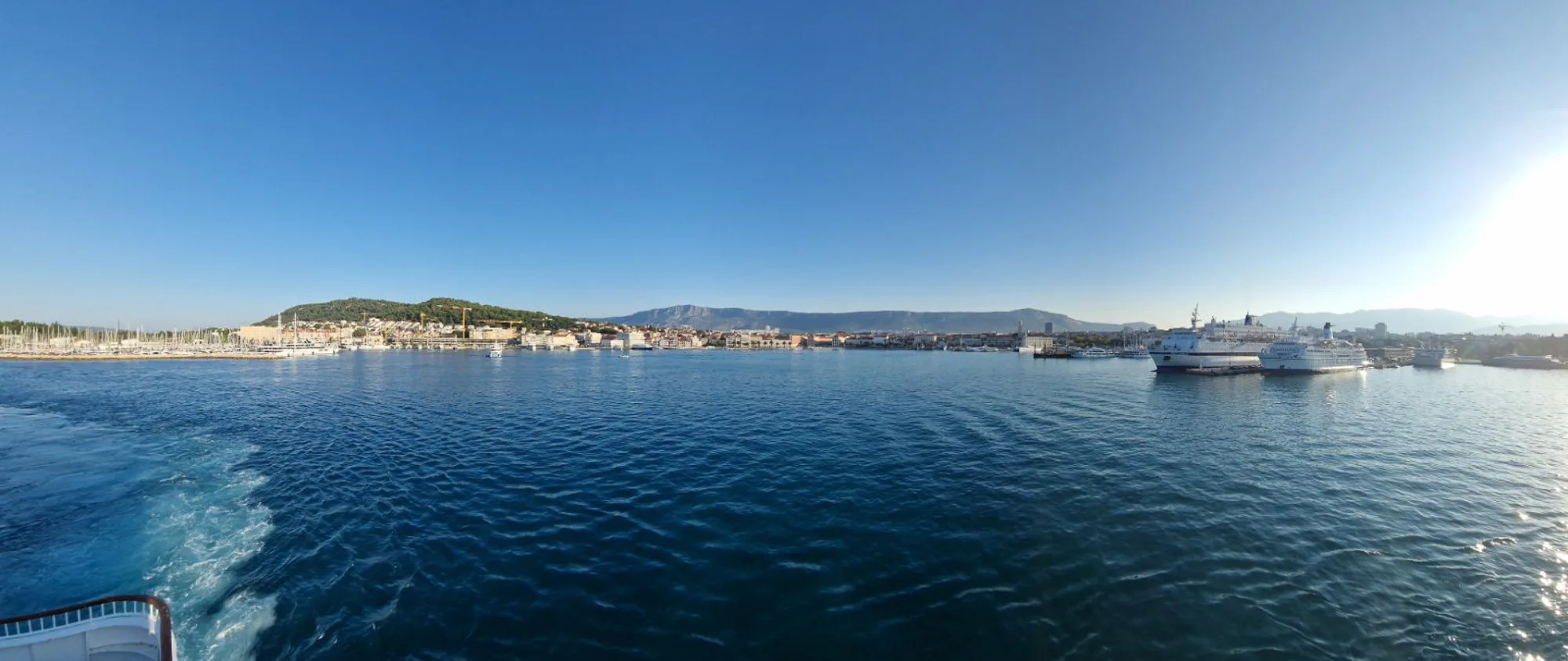
Split is the key transport hub. It combines major bus services, a railway terminus, airport access and one of Croatia’s most important ferry ports.
For Brač, Hvar, Šolta and Vis, ferry planning should be built into the itinerary before booking accommodation. If you are travelling as a foot passenger, a car is often unnecessary on a short island stay; if you want remote beaches and villages, a vehicle or local rental can make a major difference.
See the Central Dalmatia Travel Guide.
Getting around Southern Dalmatia
Dubrovnik is well connected by bus and air, and ferries link it seasonally with islands and other coastal ports. The historic centre itself is best explored on foot.
For Korčula, Mljet and the Elaphiti Islands, check whether your chosen service carries vehicles or passengers only. If you are continuing into Montenegro or Bosnia and Herzegovina, allow time for external Schengen border controls.
See the Southern Dalmatia Travel Guide.
Getting around Slavonia and Eastern Croatia
Eastern Croatia has fewer tourist-oriented public transport frequencies than the main Adriatic corridor, so a car can be especially valuable for wine areas, nature parks and villages outside Osijek and other cities.
Rail and bus connections can still work for major centres, but rural day trips require more timetable planning.
See the Slavonia and Eastern Croatia guide.
Travelling around Croatia without a car
A car-free Croatia trip is completely realistic if you build the route around strong transport hubs. Zagreb, Rijeka, Zadar, Šibenik, Split and Dubrovnik are the easiest anchors.
A practical no-car itinerary might combine:
- Zagreb by tram and on foot;
- Zadar or Šibenik by intercity bus;
- Split by bus;
- one or two islands by ferry or catamaran;
- Dubrovnik by bus or seasonal ferry where available.
The main trade-off is flexibility. Smaller beaches, villages and rural accommodation may require taxis, organised excursions or carefully timed local buses.
Combining transport types
The strongest Croatia itineraries often combine modes rather than forcing one method to do everything.
Bus plus ferry
Ideal for city-and-island trips without a car. Travel between mainland hubs by bus, then switch to passenger ferries for islands.
Train plus car
Useful if arriving in Zagreb by rail and renting a car only for the road-trip section.
Flight plus ferry
Useful when flying into Split, Dubrovnik or another coastal airport and continuing directly toward islands.
Car plus ferry
Best for island exploration when you need a vehicle, but always confirm that the chosen sailing is a vehicle ferry and whether a specific departure can be reserved.
How far in advance should you book?
For ordinary off-season travel, flexibility is often high. In July and August, advance booking becomes more important for:
- popular intercity buses;
- reserved vehicle-ferry departures;
- high-demand passenger catamarans;
- domestic flights;
- rental cars, especially automatic vehicles and larger family cars.
Do not overbook every local journey months ahead. Some island ferry timetables are seasonal and may be revised, so check the final published schedule for your travel date.
Travelling with luggage
Each transport type handles luggage differently. Intercity buses may charge or regulate hold luggage by operator. Ferries allow ordinary passenger luggage but vehicle and bicycle rules vary by service. Airlines have their own cabin and checked-bag limits.
If you are moving every one or two nights, pack lighter than you would for a single-resort holiday. Ferry ports, bus stations and old-town accommodation can involve stairs, cobbles and walking distances that look short on a map but feel much longer with heavy luggage.
Travelling with children
Families often benefit from choosing fewer bases and using day trips rather than changing accommodation constantly. A car provides flexibility for child seats, naps and beach equipment, while a car-free city-and-island itinerary avoids parking and driving stress.
For broader planning, see Croatia with Kids.
Accessibility and reduced mobility
Accessibility varies substantially between operators, stations, ferry ports and older city centres. HŽ Putnički prijevoz asks passengers who need boarding, exiting or travel assistance to notify the railway at least 24 hours before the trip where possible.
If step-free access is essential, confirm the specific vehicle, station or port arrangement rather than relying on a general statement about the route.
Current transport information matters
Schedules in Croatia are not static. Summer ferry frequencies, bus services, railway works, road restrictions and border conditions can all change.
Best practice: use travel guides to choose the right transport strategy, then verify the exact departure with the official operator before travelling.
Frequently asked questions
Can you travel around Croatia without a car?
Yes. A route built around Zagreb, Rijeka, Zadar, Šibenik, Split, Dubrovnik and major islands can work very well by bus, ferry and train. Rural areas require more planning.
Are trains good in Croatia?
They are useful on selected inland routes and some Zagreb–Split services, but they are not the main way to travel along most of the Adriatic coast.
Are buses or trains better for the coast?
For most coastal city-to-city journeys, buses are more comprehensive and often more convenient.
Do I need a car on Croatian islands?
Not always. For a short stay in one town, a foot-passenger ferry and local transport may be enough. A car is more useful for exploring remote beaches, villages and large islands.
Should I book ferries in advance?
For high-demand summer departures and reservation-enabled vehicle routes, advance planning is sensible. On some routes, tickets are date-valid rather than tied to one departure, so check the specific line.
Final advice
Think of Croatia as a transport puzzle with several strong pieces. Use buses for much of the coast, ferries for islands, trains where the rail network is competitive, and cars where freedom matters most. The best itinerary is rarely the one that uses only one mode; it is the one that matches each stage of the trip to the transport that works best there.
Plan your trip
Planning your trip to Croatia?
Explore practical guides, destinations and travel tips before you go.